The ice melts the same way in Bangkok as it does in Manila, turning a vibrant, milky orange into a watery, faded amber. On a Tuesday afternoon in Jakarta, twenty-four-year-old Rina stands in a queue that snakes out of a brightly lit storefront and onto the humid pavement. She is not waiting for a visa, a bank teller, or a government handout. She is waiting for a cup of tea that costs less than a cheap sandals purchase, topped with a mountain of cheese foam. Around her, a dozen delivery drivers in matching green jackets peer anxiously at their phones, their motorbikes idling in a chorus of low carbon exhaust.
Behind the glass counter, a stainless-steel machine seals a plastic film over a cup with a satisfying, pneumatic thud.
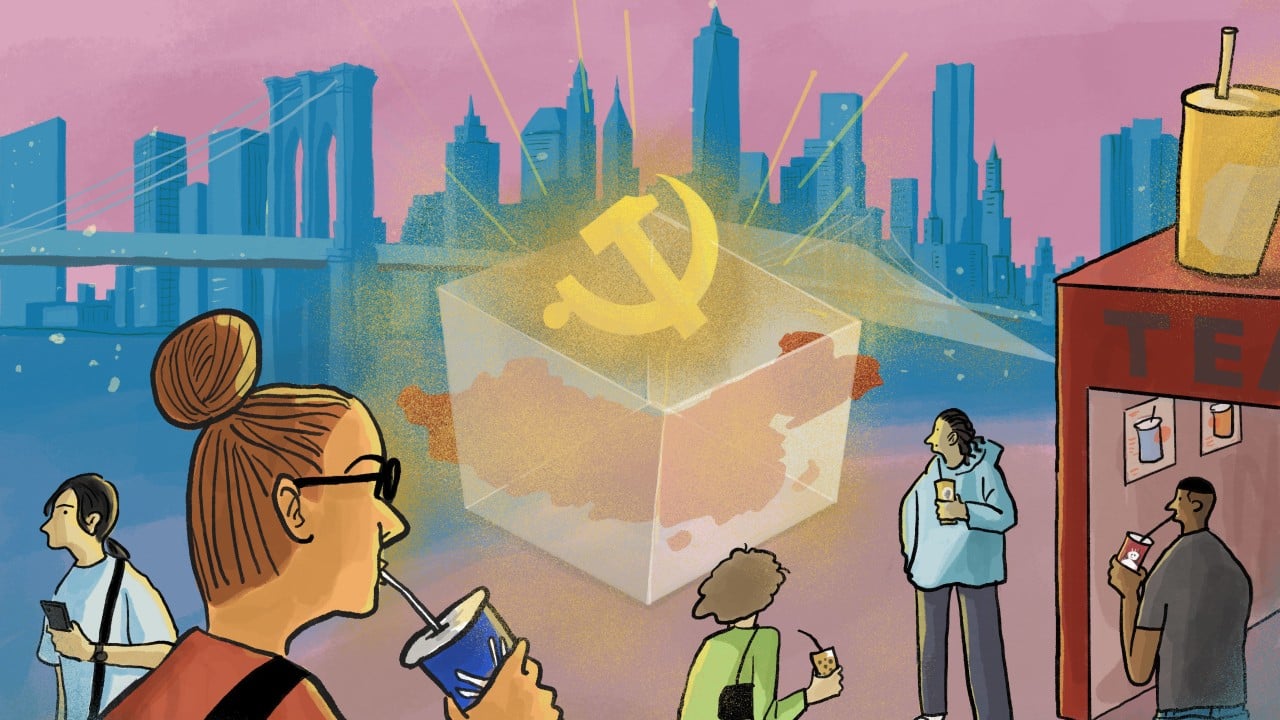
This is the frontline of a quiet, hyper-caffeinated invasion. For decades, global soft power was measured in Hollywood box office returns, the ubiquity of blue jeans, and the golden arches of McDonald’s. It was top-down, heavy, and unmistakably Western. Today, a different kind of cultural currency is quietly filling the streets of Southeast Asia, Europe, and Australia. It arrives in a plastic cup, filled with tapioca pearls, powered by supply chains that stretch deep into the agricultural heartlands of China.
The Western world spent years worrying about algorithms and social media platforms rewriting the geopolitical script. Meanwhile, the actual transformation was delivered via a giant straw.
The Cost of a Smile
To understand how a beverage chain becomes a geopolitical force, you have to look at the math of a miracle.
Consider Mixue Bingcheng. The brand’s mascot, a round, crown-wearing snowman named Snow King, beams from thousands of storefronts across Asia. He sings a jingle so repetitive it borders on psychological warfare. In Hanoi or Kuala Lumpur, a massive cup of Mixue’s signature lemonade costs roughly four Chinese yuan—under seventy-five cents in American currency.
How does a company buy fresh lemons, ship them across international borders, process them, pay staff, rent prime real estate, and still make a profit on a seventy-five-cent drink?
The secret is not magic. It is infrastructure.
Mixue, alongside rivals like Heytea, ChaPanda, and Cotti Coffee, operates less like a traditional kitchen and more like an advanced logistics network that happens to sell liquid sugar. Mixue has its own central factories, massive warehousing hubs, and direct contracts with lemon orchards in Henan and tea plantations in Yunnan. They do not buy from middlemen. They built the highway. When a store owner in Ho Chi Minh City orders a bag of milk powder, it comes from the same corporate womb that supplied the store in Chengdu.
This hyper-vertical integration creates an aggressive pricing strategy that local businesses simply cannot survive. It is economic Darwinism wrapped in a pastel aesthetic. When these chains cross a border, they do not just open shops; they import an entire ecosystem. They bring their own point-of-sale software, their own specialized machinery, and their own supply contracts, effectively bypassing the local agricultural sector while capturing the disposable income of the local youth.
The Flavor of Belonging
But supply chains do not explain why Rina will stand in the sticky heat for twenty minutes just to hold a cup with a cartoon snowman on it. Economics explains the price; psychology explains the obsession.
For a generation growing up in rapidly developing Asian economies, these drinks represent an affordable luxury. They are a status symbol that costs less than a pocket change. To walk down the street holding a vibrant, multi-layered fruit tea from Heytea—a brand that positioned itself as the Chanel of the beverage world with its minimalist design and premium ingredients—is to signal that you are part of the modern, cosmopolitan tribe.
It is a subtle shift in the global emotional landscape. For fifty years, drinking a Coca-Cola was the ultimate symbol of Western-style modernity and freedom. Now, for millions of young people, that same feeling of being plugged into the global zeitgeist comes from a drink flavored with taro, salted cheese, and brown sugar boba.
This is soft power at its most potent because it is entirely subconscious. It does not feel like state propaganda. It does not look like a military parade or a stern diplomatic briefing. It tastes like mango pomelo sago.
When a consumer forms an emotional attachment to a brand, they inadvertently form a comfort level with the culture behind it. The snowman mascot becomes a friendly, familiar neighbor. The Chinese characters printed on the side of the cup lose their foreignness, becoming as mundane and accepted as the English words on a Nike box. The invisible stakes are high: whoever controls the daily rituals of the global youth controls the subtle undercurrents of future alignment.
The Friction at the Frontier
Yet, this expansion is hitting a wall of its own making. Soft power is a fragile commodity, easily bruised by the realities of local friction.
In Malaysia and Indonesia, the rapid influx of Chinese tea and coffee chains has triggered an undercurrent of anxiety among local entrepreneurs. Independent café owners, who spent years cultivating a distinct local coffee culture, find themselves priced out of the market by corporate behemoths backed by venture capital from Beijing and Shanghai. A local shopkeeper cannot compete with a neighbor who receives ingredients at a fraction of the cost from a centralized mega-warehouse three provinces away.
There is also the question of cultural assimilation. In Indonesia, the world’s most populous Muslim-majority nation, securing Halal certification became a massive narrative hurdle for Mixue. For months, rumors and internet skepticism swirled around the ingredients used in the cheap soft-serve ice cream. The brand eventually secured the certification, but the episode exposed a deeper truth: you cannot simply copy-and-paste a cultural phenomenon from Henan into Jakarta without running into the complex realities of local identity.
Then comes the inevitable backlash of saturation. Walk down a major thoroughfare in any Southeast Asian capital today, and you will see three different bubble tea brands on a single block. The novelty is wearing off. The market is drowning in sugar.
When every street corner offers a seventy-five-cent lemonade, the drink ceases to be an exciting luxury. It becomes background noise. The margins, already razor-thin, begin to bleed. The initial burst of cultural goodwill risks turning into resentment as local communities watch profits leave their borders, flowing back along the supply lines to the corporate headquarters in China.
The Residual Sweetness
The sun begins to dip below the Jakarta skyline, casting long, orange shadows across the pavement. Rina finally reaches the front of the line, pays with a quick scan of her phone, and receives her drink. She drives a thick plastic straw through the lid with a sharp pop.
She takes a sip. It is sweet, icy, and exactly like the one she had last week.
We often look for the shifting of global power in the grandest places—in trade treaties, maritime borders, and tech embargoes. But the most profound changes usually happen where we aren’t looking, embedded in the small, unremarkable habits of everyday life.
The Western empire was built on tobacco, cotton, and carbonated syrup. The new frontier is being mapped in real-time, one franchise agreement at a time, measured in the metric tons of tapioca moving across the South China Sea.
Rina turns and walks back into the crowd, her phone in one hand, her brightly colored cup in the other. She is not thinking about geopolitics, trade imbalances, or the subtle mechanics of cultural diplomacy. She is just trying to beat the heat, holding a tiny piece of an empire in the palm of her hand, watching the ice slowly dissolve into the dark.