The wind in Reykjavik does not merely blow. It bites. It sweeps across the volcanic rock, carrying the bitter scent of the North Atlantic, threatening to rip the breath straight from your lungs. For decades, this freezing isolation dictated the rhythm of Icelandic life. Winters were long, dark, and heavy. If you wanted to play football, you did it on gravel fields crusted with ice, your ankles bruising against the frozen earth, praying the ball wouldn’t shatter if you kicked it too hard.
Nobody expected greatness from a rock in the middle of the ocean.
With a population hovering around 330,000—roughly the size of a modest London suburb or a single neighborhood in New York—Iceland was a footballing afterthought. A punchline. Success was defined by not losing by more than four goals to Europe’s elite.
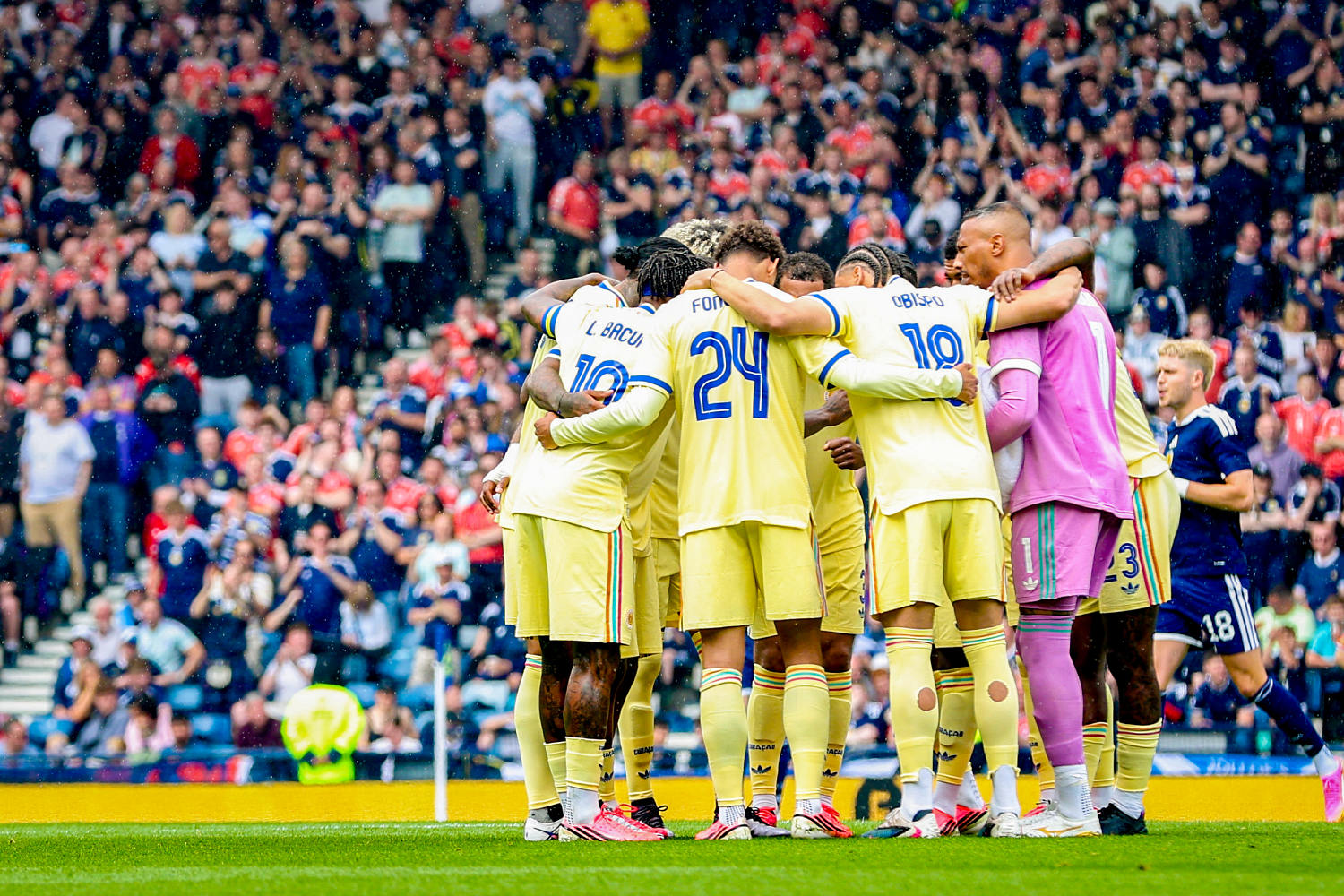
Then came the miracle of 2016, followed by the impossible qualification for the 2018 World Cup in Russia. Iceland became the smallest nation in human history to ever reach football’s grandest stage. The world watched in awe as a tiny island nation slayed giants, capturing hearts with their thunderous, rhythmic "Viking Clap" that echoed through stadium walls.
The global media painted a picture of pure Nordic grit. They spun folklore about modern-day Vikings rising from the ashes of the 2008 banking collapse, fueled by sheer willpower and geopolitical defiance. It was a beautiful story.
It was also incomplete.
The truth is far more calculated, far more human, and infinitely more instructive for anyone who believes that smallness is a permanent limitation. Iceland did not find success in a vacuum of cold air and determination. They engineered it. They realized that when you have so few people, you cannot afford to waste a single soul.
The Concrete Greenhouse
To understand how a miracle is built, you have to look at the knattspyrnuhús.
Literally translated, it means "football house." To a visitor, these structures look like massive, utilitarian spaceships landed amidst the black lava fields. They are giant, heated indoor domes housing full-sized artificial turf pitches.
Before the turn of the millennium, Icelandic football was a seasonal hobby. You trained hard for three months in the fleeting summer sun, and you spent the other nine months trapped indoors, playing handball or running up concrete stairwells to stay fit. The technical gap between Icelandic teenagers and their European counterparts wasn’t a gap in talent; it was a gap in infrastructure.
Imagine trying to learn the violin, but you are only allowed to touch the instrument between June and August. The rest of the year, you can only look at sheet music. You would never become a virtuoso.
Starting in the early 2000s, the Icelandic Football Association (KSÍ), alongside local municipalities, made a radical bet. They built these indoor domes across the country, open to everyone, from elite prospects to seven-year-olds just trying to escape the sleet.
Suddenly, the seasons vanished. The biting wind was kept at bay by thick insulation and roaring heaters. A generation of children grew up with a ball at their feet in January, executing perfect passing drills while a blizzard raged outside the translucent walls. The domes became the community hubs, the modern campfires around which a nation redefined its identity.
The Overqualified Volunteers
But infrastructure is just dead concrete and rubber pellets without human breath. The second pillar of the Icelandic miracle was an obsession with knowledge.
In most major footballing nations, youth coaching is an afterthought. It is left to well-meaning parents who shout tactical advice from the sidelines while clutching plastic cups of lukewarm coffee. If you are a talented ten-year-old in a massive country, you might eventually get noticed by a professional academy with certified coaches. If you are average, you get the dad who played a bit in high school.
Iceland looked at its meager population and realized they could not rely on the lottery of a massive talent pool. Every child had to receive world-class instruction.
The federation subsidized UEFA coaching licenses, making them incredibly affordable and accessible. Barbers, dentists, schoolteachers, and carpenters spent their weekends learning the intricate physics of positional play and sports psychology.
The result was staggering. Iceland achieved one of the highest ratios of UEFA-qualified coaches per capita in the entire world. Walk down to a local pitch in Akureyri to watch a team of nine-year-olds who can barely tie their own boots, and the person running the session likely holds a UEFA B License.
Think about the profound shift in equity that represents. It meant that talent was no longer a geographical accident. The quiet kid from a fishing village in the Westfjords received the exact same tactical blueprint and psychological nurturing as a kid living five minutes from the national stadium. Nobody fell through the cracks because the net was woven so incredibly tight.
The Dentist on the Sidelines
This radical egalitarianism extended all the way to the top of the pyramid. Consider Heimir Hallgrímsson.
During the historic run to the World Cup, Hallgrímsson wasn’t just the co-manager and later the sole head coach of the national team. He was also a practicing dentist in Heimaey, a small island off the south coast of Iceland.
Picture this: a man who is actively scheming how to stop Lionel Messi or Cristiano Ronaldo during the week is spending his mornings filling cavities and extracting wisdom teeth for his neighbors.
In any other country, this would be viewed as an amateurish distraction. In Iceland, it was their secret weapon. Hallgrímsson’s dual life embodied the total lack of hierarchy that defined the squad. There were no egos. There were no superstars insulated from reality by fleets of sports cars and public relations teams.
Before every home international match, Hallgrímsson would walk into a local pub in Reykjavik to meet with the Tólfan, the official supporters' group. He would sit down, drink a coffee, and reveal the starting lineup and the tactical game plan to the fans before he even announced it to the media.
"This is who we are playing," he would tell them, pointing to a whiteboard in a crowded room smelling of stale beer and raincoats. "This is how we are going to stop them. Keep this between us."
And they did. For years, the tactics never leaked. The fans weren't just spectators; they were confidants. They were part of the tactical staff. The boundary between the pitch and the stands dissolved entirely.
The Law of Proximity
When a squad feels that deeply connected to its community, the psychological dynamic of a match changes.
When the midfielder Gylfi Sigurðsson or the captain Aron Gunnarsson put on the blue jersey, they weren't playing for an abstract concept of a nation, or for a lucrative bonus. They were playing for the dentist who fixed their teeth, the teacher who taught them long division, and the neighbor who helped shovel their driveway in November.
Psychologists refer to this as high social cohesion. In sports, we often call it chemistry, but that word fails to capture the fierce, almost desperate loyalty found in the Icelandic squad.
On the pitch, this manifested as a terrifyingly disciplined defensive unit. They knew they couldn't out-skill Argentina or Croatia in a beautiful, open game of tiki-taka. Instead, they perfected the art of the collective grind. They moved as a single organism, closing gaps, throwing bodies in front of shots, enduring suffering with a stoic, shared pride.
Every player knew that if they slacked off for a single second, if they failed to track a runner or skipped a tackle, they weren't just letting down a coach. They were breaking a sacred pact made in those heated indoor domes years ago.
The Echo in the Lava Fields
The World Cup journey eventually ended, as all fairy tales do. Iceland didn't lift the trophy in Moscow. They drew with Argentina, lost to Nigeria and Croatia, and exited in the group stage.
But the scorelines are the least interesting part of the story.
The true legacy of that run isn't found in a trophy room. It is found on a Tuesday evening in late October, deep within a heated dome on the outskirts of Reykjavik. The rain is lashing against the exterior structure, sounding like a continuous volley of small stones. Inside, the lights are bright, the air smells of fresh rubber, and forty children are chasing a ball across pristine green turf.
A woman with a UEFA A license blows her whistle, her voice echoing off the high, curved ceiling. The children stop instantly, listening intently to an adjustment on body shape and passing angles.
The world looked at Iceland and saw a miracle born of luck and folklore. But if you stand inside that dome, you realize it was never a miracle at all. It was a choice. A choice to believe that no community is too small to achieve something monumental, provided they are willing to build a shelter against the storm, educate every volunteer, and look after one another when the winter sets in.


