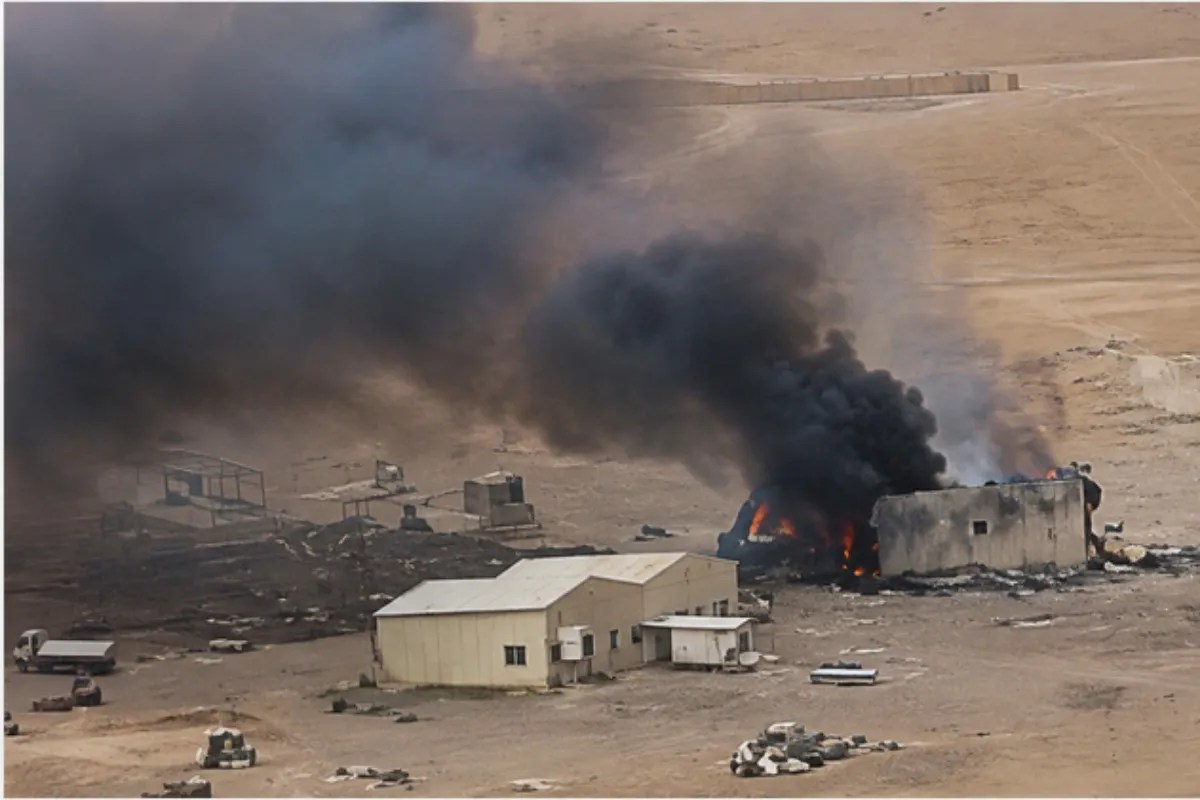
At least 38 Yemeni government soldiers were killed and dozens more wounded when coordinated Houthi missile and drone strikes targeted military camps across the central and eastern provinces of Marib and Hadramawt. This devastating assault shattered what remained of a long-standing 2022 truce, marking one of the bloodiest single-day spikes in casualties since the broader regional theater began bleeding into domestic Yemeni flashpoints.
The strikes hit with chilling precision. Early-morning formations at strategic installations, including the al-Ruwaik camp in Marib and positions near the Saudi border in Al-Abr and Al-Wadiah, turned into chaotic killing fields. For years, the front lines had settled into an uneasy, frozen stagnation. That illusion of stability has evaporated.
Anatomy of a Broken Ceasefire
The 200-plus weeks of relative quiet brokered by the United Nations were always fragile. Beneath the surface, both sides used the pause to rearm, reposition, and posture. Yet, the catalyst for the current violence stretches far beyond local territorial disputes.
Weeks prior to the bombardment, a direct commercial flight landed in Sanaa from Iran, effectively piercing a long-standing transport barrier. This diplomatic and logistical escalation triggered an immediate cycle of tit-for-tat retaliation. The Houthi movement, emboldened by its posture in regional maritime confrontations, shifted its focus back inland. They claimed the coordinated missile barrage was a preemptive strike against an alleged Saudi military buildup intended to support the internationally recognized government.
Whether that buildup was an imminent offensive or merely defensive posturing matters little now. The rockets flew, the tents burned, and morgues across Marib filled before noon.
The Strategic Calculation in Marib and Hadramawt
Marib has always been the ultimate prize. As the final major stronghold of the Saudi-backed government in northern Yemen, holding Marib prevents total Houthi hegemony over the former North Yemen territories. When ballistic missiles and loitering munitions struck the al-Ruwaik military camp during morning drills, the objective was psychological as much as it was tactical.
By striking deep into Marib and extending operations eastward into Hadramawt near the border crossings, the Houthi command signaled an expanded operational reach. They are no longer merely defending territory or harassing Red Sea shipping lanes. They are aggressively rolling back the defensive perimeter of the state apparatus.
Military analysts tracking the telemetry of the strikes note an increasing sophistication in guidance systems. Years of foreign technical assistance and domestic improvisation have transformed a local militia into a force capable of precision-targeting stationary troop concentrations at distance. Standard-issue early warning systems at these regional camps failed to intercept the incoming ordnance, exposing critical vulnerabilities in baseline force protection.
The Geopolitical Ripple Effect
Yemen cannot be viewed in a vacuum. The internal war is now inextricably linked to broader confrontations involving regional actors and international naval coalitions. As maritime blockades tighten around strategic shipping corridors and economic infrastructure faces persistent threats, domestic actors are finding themselves squeezed by wider geopolitical ambitions.
International bodies issued swift condemnations. The United Nations urged immediate restraint, warning that a return to full-scale hostilities will reverse any humanitarian gains achieved over the past few years. Diplomats in western capitals recognize that the unraveling of the Yemeni truce introduces another volatile vector into an already unstable Middle East.
Yet statements from conference rooms carry little weight on the ground in Hadramawt. The internationally recognized government faces a severe crisis of confidence. When troops assembled for morning roll call can be targeted and liquidated by remote-launched precision strikes, the cost of military service multiplies exponentially. Morale, already fragile after a decade of grinding attrition, is plummeting.
What Lies Beyond the Smoke
The destruction of the camps in al-Ruwaik and Al-Wadiah represents a structural shift. The era of frozen conflict is over. Both the Houthi leadership and the allied coalition forces are pivoting toward active posture adjustments.
Retaliation is promised from the defense ministry, but the structural imbalances remain glaring. The government forces are fractured, plagued by shifting loyalties, and heavily reliant on external sponsorship that fluctuates with political shifts abroad. Conversely, the Houthi movement operates with internal lines of supply, ideological cohesion, and an unyielding commitment to centralizing control.
As smoke clears over the central desert plains, the wounded recover in overwhelmed provincial hospitals, and commanders bury their dead. The war has returned to its baseline, more lethal and less forgiving than before.