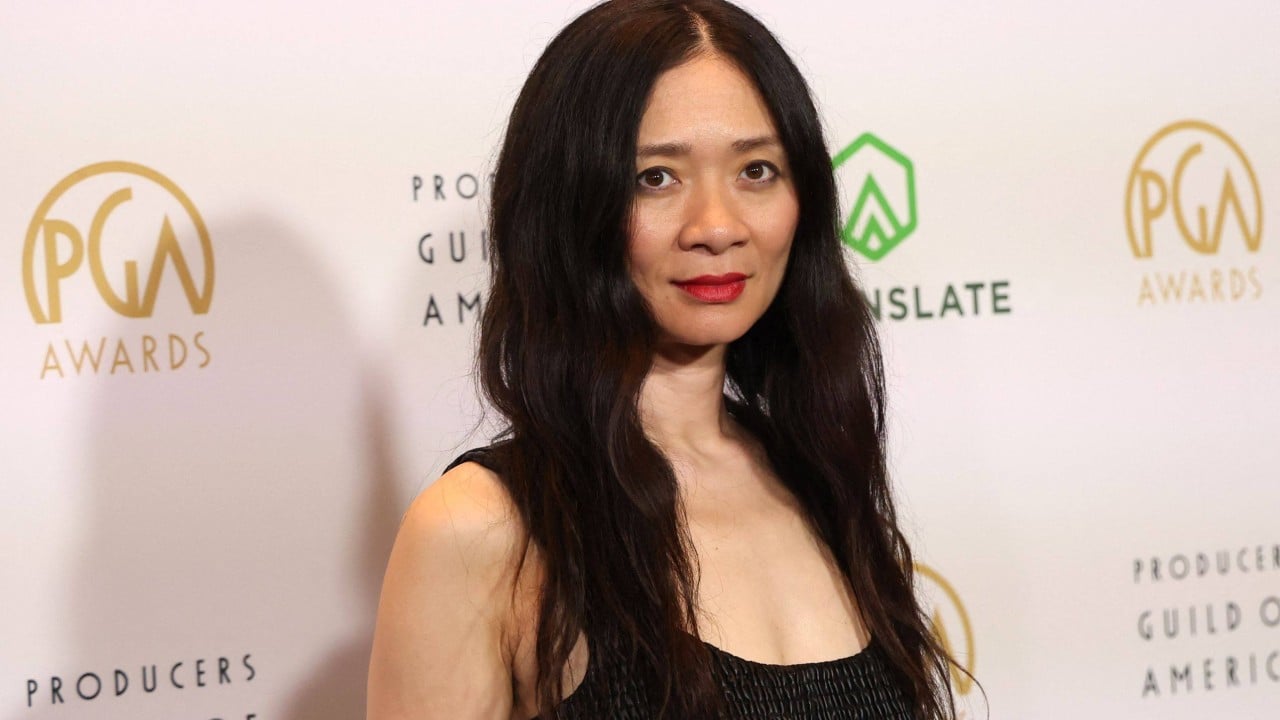
The selection of the Cannes Film Festival jury is not merely a ceremonial assembly of talent but a calculated exercise in brand management and geopolitical soft power. By aggregating specific archetypes—the Hollywood veteran, the arthouse auteur, and the cross-over international star—the festival constructs a temporary governing body designed to validate its prestige. The current iteration featuring Demi Moore, Chloe Zhao, and Stellan Skarsgard serves as a case study in how the festival balances commercial viability with critical rigor to maintain its position at the apex of the cinematic hierarchy.
The Tri-Lens Evaluation Framework
A Cannes jury operates through three distinct evaluative lenses that dictate the trajectory of the films in competition. Understanding these lenses reveals why specific individuals are selected for the panel.
- The Commercial-Prestige Lens: Represented by figures like Demi Moore, this lens assesses a film’s potential for global cultural penetration. Moore’s inclusion brings a legacy of high-budget American cinema, ensuring that the jury does not drift into obscure intellectualism that alienates the broader industry.
- The Technical-Auteur Lens: Chloe Zhao represents the peak of technical and narrative innovation. As an Oscar-winning director who moved from micro-budget indies to massive franchise filmmaking, Zhao evaluates the structural integrity and visual grammar of the entries. Her presence ensures that the Palme d’Or remains a mark of technical mastery.
- The International-Character Lens: Stellan Skarsgard exemplifies the "Prestige Utility" actor. His career spans Lars von Trier’s provocations and Marvel’s blockbusters. He functions as the bridge between European tradition and global marketability, providing a grounded perspective on performance and ensemble dynamics.
The Jury as a Risk Mitigation Engine
The festival faces a recurring systemic risk: the "Echo Chamber Effect," where a jury becomes too focused on a single aesthetic, leading to a winner that fails to resonate outside of the Palais. To counter this, the festival organizers utilize a diversification strategy that treats the jury as a portfolio of assets.
- Geographic Diversification: By pulling members from disparate cinematic cultures (China/USA, Sweden, etc.), the festival prevents regional biases from dominating the discourse.
- Generational Stratification: Mixing veterans with contemporary directors creates a tension between traditional cinematic values and modern sensibilities.
- Genre Expertise: The inclusion of actors and directors who have worked across horror, drama, and action ensures that the "art" of the festival is not limited to a narrow definition of social realism.
The Economic Impact of the Jury’s Verdict
The deliberations of these nine individuals directly influence millions of dollars in distribution rights. A Palme d’Or win functions as a massive marketing subsidy.
The "Winner’s Premium" manifests in three distinct phases:
- Phase 1: Territory Sales: Immediately following a win, international distributors bid aggressively for the rights in their respective regions. The jury’s approval acts as a de facto quality insurance policy.
- Phase 2: Awards Season Momentum: A Cannes win provides a six-month head start on the Academy Award cycle, establishing the "frontrunner" narrative that critics and voters often adopt.
- Phase 3: Back-Catalog Appreciation: For directors and actors, the win creates a permanent "Cannes Winner" tag that increases the valuation of their future projects and historical body of work.
The Mechanism of Deliberation
The jury process is intentionally opaque, but the structural constraints of the festival dictate a specific workflow. The group must watch approximately 20 films over 12 days. This high-density consumption creates "Recency Bias" and "Fatigue Variance."
The first limitation is the schedule. Films screened early in the festival must survive ten days of subsequent competition in the minds of the jurors. This creates a bottleneck where only the most visually or emotionally visceral films remain top-of-mind.
The second limitation is the consensus requirement. The jury cannot simply vote by secret ballot; they must debate until a majority agrees on the distribution of prizes (Palme d’Or, Grand Prix, Jury Prize, Best Director, Best Actor/Actress, and Screenplay). This process often leads to "Compromise Winners"—films that are no one’s absolute favorite but everyone’s second choice, thereby avoiding a veto from any single strong-willed juror.
The Power Dynamics of the Jury President
While the jury is presented as a democracy, the Jury President (in this cycle, Greta Gerwig) wields significant influence over the "Tone of the Room." The President sets the agenda for the final deliberations at the Villa Domergue. A strong President can steer the group toward a specific cinematic philosophy, whether that is radical experimentation or classical storytelling.
The President’s role involves:
- Managing Ego Friction: High-profile stars often have conflicting interpretations of "quality." The President must mediate these disputes to ensure a cohesive prize list.
- Time Management: Ensuring the group does not spend six hours debating a minor prize at the expense of the Palme d'Or.
- External Pressure Insulation: Protecting the jurors from the immense social and industry pressure that permeates the Croisette during the final 48 hours.
Analyzing the 2024 Selection Logic
The appointment of Demi Moore specifically signals a shift toward reclaiming the "Movie Star" era of Cannes. Following a period where the festival leaned heavily into austere international cinema, the 2024 jury composition suggests a desire to reunite high art with high glamour.
Chloe Zhao’s presence is a strategic nod to the "New Guard." Her ability to bridge the gap between the Beijing film scene and Hollywood's elite makes her an invaluable asset for a festival that is increasingly looking toward the East for both content and capital.
The Fragility of the Consensus Model
Despite the rigorous selection process, the jury system is prone to "Black Swan" events—outlier decisions that baffle the industry. This usually occurs when the group dynamics lead to a "groupthink" scenario where a specific political or social message overrides the aesthetic evaluation of the films.
The festival manages this risk by selecting jurors with documented histories of independent thought. Stellan Skarsgard, for instance, is known for a blunt, pragmatic approach to the craft, which acts as a check against overly sentimental or purely "message-driven" selections.
The final strategic move for any filmmaker in competition is to identify the "Swing Juror." In this panel, it is likely the mid-career directors who do not have the legacy of Moore or the recent massive success of Zhao. These individuals often become the tie-breakers in the final hours of deliberation. The ultimate success of the 2024 Cannes Film Festival will be measured not by the standing ovations in the theater, but by whether this specific configuration of jurors selects a winner that can survive the transition from the Mediterranean coast to the global box office.
Filmmakers should focus their technical execution on the "Zhao Standard" of visual storytelling while ensuring their narrative arc possesses the "Moore Scale" of universal accessibility. This dual-path approach is the only way to capture a unanimous vote from a panel built on such divergent cinematic pillars.