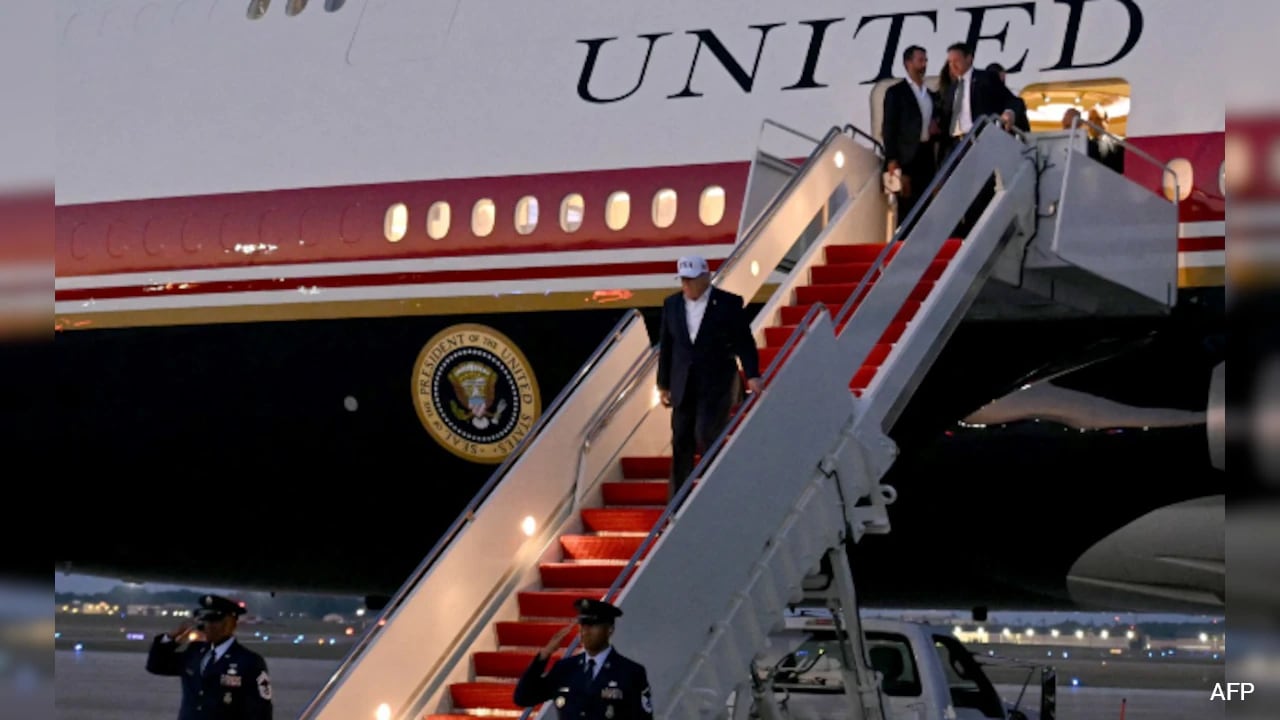
President Donald Trump boarded a newly re-painted Boeing 747-8 at Joint Base Andrews, initiating a fresh era of presidential transport that skips traditional military procurement entirely. The aircraft represents a luxury upgrade wrapped in intense geopolitical friction. Valued at $400 million, the massive jumbo jet arrived not from the standard assembly lines of American defense contractors, but as a direct gift from the royal family of Qatar.
The White House insists the arrangement saves money. Critics call it something else entirely. While the administration champions the zero-dollar acquisition price as a victory for the American taxpayer, a closer look at the logistical reality, hidden structural costs, and defense compromises reveals a far more volatile trade-off.
A Fragile Bridge in the Clouds
The aircraft serves as a temporary substitute. A multi-year delay in Boeing’s official replacement program forced the government to seek an interim solution as the existing decades-old fleet grew increasingly expensive to maintain.
The administration rushed the Qatari jet into active service to fill this operational gap. To meet the deadline, engineers had to limit structural changes. According to defense analysts who reviewed early images of the modified jet, this haste resulted in a presidential aircraft that lacks the heavy-duty defensive systems standard on modern military command posts. The plane does not feature the complete suite of advanced missile detection and electronic countermeasure systems that protected previous commanders in chief during international crises.
Security took a back seat to speed. Aviation analysts note that the absence of heavy shielding and specialized tactical antennas indicates the plane is effectively limited to domestic flight paths. Taking the jet into contested international airspace would expose the executive branch to unprecedented risks, transforming what should be a flying fortress into a vulnerable commercial transport with a custom paint job.
The Illusion of Free Transport
Bargains rarely come without strings attached. While the hull itself cost nothing to acquire, retrofitting a foreign-owned commercial airliner to meet basic American military flight standards requires hundreds of millions of dollars.
The Air Force spent massive sums just to prepare for the plane's arrival. Taxpayers funded a complete three-dimensional interior mock-up to train crews, alongside separate leasing agreements for identical training hulls. The Secretary of the Air Force previously conceded to lawmakers that initial security upgrades alone would approach $400 million.
The financial diversion ripples across the wider military budget. Funds originally meant to support critical defense modernization efforts, including the struggling Sentinel intercontinental ballistic missile program, were redirected to expedite this executive transport project.
Gold Leaf and Diplomatic Leverage
The aesthetic choices speak volumes. The traditional light-blue exterior chosen during the Kennedy era has vanished, replaced by a dark navy hull accentuated with sharp red and gold lines.
Inside, the environment mirrors a luxury hotel rather than a military hub. White House officials shared images detailing glossy wood paneling, heavy leather captain's chairs, and spacious meeting rooms. Aides and press corps members travel in plush passenger cabins equipped with massage seats and individual entertainment setups.
The geopolitical price tag is harder to quantify. Qatar has long sought to cement its standing as an indispensable intermediary in Middle Eastern diplomacy, balancing relationships with Western allies against ties to regional militant groups. Handing a $400 million asset to the American presidency grants Doha an extraordinary degree of soft-power access.
The transaction establishes a dangerous precedent for executive independence. Ethicists warn that accepting high-value corporate or foreign assets blurs the line between statecraft and personal favor. The administration's plan to eventually transition the aircraft into a private presidential library upon retirement only deepens the ethical quagmire, leaving the public to wonder who truly benefited from the deal.
Scripps News report on Trump's first flight provides direct footage and broadcast coverage detailing the aircraft's initial flight to North Dakota and the unfolding public response.