Sound arrives before sight.
You feel it in the floorboards first—a low, rhythmic thrum that rattles the ceramic coffee mugs on the kitchen counter and makes the windowpanes hum in their wooden frames. Then comes the shadow. It blots out the afternoon sun, stretching long and heavy across the manicured lawns of Washington, swallowing the trees whole. Meanwhile, you can explore related events here: Why Moscow Creating a Dedicated Drone Force is a Desperate Trap Not a Masterstroke.
It is the Sikorsky VH-92A Patriot, though everyone still just calls it Marine One.
To watch it land is to watch a physics problem solve itself in real time. Twin engines roar with a violence that forces you to take a step back, shielding your eyes from the sudden hurricane of dust and clipped grass blades. This is not just a helicopter. This is an airborne command center, a technological marvel wrapped in dark green and white, built to carry the most powerful person on Earth through the worst days imaginable. To explore the full picture, we recommend the recent report by USA Today.
And it demands room.
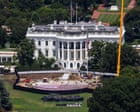
Recently, the White House confirmed a quiet, unglamorous infrastructural necessity: a brand-new helipad built specifically to accommodate this supersized aircraft.
Read that sentence again, and strip away the bureaucratic packaging. A new helipad. Concrete poured, steel reinforced, millions of dollars spent, all because the presidential fleet outgrew the pavement it used to rely on.
Progress is heavy.
Consider what happens next. When a machine grows larger, heavier, and more sophisticated, everything around it must bend to accommodate its weight. For decades, the older VH-3D Sea King helicopters carried presidents across oceans, lawns, and crisis zones. They were workhorses of another era. But technology marches forward, security demands tighten, and communication systems multiply. The VH-92A emerged as the modern answer to an increasingly dangerous world.
It is packed with encrypted networks, defensive countermeasures, and enough armor to make a tank look fragile.
Yet, an upgrade in the air creates a crisis on the ground.
Walk the South Lawn on a quiet morning. The grass is impossibly green, tended by groundskeepers who treat every blade like a national asset. Beneath that velvet carpet, however, lies the hidden reality of presidential transit. The original landing zones, engineered decades ago, were never designed to shoulder the immense weight and intense downwash heat of the new fleet. The sheer thermal blast from the VH-92A's engines can scorch turf, crack foundational slabs, and destabilize older subsurface utilities.
So, construction begins.
It is easy to scroll past the headline as dry bureaucratic procedure. Another government project. Another line item in an endless federal budget. But behind that headline is a story about scale, adaptation, and the physical footprint of modern power.
Think about the logistical dance required to modify the most scrutinized piece of real estate on the planet. Every yard of concrete brought through the gates is vetted. Every construction worker undergoes rigorous background checks. Heavy machinery rolls onto historic grounds where every inch has witnessed a century of American history. Heavy iron meets heritage soil.
The new helipad is not just a slab of reinforced stone. It is a symbol of how governance evolves under the pressure of new threats.
When threats change, the tools change. When the tools change, the architecture changes.
We forget that history is built with materials. We talk about policies, treaties, elections, and speeches as if they exist purely in the ether of television screens and digital feeds. We forget the dirt. We forget the steel. We forget that keeping a leader mobile, connected, and alive requires physical engineering of staggering proportions.
A helicopter pilot grips the cyclic, feeling the immense tension of dual turbine engines winding down. The rotors slow from a frantic blur into distinct, sweeping blades. The dust settles.
The president steps out into the crisp air, walking toward the Oval Office.
Behind them, the new pad stands silent and dark, cooling in the twilight, already waiting for the next time the earth begins to shake.