At 2:00 AM in Mid-Levels, the air conditioner hums like a distant turbine, and the glow of a smartphone illuminates a spreadsheet that refuses to add up.
David—a composite character representing tens of thousands of middle-class professionals across the harbor—stares at the numbers. His thumb hovers over the mortgage calculator. Every quarter-point hike from the Federal Reserve across the Pacific doesn't just stay in Washington; because of the Hong Kong dollar's strict peg to the greenback, that shockwave travels straight through the submarine cables, hits the Hong Kong Monetary Authority by breakfast, and lands directly in David’s monthly bank statement by the first of the month.
Fear. It tastes like cold coffee and stale air in a 450-square-foot flat.
If you listen to the cocktail-party chatter in Central or scroll through the panic-stricken threads on local financial forums, you would think the city is standing on the edge of 1997 all over again. Back then, the Asian Financial Crisis tore through the territory like a typhoon without warning. Interest rates skyrocketed, property values plummeted by nearly seventy percent over six years, and thousands of families found themselves trapped in negative equity—owing the bank far more than their concrete boxes were worth. That trauma isn't just history here; it is inherited memory, passed down at dim sum tables like a warning against hubris.
Yet, when you step back from the visceral dread of the monthly mortgage debit and examine the actual structural wiring of Hong Kong’s housing market today, a startling contradiction emerges. The panic feels real, and the squeeze on household budgets is undeniable, yet the market itself is engineered to survive this exact storm far better than it ever has in modern history.
The Ghosts of 1997 and the Invisible Armor
To understand why today’s rate environment won't trigger a systemic collapse, you have to look at what regulators built in the quiet years between crises.
Consider a simple analogy. Imagine a coastal village that gets flattened by a once-in-a-century tsunami. When the survivors rebuild, they don't just put up prettier wooden huts; they pour twenty-foot-thick reinforced concrete seawalls, mandate that every house be built on steel stilts, and forbid anyone from storing gunpowder in the basement. When the next storm rolls in, the wind still howls, the rain still batters the windows, and people still feel terrified inside—but the foundations hold.
Hong Kong’s property market is that reinforced village.
Over the past decade and a half, the Hong Kong Monetary Authority (HKMA) systematically stripped the speculative rot out of the mortgage system. During the frenzy of the late 1990s, buyers routinely leveraged themselves to the hilt, borrowing ninety percent or more of a property’s value on razor-thin margins. Today, the average loan-to-value ratio across new mortgages sits comfortably around fifty to sixty percent. That means nearly half of the equity in Hong Kong’s residential towers is already paid for in hard cash.
More importantly, look at the stress tests. For years, before a bank could hand David the keys to his flat, he had to prove he could still pay his mortgage if interest rates jumped by a full two to three percentage points overnight, all while keeping his debt-servicing ratio below a strict ceiling. Banks didn't just lend to people who could afford today's rates; they lent exclusively to people who could survive tomorrow's disaster.
I remember sitting across from a veteran credit officer in Wan Chai a few years back, watching him reject an applicant who earned a stellar salary but carried too much variable debt. "We aren't in the business of selling dreams anymore," he told me, tapping a thick regulatory binder. "We're in the business of making sure nobody jumps off a roof when the Fed sneezes."
Follow the Cash, Not the Noise
Still, knowing the seawall is thick doesn't stop your stomach from dropping when your monthly payment jumps by four thousand Hong Kong dollars. Let’s be honest about the pain: rate hikes hurt. They eat into discretionary spending, they force young couples to delay having children, and they make the dream of upgrading from a cramped studio to a two-bedroom flat feel like climbing Victoria Peak in flip-flops.
But systemic crashes don't happen because families cancel their summer vacations to Tokyo. Systemic crashes happen when forced sellers flood the market simultaneously, creating a downward spiral where falling prices trigger margin calls, which trigger more forced selling.
And that is precisely what is missing in Hong Kong today.
Look at the cash sitting on the sidelines. Hong Kong remains one of the most cash-rich cities on earth, boasting massive household savings rates and a banking system flush with liquidity. Unlike Western markets where homeowners routinely refinance to pull equity out of their homes to buy cars or fund lifestyles, Hong Kong homeowners treat their mortgages like a war chest to be paid down as aggressively as possible.
Over sixty percent of private residential units in the city are completely mortgage-free. Read that number again. More than six out of every ten private flats in Hong Kong have zero debt attached to them.
When interest rates climb, those owners don't panic. They don't rush to dump their assets at fire-sale prices. Why would they? They have no monthly bank payment squeezing their throat. Instead, they simply pull their listings off the market, wait out the storm, and collect rent from the growing pool of professionals who have decided to lease rather than buy while borrowing costs remain elevated.
The Anatomy of a Slow-Motion Adjustment
Consider what happens next in our hypothetical scenario with David.
Instead of the violent, chaotic crash of 1997, David’s reality looks much more like a slow, grinding stalemate. His monthly HIBOR-linked mortgage rate hits its cap—the built-in ceiling tied to the bank's prime rate that protects borrowers from infinite spikes. It stings. He cuts back on weekend dinners in Soho, renegotiates his internet bill, and puts off buying a new car.
Meanwhile, across the hallway, his neighbor Mrs. Chan—who bought her unit in 2004 and paid off the mortgage three years ago—decides not to sell this year because buyers are offering ten percent less than she wants. She doesn't need the cash. She simply keeps living there.
Multiply David and Mrs. Chan by a million households, and you see the true mechanics of the Hong Kong property market. Transaction volumes dry up. Real estate agents stand outside storefronts in Causeway Bay holding laminated placards in the humid afternoon heat, watching pedestrians walk past without stopping. Prices soften gradually, shaving off five, ten, or fifteen percent from peak valuations—a healthy, albeit uncomfortable, letting out of air rather than a catastrophic explosion.
Even the rental market acts as a shock absorber. Because fewer buyers are willing to lock in higher mortgage rates, rental demand surges, pushing yields upward. For cash-rich investors watching fixed-deposit rates fluctuate, suddenly a physical apartment generating steady, rising rental income begins to look attractive again, putting a natural floor under property prices.
The Psychology of Scarcity
There is another truth that spreadsheets in New York or London consistently fail to capture when analysts predict the demise of Hong Kong real estate: geography and human desire.
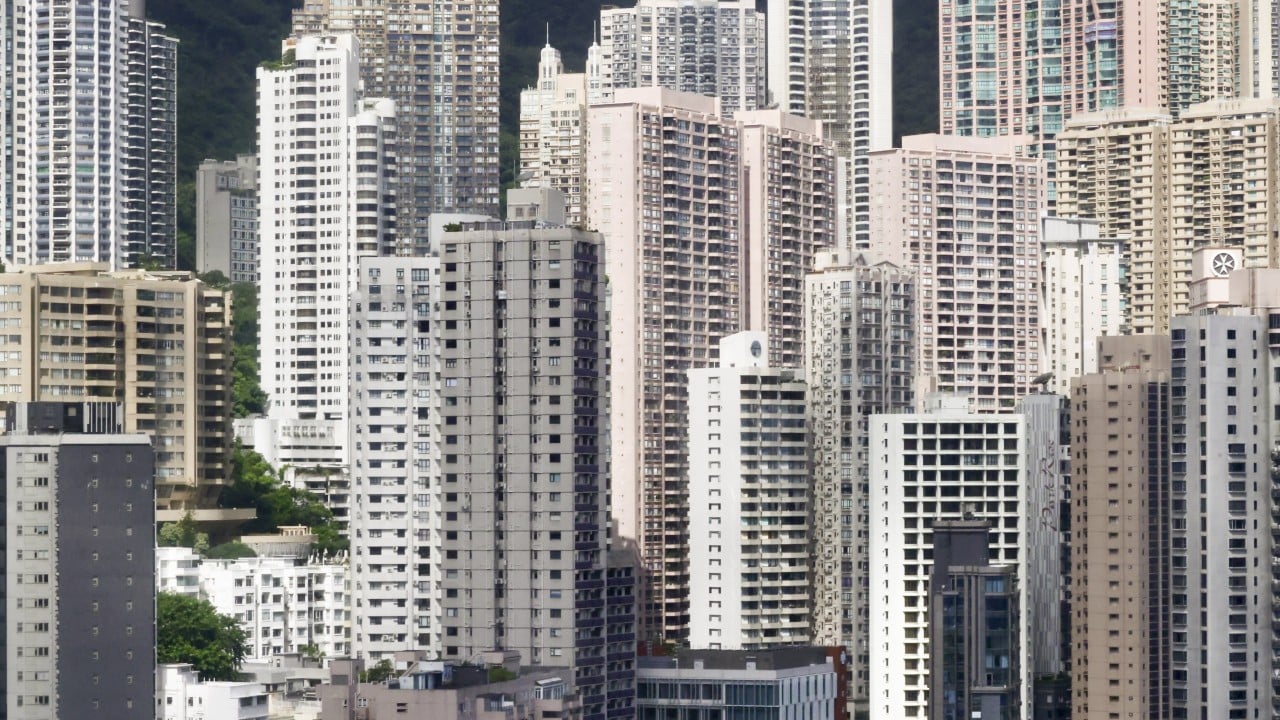
Step onto the Star Ferry at dusk and look back at the skyline. Those towers aren't sprawling across an endless plain; they are wedged into a sliver of reclaimed land between granite mountains and deep water. Land supply in Hong Kong isn't just tight; it is a tightly controlled, multi-year political and engineering bottleneck. You cannot simply throw up ten thousand suburban tract homes over a weekend when demand returns.
For decades, generations of families have viewed brick and mortar not merely as shelter, but as the ultimate store of generational security in a volatile world. Currency fluctuations, geopolitical shifts, stock market swings—through all of it, the physical deed to a flat in Kowloon or on the Island has remained the bedrock of family wealth.
When the government dismantled the remaining cooling measures—scrapping the punitive stamp duties that had kept mainland buyers, investors, and second-home purchasers locked out for over a decade—it wasn't an act of desperation. It was the release of a pressure valve that had been clamped shut for fourteen years. The moment those barriers came down, pent-up demand rushed back into showrooms, proving that the underlying appetite for Hong Kong property hadn't vanished; it had merely been waiting in the lobby.
Living Inside the Reality
None of this makes David’s 2:00 AM math any easier this month. Vulnerability requires admitting that macroeconomics offers cold comfort when you are staring at a higher bill at the end of a long workweek. The era of near-zero interest rates spoiled a generation of borrowers into believing that cheap money was a permanent birthright rather than a historical anomaly. Adjusting back to normal costs of capital feels like climbing uphill with weights strapped to your ankles.
Yet there is a profound difference between feeling uncomfortable and being in danger.
The headlines will continue to scream whenever central banks signal another pause or another quarter-point nudge. Pundits who have predicted the collapse of Hong Kong every year since 1998 will continue to recycle their warnings.
Let them talk. Out on the harbor, the morning ferry cuts through the grey water, carrying thousands of workers back into the steel-and-glass canyons of the city. Above them, the concrete towers stand anchored deep into the bedrock, built for typhoons, built for tremors, and quietly outlasting the storm.