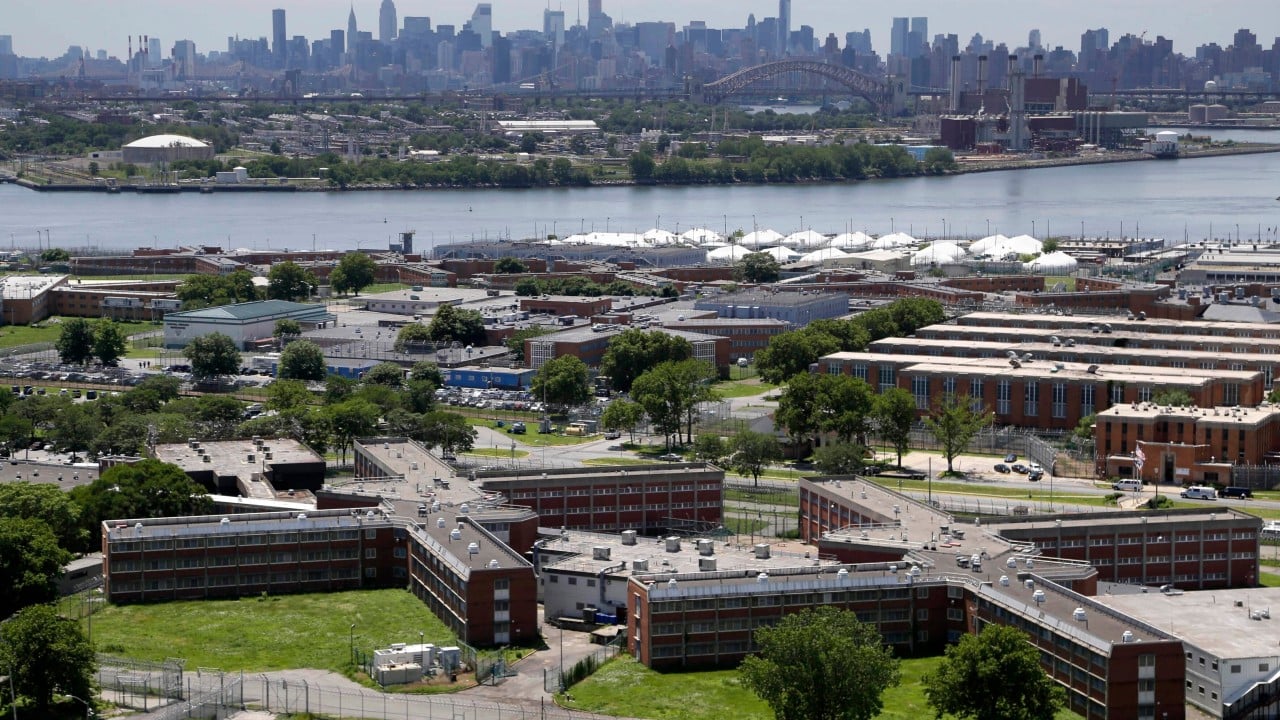
The wind off the East River does not blow; it scrapes. Stand on the edge of Astoria Park on a Tuesday morning in November, look north across the water past the industrial silhouettes of Queens, and you will see four hundred acres of flat, grey land tethered to the mainland by a single, narrow umbilical cord of concrete and steel.
Rikers Island.
To most New Yorkers, it is a blur out the window of a LaGuardia-bound cab, a punchline in a courtroom drama, or a headline skimmed over coffee. To the people who have walked across the Francis R. Buono Memorial Bridge in shackles, or the mothers who have boarded the Q100 bus at 4:00 AM clutching clear plastic bags of approved toiletries, it is something else entirely. It is a machine designed to evaporate human time.
And now, Zohran Mamdani has put a detailed, audacious blueprint on the table to shut its gates for good.
Politicians have promised to close Rikers before. In 2017, the city council voted to shutter the complex by 2026—a deadline that slipped, stumbled, and collapsed under the weight of construction delays, soaring budgets, and political hesitation. Every mayor promises reform; every administration inherits the same sprawling, decaying archipelago of ten jails. So when Mamdani, the democratic socialist assemblymember from Queens and mayoral contender, unveiled his comprehensive plan to dismantle the Rikers apparatus, the collective reaction across the five boroughs was a mixture of fierce hope and bone-deep skepticism.
Can you actually close a city within a city? What happens to the thousands of people locked inside it today? And why does a strip of landfill in the East River cost taxpayers more than half a million dollars per person, every single year, just to produce misery?
To understand Mamdani’s plan—and why its success or failure defines the moral architecture of New York—you have to step off the bridge and inside the walls.
The Architecture of Waiting
Consider a hypothetical scenario, grounded in the daily reality of New York’s criminal legal system.
Meet Marcus. He is twenty-four years old, works stock overnight at a grocery store in the Bronx, and has never been convicted of a felony. One night in October, a dispute on a subway platform escalates. Arrests are made. Charges are filed. A judge sets bail at fifteen thousand dollars—an amount that might as well be fifteen million to a family living paycheck to paycheck.
Marcus is put on a Department of Correction bus. He crosses the bridge.
Here is the fundamental truth about Rikers Island that outsiders routinely misunderstand: it is not a prison. Prisons hold people who have been convicted of crimes and sentenced to serve time. Rikers is a jail. Roughly eighty-five percent of the people sleeping on its thin, plastic-covered mattresses tonight have not been convicted of the charges holding them there. Under the law, they are innocent.
Yet the moment Marcus passes through intake, innocence becomes an administrative abstraction.
He enters a world of broken cell doors that lock with chains and padlocks because the electronic mechanisms failed years ago. He breathes air thick with the smell of bleach, stagnant water, and unwashed concrete. The heating system in the older facilities either roasts a housing unit to ninety degrees or leaves inmates shivering in sweatshirts through January. Because the facility sits isolated in the river, far from the courthouses in Manhattan, Brooklyn, and the Bronx, a simple fifteen-minute court appearance requires waking up at 3:30 AM, being shackled to a bench in a holding pen for six hours, and often being told at 2:00 PM that the court date was adjourned—meaning the entire exhausting ritual will repeat next month.
Wait.
That is the real sentence on Rikers Island. Not a verdict handed down by twelve peers, but the slow, grinding erosion of a life while waiting for a day in court that never seems to arrive. Weeks turn into months. Months bleed into years. Jobs vanish. Apartments are lost. Relationships fracture under the strain of dropped collect calls and cancelled visits. By the time a prosecutor finally offers a plea deal—time served, go home today—an innocent person will sign almost anything just to cross back over that bridge.
We built a system where the process itself is the punishment.
The Price of Dysfunction
If the human toll does not move the needle for hardened pragmatists, the ledger sheet should.
New York City spends roughly $550,000 per year to incarcerate a single person on Rikers Island. Pause and let that figure settle. For the cost of keeping one human being in a crumbling cell with inadequate medical care and rampant violence, the city could pay tuition at an Ivy League university, rent a luxury apartment in Manhattan, hire a private therapist, and still have money left over.
Where does that money go? Not into rehabilitation. Not into safety. It vanishes into the black hole of geography and institutional rot.
Because Rikers is an island with no subway access and miles of perimeter fencing, transporting a detainee to a hospital, a lawyer’s office, or a courtroom requires an army of correction officers, buses, and logistical redundancies. Overtime budgets have ballooned into the hundreds of millions of dollars as chronic absenteeism—driven by burnout, injury, and a toxic workplace culture—leaves shifts dangerously understaffed.
Think of Rikers Island like an old, poorly insulated house with a cracked foundation and burst pipes. Every winter, the city spends millions pumping heat into rooms with broken windows, patching leaks with duct tape while the floorboards rot underneath. At a certain point, spending more money to maintain a ruin is not fiscal responsibility. It is arson with a checkbook.
Between 2021 and 2025, dozens of people died in city custody—from overdoses, untreated medical emergencies, suicides, and violence inside facilities where officers had abandoned their posts. Federal monitors issued report after blistering report, warning that the Department of Correction had lost basic operational control. The question is no longer whether Rikers can be fixed. The question is how quickly we can stop feeding lives and public funds into its furnace.
Inside the Mamdani Blueprint
This is the terrain Zohran Mamdani stepped onto when he released his plan to close Rikers Island.
Unlike previous proposals that treated jail closure purely as a real estate construction project—tearing down one set of cages to build slightly newer cages in four boroughs—Mamdani’s strategy attacks the crisis at both ends of the pipeline. His premise is direct: you cannot build your way out of mass incarceration, and you cannot close Rikers while the city keeps pouring thousands of people into it every month.
The plan rests on three structural pillars, each designed to dismantle a specific gear in the Rikers machine.
First: Radical Decarceration Before Construction.
The single biggest obstacle to closing Rikers has always been the headcount. The borough-based jail plan—designed to replace Rikers with smaller, modern facilities in Manhattan, Brooklyn, Queens, and the Bronx—was built around a target population of roughly 3,300 detainees. Yet the population on Rikers has stubbornly hovered above 6,000, sometimes climbing past 7,000. You cannot pour two gallons of water into a one-gallon jug.
Mamdani’s plan tackles that math head-on. It calls for an immediate audit of everyone held on Rikers, prioritizing the release of people detained solely on technical parole violations, low-level misdemeanors, or inability to pay cash bail. More importantly, it targets the single largest demographic shift inside the jails over the past decade: New Yorkers living with serious mental illness.
Today, Rikers Island is effectively the largest psychiatric institution in New York State. Nearly half of the people held there have a mental health diagnosis; roughly one in five suffers from a serious mental illness like schizophrenia or bipolar disorder. Locking someone experiencing a psychotic episode in a concrete box does not treat them. It terrifies them, destabilizes them, and triggers conflicts with staff who are trained as guards, not clinicians. Mamdani’s blueprint redirects hundreds of millions of dollars from the Department of Correction budget into supportive housing, involuntary-free crisis stabilization centers, and community-based psychiatric beds—moving people out of cells and into actual care.
Second: Fixing the Broken Clock of the Courts.
Why do people sit on Rikers for two, three, or four years awaiting trial? Because New York’s court system moves at a glacial pace.
Mamdani proposes pairing jail closure with aggressive court-system reforms: expanding funding for public defenders and prosecutors specifically tied to discovery compliance, increasing the number of active criminal court judges, and establishing strict, enforceable timelines for pre-trial detention. Under his framework, if the state cannot bring a case to trial within a statutory window, the default cannot be indefinite warehousing on an island.
Third: Reclaiming the Land and Rethinking the Borough Jails.
What happens to the four hundred acres in the East River once the last bus crosses the bridge?
For years, environmental advocates and urban planners have looked at Rikers with a bold vision: Renewable Rikers. The island sits directly adjacent to LaGuardia Airport and the Astoria power grid. Mamdani’s plan fully embraces transforming the island from a monument to punishment into a hub for green infrastructure—solar arrays, battery storage facilities, and wastewater treatment upgrades that would allow New York to shut down polluting peaker power plants in low-income neighborhoods of Queens and the Bronx.
At the same time, his proposal confronts a thorny political reality that divides even progressive allies: the four borough-based jails currently under construction. Critics on the left argue those towering facilities simply replicate Rikers in residential neighborhoods; critics on the right argue closing Rikers without them is reckless. Mamdani threads this needle by insisting that any borough-based facility must be dramatically downsized in capacity, stripped of punitive architecture, and paired with guaranteed community investments—parks, clinics, and affordable housing—in the neighborhoods hosting them.
The Friction of Reality
Let us be honest about the doubts. Whenever a bold plan meets the machinery of New York City politics, skepticism is not cynicism; it is survival instinct.
If you live in Chinatown, Downtown Brooklyn, Kew Gardens, or Mott Haven, the promise of closing Rikers sounds very different when a thirty-story detention tower is rising three blocks from your child’s elementary school. Residents in those neighborhoods have watched construction cranes block out the sun while billions of dollars in cost overruns pile up. They ask a fair question: Why should we trust City Hall to keep the population cap low when every previous promise has been broken?
And then there is the question of public safety.
In subways and bodegas across the city, anxiety about street crime and repeat offenders is real. You cannot dismiss a shopkeeper’s fear with a policy white paper. Critics of Mamdani’s plan—including police unions, correction officer associations, and moderate Democrats—warn that shrinking jail capacity too aggressively could tie judges’ hands when dealing with individuals charged with violent offenses. They argue that the borough-based jails are already behind schedule, pushed past 2027 and potentially into the early 2030s, making any rigid closure timeline a fantasy.
Those concerns are not trivial. I have stood in community board meetings where the air vibrated with anger—from families whose loved ones were harmed inside Rikers, standing ten feet away from families whose loved ones were harmed on the street. Both groups want safety. Both groups feel abandoned by institutions that promise protection and deliver chaos.
Yet look closely at the argument that keeping Rikers open keeps New York safe. Does it?
Nearly everyone who goes to Rikers eventually comes home. Over ninety-five percent of detainees return to the five boroughs. When we send a twenty-year-old to an island where survival requires joining a gang, where untreated trauma festers in solitary confinement, and where they emerge with no housing, no job, and a shattered nervous system, we are not preventing crime. We are manufacturing it. Rikers Island is a recidivism engine disguised as a security measure.
What Happens When the Bridge Empties
History offers a quiet lesson about institutions once thought permanent.
In 1825, New York built Blackwell’s Island—now Roosevelt Island—to house its outcasts: a lunatic asylum, a smallpox hospital, a workhouse, and a penitentiary. For over a century, the city ferried its most vulnerable and troublesome citizens across the East River so polite society would not have to look at them. Today, families ride an aerial tramway over that same water to walk along manicured promenades, live in mixed-income apartments, and study at a world-class engineering campus.
Geography is not destiny. Policy is.
Rikers Island exists in its current form because, in the 1930s, city planners decided it was convenient to sweep human problems onto a landfill out of sight. For ninety years, that invisibility enabled cruelty. Nobody saw the mold on the walls because nobody had to walk past it on their way to work. Nobody heard the screams from punitive segregation because the East River swallowed the sound.
Mamdani’s plan is an attempt to strip away that invisibility. By insisting that justice must happen inside the communities it affects, that mental illness belongs in hospitals rather than cages, and that four hundred acres of waterfront belong to the city’s ecological future rather than its punitive past, the blueprint forces New York to grow up.
Will every piece of his proposal survive the brutal gauntlet of Albany legislation, union negotiations, and municipal budget battles? Almost certainly not intact. Real governance is messy, compromised, and slow. The concrete towers in the boroughs will face more delays; prosecutors and defenders will clash over discovery rules; politicians will flinch at the first tabloid headline.
But movement begins when someone draws a line in the dirt and refuses to pretend that an atrocity is normal.
Picture that bridge across the East River five years from now.
Imagine a morning when the Q100 bus does not stop at a razor-wire checkpoint. Imagine the gates standing open, not to admit another shackled teenager whose only crime was being poor, but to let electricians, landscapers, and engineers walk onto a peninsula gleaming with solar panels, turning the wind and sunlight off the water into clean power for the Bronx.
The island is still there, anchored in the river. The only question left is what we choose to build on it.


