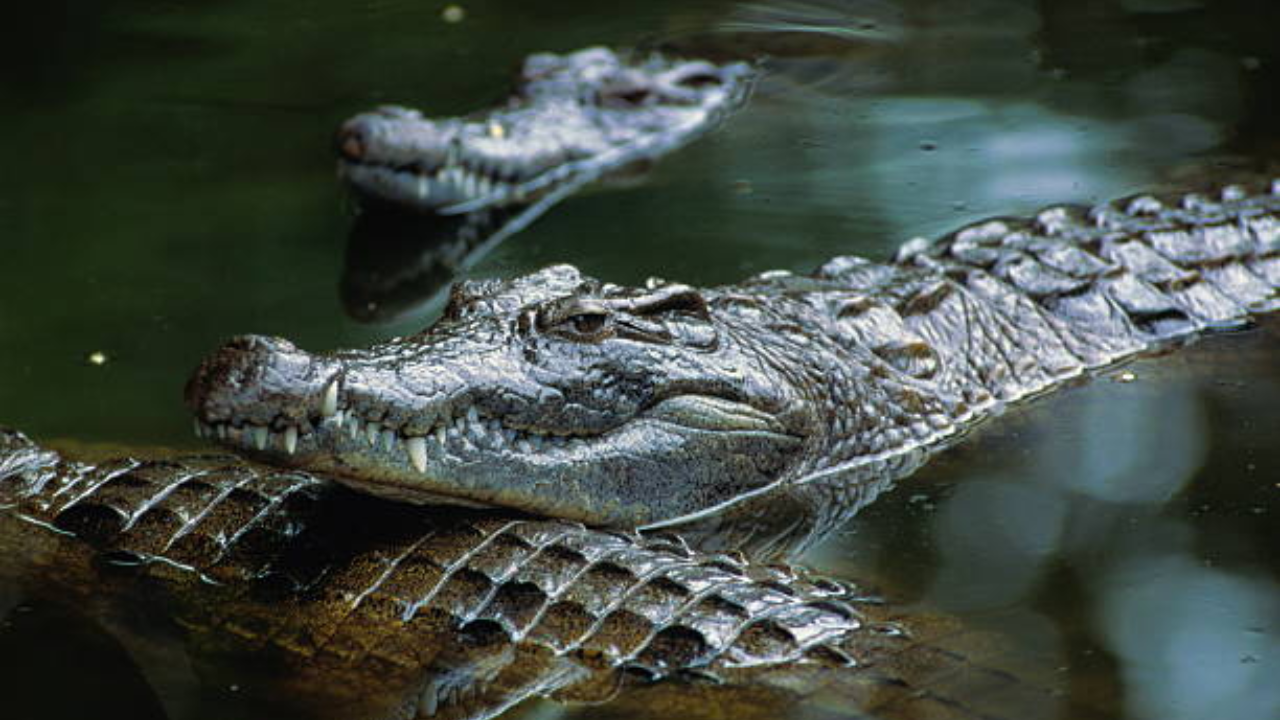
The heat in the valley does not merely warm the skin; it presses down with physical weight, smelling faintly of sun-bleached dust, fermenting poultry feed, and ancient, stagnant water. Here, beneath the unforgiving glare of the Middle Eastern sun, sits a monument to a miscalculated ambition. Concrete walls rise from the dry earth, topped with rusted razor wire and heavy mesh. Inside, the surface is deceptive. At first glance, the green-brown ponds look still. Lifeless.
Then water shifts.
A ripple spreads outward, silent and sudden. Two amber eyes break the surface, followed by a ridge of armored scales that catches the harsh light. Weight. Power. Pure, unfiltered antiquity staring back through a chain-link fence.
This is not a sanctuary. Nor is it a zoo. It is an administrative purgatory.
To understand how more than a thousand Nile crocodiles came to inhabit a high-security holding facility in Israel, one must travel backward through decades of shifting commercial dreams, regulatory pivots, and the stubborn biology of apex predators. Animals do not care about zoning laws. They do not understand import bans, changing global fashion tastes, or bankruptcy filings. They simply need meat, space, and time. And in the Jordan Valley, time ran out.
The Economics of Scale and Teeth
Decades ago, the vision was straightforward. Agriculture in Israel’s arid borderlands required constant adaptation, and enterprising farmers looked at the Nile crocodile—a creature native to the region's deeper history before being hunted to local extinction—and saw an untapped commodity. The logic of the era was purely industrial. Skin for luxury leather goods. Meat for niche markets. Tourists for roadside attractions.
For a time, the farms hummed with activity. Hatcheries clicked under warm lamps. Concrete enclosures multiplied across the landscape. Entrepreneurs invested heavily, believing they had secured a profitable niche in the desert economy.
Markets shift. Sensitivities evolve. International pressure mounted against the commercial breeding of crocodilians for luxury apparel. Animal welfare advocacy groups began exposing the grim realities behind the exotic leather trade. Concurrently, global regulatory frameworks tightened. The permits grew scarce. The export markets dried up.
What happens when an industrial machine breaks down, but the product is four meters long, weighs half a ton, and possesses a bite force capable of crushing bone?
You cannot liquidate inventory on an open market when the inventory can consume the auctioneer.
The farms went insolvent. The owners, facing mounting debt and tightening legal prohibitions, faced an impossible financial burden. Feeding hundreds of massive carnivores requires tons of slaughtered poultry and red meat weekly. Maintenance of reinforced security barriers demands constant capital. When the money vanished, the owners vanished with it.
Yet the crocodiles remained.
The Watcher at the Gate
Avi knows the sound of hunger. It is not a roar. It is a dull, heavy thud against concrete, followed by the wet splash of water displaced by thousand-pound bodies sliding toward the fence line.
Avi is a veteran agricultural inspector, a man whose boots are permanently gray with valley dust. For thirty years, his job was supposed to be about water quotas, date palm yields, and drip-irrigation lines. Instead, he inherited the ghost industry.
"People think of them as monsters," Avi says, leaning against a sun-warmed concrete pillar, his eyes shaded beneath a worn baseball cap. "They aren't monsters. They are simply efficient. They have spent millions of years perfecting the art of doing nothing until the exact moment to kill. And now, we have locked them in a box with no exit, and we are expected to play God with their feeding schedule while the politicians figure out whose budget pays for the chicken necks."
To walk the perimeter of the facility is to witness a masterclass in bureaucratic paralysis. On one side of the fence lies some of the most contested and valuable real estate in the region—arid land eyed by municipal planners for agricultural expansion or residential development. On the other side sits a biological time bomb.
If the facility is abandoned, the walls breached, or the management abandoned entirely, the consequences do not bear thinking about. The Jordan River sits dangerously close. A breakout of hundreds of large, highly adaptable apex predators into local waterways would spell immediate disaster for regional ecosystems, local fisheries, and human safety.
Yet keeping them alive costs a small fortune every month. A fortune that neither the bankrupt private operators nor the local authorities want to shoulder.
The Collision of Law and Biology
Consider what happens when a state tries to untangle a knot of its own making.
Wildlife protection laws in Israel are strict, designed to preserve and rehabilitate native fauna. But the Nile crocodile occupies a strange legal netherworld. It is a historical native, yet modern populations were reintroduced purely for commercial exploitation. They are not wild animals returning to their ancestral home; they are domestic livestock that happen to possess teeth designed for the Pleistocene.
Environmental ministries argue that the state should not subsidize private commercial ventures that failed. Treasury officials balk at allocating public funds indefinitely to feed redundant reptiles. Meanwhile, animal welfare organizations demand humane treatment, permanent sanctuary status, and absolute guarantees that no animal will be culled or sold into less scrupulous hands abroad.
Every stakeholder is trapped in the same enclosure.
The proposed solutions are as fractured as the concrete ponds. Some advocate for international relocation—shipping the animals to verified sanctuaries in Africa or Asia. But the logistical hurdles are staggering. Transporting a single adult Nile crocodile requires specialized sedation, heavy-duty crates, international veterinary permits, CITES documentation, and tens of thousands of dollars in transport costs. Multiply that by more than a thousand individuals, and the price tag reaches astronomical heights.
Others suggest permanent state-funded containment, transforming the commercial farm into a permanent, publicly managed welfare facility. But this proposal runs headfirst into the realities of land use politics. Every acre in the Jordan Valley is fought over with fierce intensity. Dedicating prime land in perpetuity to house obsolete industrial crocodiles is a bitter pill for local farmers and developers who see missed economic opportunity in every sun-baked acre.
The Silent Threat Beneath the Surface
There is another, quieter anxiety that haunts the inspectors and local residents alike. It is the invisible threat of structural decay.
Concrete cracks under the relentless desert thermal cycle. Rebar oxidizes inside the walls, swelling and bursting the stone from within. Mesh rusts in the humid microclimates of the breeding pools. Every winter brings torrential flash floods to the valley, sweeping down from the Judean Hills, threatening to overwhelm drainage systems and test the integrity of aging barriers.
A hypothetical failure is never purely hypothetical to those who live downriver.
Imagine a sudden, catastrophic structural collapse during a midnight winter storm. The power grid fails. The perimeter lights die. The heavy iron gates, weakened by years of saline water exposure, buckle under the pressure of surging floodwaters mixed with hundreds of displaced, panicked reptiles.
In the span of a single rainy night, the concrete prison dissolves into the murky waters of the valley.
It is this nightmare scenario that keeps local security coordinators awake. It transforms a dry bureaucratic debate over land use and wildlife protection into an urgent, kinetic safety issue. The crocodiles are not waiting for a committee meeting to reach consensus. They are growing larger, living longer, and testing the limits of their containment every single day.
The Metaphor of the Cage
We build systems to extract value from the earth, treating living creatures as raw inputs for an economic engine. We breed, we farm, we capitalize, and we consume. But biology refuses to be neatly filed away under accounts receivable when the market collapses.
The crocodile prison stands as a stark physical manifestation of human hubris. We brought back a creature that predates human civilization, tried to turn it into a luxury handbag accessory, and when the fashion changed and the ledgers bled red, we walked away, leaving behind the heavy doors and the thick walls.
Now, the walls are all that stand between order and chaos.
Avi walks back toward his truck, kicking a loose pebble across the cracked asphalt. Behind him, across the wire, a massive male crocodile hovers motionless in the green water, only its nostrils and armored crest breaking the surface. It does not blink. It does not calculate political capital or worry about the fiscal year. It simply waits.
The sun dips lower over the western ridges, casting long, sharp shadows across the concrete labyrinth. The valley cools for a brief, deceptive moment before night descends, bringing with it the heavy, earthy smell of the riverbeds and the low, resonant thrum of a world held together by rust and resolution.
The gate is locked. The bills are unpaid. The animals are watching.