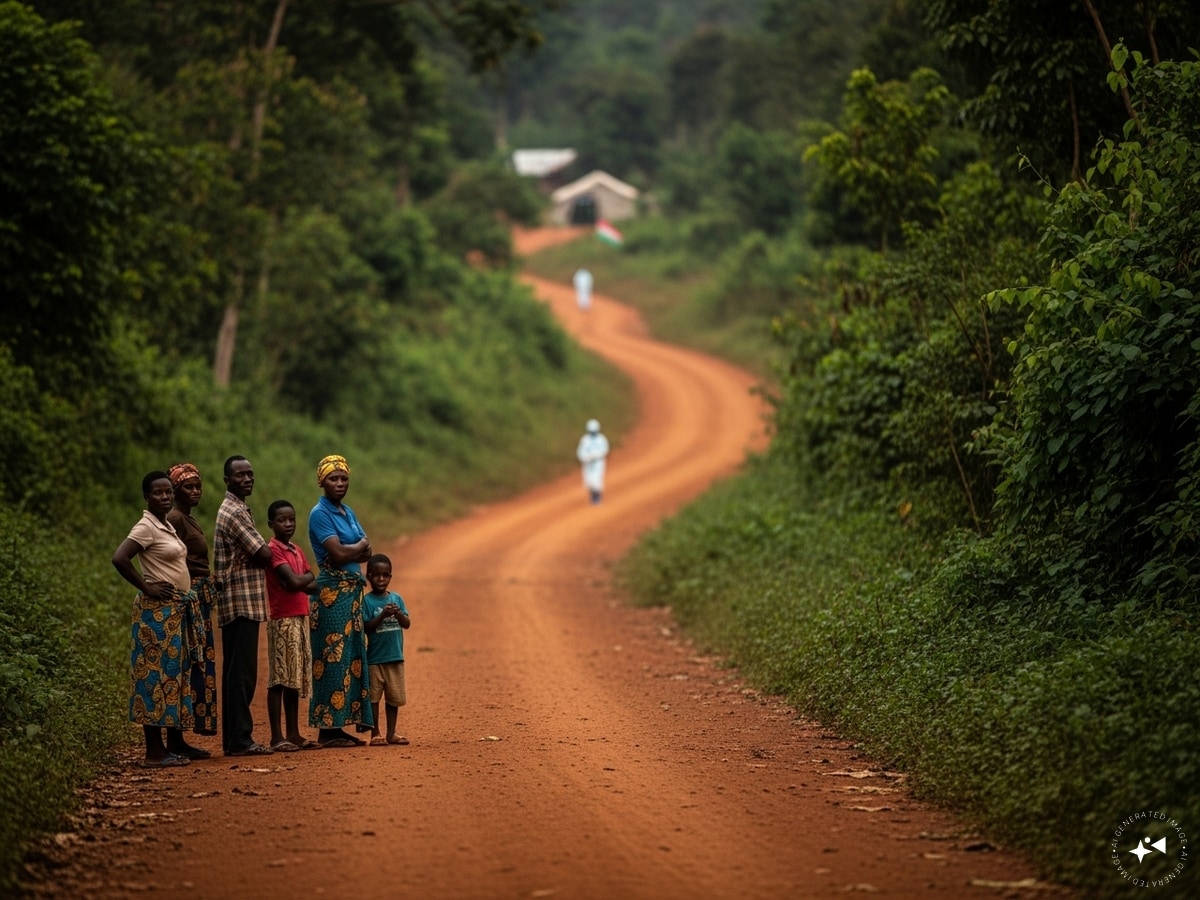
The Democratic Republic of the Congo just can't catch a break. A newly declared Ebola outbreak is tearing through the country’s northeastern provinces, and it’s moving fast. The virus has officially jumped into three brand-new health zones across North Kivu and Ituri. Total confirmed cases have suddenly spiked to 676, with 136 deaths already in the books.
If you think this is just another routine headline out of Central Africa, you're missing the terrifying part. This isn't the standard Ebola we have gotten used to fighting.
The World Health Organization (WHO) recently sounded its loudest alarm, designating this an active Public Health Emergency of International Concern. Why the sudden panic? Because the culprit here is the Bundibugyo ebolavirus strain.
That might sound like medical jargon, but it means something practical and brutal. We have exactly zero approved vaccines or specific therapeutic treatments for it.
The medical tools used to crush recent outbreaks—like the Ervebo vaccine—were engineered specifically for the Zaire strain. They don't work against Bundibugyo. If you catch it, you can't rely on a modern pharmaceutical miracle. You rely on basic, old-school supportive care, a strong immune system, and luck.
The Toxic Intersection of War and Disease
It's easy for global health analysts to look at maps and wonder why contact tracers can't just isolate the sick. The reality on the ground in eastern Congo makes that job nearly impossible. The virus isn't spreading in a vacuum. It's moving through an active, brutal war zone.
Northeastern provinces like Ituri and North Kivu are currently being torn apart by heavily armed insurgent groups, including the Rwanda-backed M23 and local militias like CODECO. These groups control large swaths of territory and routinely attack local infrastructure.
When an active militia controls the road between a laboratory and a newly infected village, you can't just drive a medical team in. Security incidents targeting clinics and health workers have escalated significantly over the last month.
Because of this violence, over two million forcibly displaced people are crammed into makeshift camps and settlements across the region. These places are crowded, sanitation is poor, and health screening is practically nonexistent.
When you throw a highly contagious hemorrhagic fever into a densely packed displacement camp, the virus doesn't just spread. It explodes.
[Image of the human digestive system]
The Fatal Delay in Knowing You're Sick
People often ask why detection takes so long if Ebola is famously terrifying. The problem is how the virus sneaks into a community.
The incubation period lasts anywhere from two to 21 days. During this window, an infected person feels completely fine and isn't contagious. But once the symptoms start, they look exactly like every other common tropical disease.
- High fever
- Severe muscle pain and headaches
- Sore throat and crushing fatigue
If you live in rural Ituri, a fever and a headache usually mean malaria, typhoid, or a bad flu. You don't immediately assume it's Ebola. You stay home, your family takes care of you, and you inadvertently expose everyone in the household.
By the time the classic, unmistakable hemorrhagic symptoms appear—like nosebleeds, vomiting blood, and severe gastrointestinal distress—the damage is done. The virus has already been handed off to family members, neighbors, and local doctors.
The Broken Infrastructure and the U.S. Retreat
Eastern Congo’s network of informal, underfunded healthcare clinics is a massive amplifier for the virus. Many of these remote facilities lack steady electricity, let alone clean running water or adequate Personal Protective Equipment (PPE).
When a patient walks in vomiting and bleeding, healthcare workers try their best with what they have. Without proper gear, those workers become the next victims. At least 16 health professionals have already caught the virus while trying to save lives.
To make things worse, international support isn't what it used to be. A quiet disaster happened behind the scenes in 2025. Major community health surveillance programs funded by foreign aid were shut down or scaled back.
Local health workers who spent years tracking outbreaks lost their jobs and moved on to other work just to survive. Stocks of specialized medical gear dried up.
When this outbreak started moving through the town of Mongbwalu earlier this spring, the early warning systems that should have caught it were dark. The virus circulated silently for weeks before anyone officially noticed.
The Invisible Network Explaining the Geographic Spread
Look at a map of Central Africa and you'll see why the virus is jumping health zones so rapidly. Ituri and North Kivu are major commercial hubs. Millions of people are constantly on the move, driven by the informal gold mining trade and agricultural markets.
A miner gets infected in a remote camp, feels a slight fever, and hops on a motorbike taxi to go back to a major city like Bunia or Butembo. By the time he gets tested, he has traveled through three different health zones, interacting with dozens of people along the way.
This cross-border movement has already carried the virus directly into Uganda. The capital city of Kampala has recorded confirmed cases linked directly to travelers coming out of the DRC. While Uganda has managed to keep community transmission locked down so far, the threat of a wider regional outbreak is incredibly real.
The World Health Organization explicitly lists the national risk level for the DRC as "very high" and the regional risk as "high." The only reason global risk remains low is because international air travel out of these specific remote zones is limited. But that's cold comfort for the people living along the Congo-Uganda border.
How We Actually Stop This Without a Vaccine
We can't rely on a pharmaceutical silver bullet this time around. Fighting a Bundibugyo outbreak requires going back to the foundational basics of epidemiology. It's grueling, slow, and expensive work.
First, real contact tracing has to scale up immediately. Every single person who interacted with a confirmed patient over the previous three weeks needs to be found, monitored, and isolated if they show a fever.
Second, international agencies like Africa CDC and the WHO must rapidly flood these health zones with basic supplies. We need a massive influx of PPE, clean water tracking systems, and mobile testing laboratories that can deliver results in hours instead of days.
Finally, the most critical piece of the puzzle isn't medical at all. It's social.
Deep-seated distrust of outside authorities and government officials is common in eastern Congo after decades of exploitation and conflict. If a medical team rolls into a village wearing full hazmat suits and starts taking away sick relatives, the community will naturally push back. People will hide their sick.
The response must be led by trusted local voices—community elders, religious leaders, and local women's groups. These are the only people who can effectively convince families to change traditional, high-risk burial practices, which frequently involve washing and touching the bodies of the deceased. Because the virus remains highly concentrated in bodily fluids even after death, unsafe funerals are a primary driver of new clusters.
International partners need to urgently route resources directly to these local networks. Air passengers coming out of the broader impact zone are already being rerouted to designated international screening hubs like JFK, Dulles, and Atlanta to keep the global spread at bay, but the real battle is on the ground in Ituri.
The immediate next step requires establishing secure humanitarian corridors with local militias to allow medical supply trucks to safely reach the isolated health zones. Without guaranteed safe passage for field teams and immediate funding for local community engagement, the case count will continue to climb well into the summer.


