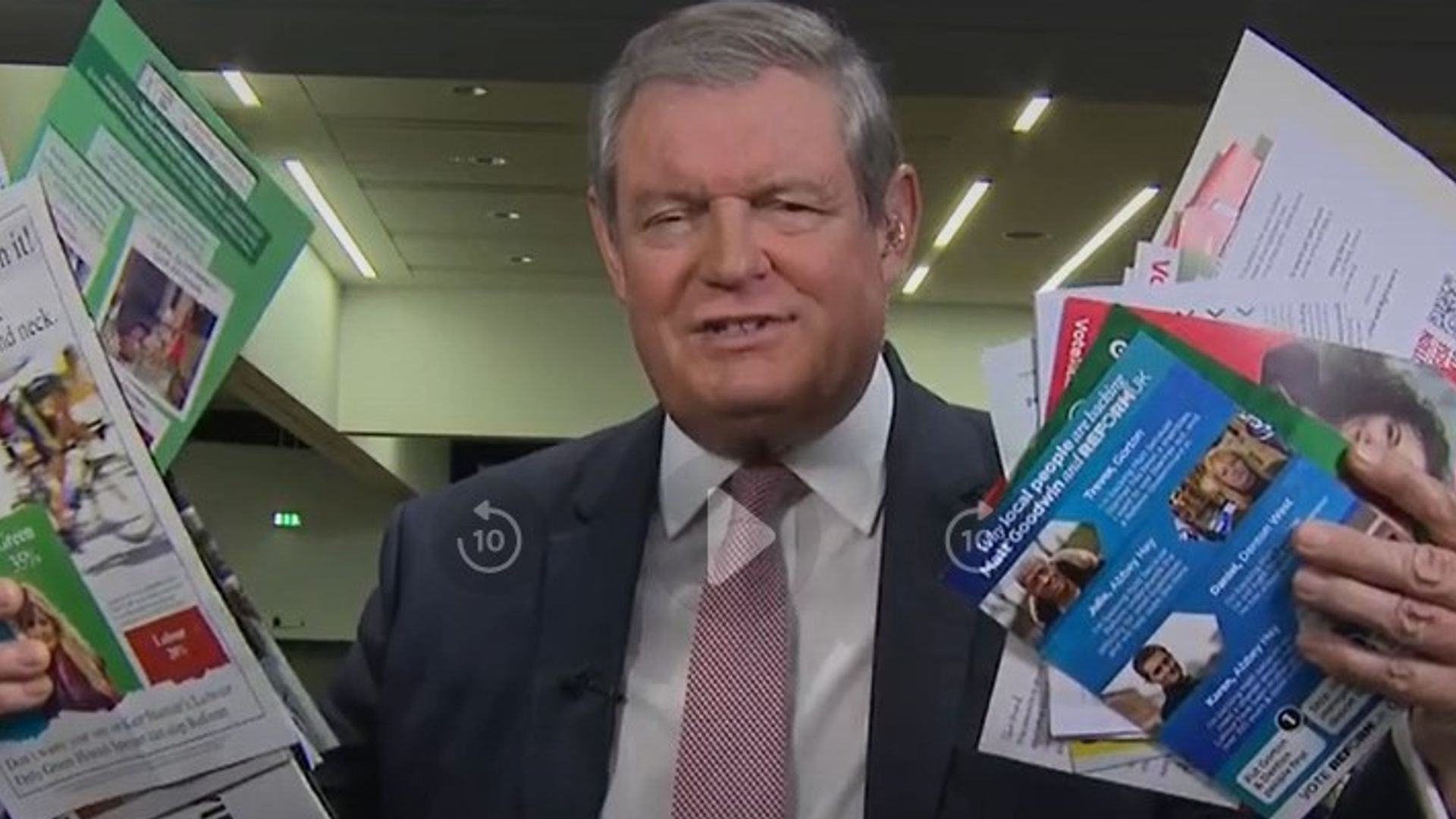
The British electoral landscape is currently bracing for a seismic shift in how political parties communicate with minority communities. A proposed Conservative party ban on election leaflets printed in foreign languages represents more than a simple administrative tweak to electoral law. It is a targeted strike at a long-standing method of grassroots mobilization. By requiring all campaign materials to be printed in English, or Welsh in Wales, the government is effectively attempting to redraw the boundaries of political engagement in some of the most diverse constituencies in the United Kingdom.
This move aims to centralize the English language as the sole medium of democratic participation. Proponents argue that the measure ensures transparency and prevents the spread of "hidden" messages that cannot be easily scrutinized by the wider public or the press. Critics, however, view it as a thinly veiled attempt to disenfranchise non-English speaking voters who rely on translated materials to understand complex policy platforms. The stakes are high. In a country where hundreds of languages are spoken daily, the medium of the message often determines who gets a seat at the table.
The Mechanics of the Proposed Ban
Under the current framework, political parties have significant leeway in how they present their arguments to the public. There is no legal restriction preventing a candidate in Birmingham or East London from distributing a flyer written entirely in Urdu, Bengali, or Polish. This flexibility has allowed parties across the spectrum to court specific demographics by speaking their literal language.
The new proposal would mandate that English is the primary language for all official campaign literature. While translations could potentially exist as secondary supplements, the core requirement would be an English-language version that is accessible to all. The logic presented by government insiders is one of "national cohesion." They suggest that a common language in politics prevents the balkanization of the electorate into linguistic silos where different promises can be made to different groups without cross-reference.
Why the Timing Matters
Political strategy is rarely accidental. The timing of this proposal coincides with a period of intense pressure on the Conservative Party to shore up its "traditional" base while simultaneously navigating a complex relationship with immigrant communities. By framing this as a matter of integration, the party appeals to voters who feel that the pace of cultural change in the UK has been too rapid.
However, the internal data suggests a more nuanced reality. Many "blue-wall" and "red-wall" seats contain significant pockets of voters who are bilingual or primary speakers of other languages. For years, the Conservatives themselves have utilized translated materials to reach business owners in the Gujarati or Punjabi communities. This sudden pivot suggests a shift in priority. The party appears willing to sacrifice a degree of direct outreach in exchange for a powerful "one nation" narrative that resonates with the broader English-speaking majority.
The Shadow of the Hidden Message
One of the most potent arguments for the ban is the difficulty of monitoring campaign promises. When a leaflet is distributed in a language that local journalists or opposing candidates cannot read, the accountability loop is broken. There have been sporadic reports over the decades of "dog-whistle" politics occurring in translated materials—claims made in mother tongues that would never survive the scrutiny of a national BBC interview.
If a candidate makes a specific promise about local planning or international foreign policy in a Mirpuri-dialect leaflet that contradicts their national manifesto, the democratic process is undermined. The ban seeks to bring these peripheral conversations into the light of the town square. It forces every promise to be one that the candidate is willing to stand by in English.
Impact on Voter Turnout and Engagement
The most immediate casualty of such a policy could be voter turnout. For a first-generation immigrant who is still perfecting their English, a political leaflet in their native tongue is often the only bridge to the ballot box. It explains the "how" and "where" of voting, processes that can be daunting to those unfamiliar with the British system.
Removing this bridge does not magically make those voters fluent in English. It simply makes them less likely to vote. If the goal of a democracy is maximum participation, then creating linguistic barriers is a counter-intuitive strategy. We risk creating a tiered system of citizenship where political literacy is gated by linguistic proficiency.
The Constitutional and Legal Hurdles
Implementing such a ban is not as simple as drafting a press release. It would require significant changes to the Representation of the People Act. Legal experts have already begun to point out potential conflicts with the European Convention on Human Rights, specifically regarding freedom of expression and the right to free elections.
If a candidate is barred from communicating with their constituents in a language they both understand, is that a violation of their rights? The courts would likely have to weigh the government’s interest in "cohesion" against the fundamental right of a citizen to be informed. This sets the stage for a protracted legal battle that could overshadow the very elections the ban intends to regulate.
The Cost of Translation vs. The Cost of Silence
Campaigning is an expensive business. Small parties and independent candidates often operate on shoestring budgets. For them, the requirement to produce everything in English first, then perhaps translate it, adds a layer of bureaucratic and financial friction.
Economic Pressures on Local Campaigns
- Production Costs: Doubling the amount of text or printing separate versions increases paper and ink costs.
- Verification: Candidates would need to ensure their English and translated versions match perfectly to avoid legal challenges, requiring professional (and expensive) translation services.
- Distribution: Volunteers can only carry so much. Forcing larger or more complex leaflets into letterboxes slows down the ground game.
A History of Linguistic Politics
Britain has a long and complicated relationship with its minority languages. From the historical suppression of Welsh and Scottish Gaelic to the modern-day debates over ESOL (English for Speakers of Other Languages) funding, language has always been a proxy for power.
In the 1960s and 70s, the arrival of Commonwealth immigrants prompted a surge in multilingual government communication. It was seen as a pragmatic necessity. The shift we are seeing now represents a move away from pragmatism toward a more ideological stance. It is an assertion that to be a British political actor, one must function exclusively within the English linguistic framework.
The Counter-Argument of Digital Evolution
Technological optimists argue that a physical leaflet ban is irrelevant in the age of the smartphone. Any voter can use a translation app to scan a piece of English text and receive a near-instant translation in their native tongue. In this view, the government isn't blocking information; it is simply standardizing the source material.
But this ignores the digital divide. Older voters, who are the most likely to rely on physical mail and the least likely to use real-time translation AI, are the ones who will fall through the cracks. Relying on technology to fix a policy-induced communication gap is a risky gamble with the franchise.
Strategic Realignment or Electoral Suicide
There is a school of thought that suggests this ban could backfire on the Conservatives. In many urban seats, the "ethnic vote" is no longer a monolith. It is composed of diverse, aspirational, and often socially conservative individuals. By appearing to target their languages, the party risks alienating the very people they need to win over to maintain a majority in the coming decades.
Labor and the Liberal Democrats have already signaled their opposition, framing the ban as an attack on diversity. If they continue to use multilingual materials while the Conservatives are forced to stick to English, the visual contrast on the doorstep will be stark. One party will look like it is reaching out; the other will look like it is drawing a line in the sand.
The Burden of Proof
If the government wants to push this through, they must provide concrete evidence of the "harm" caused by foreign-language leaflets. So far, the evidence has been largely anecdotal. Without a dossier of proven electoral fraud or systemic misinformation tied specifically to translated materials, the ban looks less like a security measure and more like a political posture.
The integrity of an election rests on the ability of the voter to make an informed choice. If a voter can only be informed in Punjabi, then a Punjabi leaflet is a tool of democracy, not a threat to it. Forcing that voter to wait for an English version they cannot read effectively silences their voice in the national conversation.
Reimagining the Town Square
The debate over election leaflets is a proxy for a much larger conversation about what it means to be a "multicultural" society in 2026. Is the UK a collection of distinct communities that interact through a common language, or is it a singular entity where the common language is the only permitted medium for public life?
Political parties have a choice. They can lean into the complexity of a globalized Britain, or they can try to legislate it away. The proposed ban is an attempt to simplify a reality that is stubbornly complex. By mandating English-only leaflets, the government is trying to turn back the clock to a version of Britain that no longer exists on the streets of its major cities.
The local councilor who speaks to a grandmother in her native tongue isn't just winning a vote; they are validating her place in the community. When that interaction is banned or made difficult by the state, the message sent is one of exclusion. In the high-stakes game of electoral politics, exclusion is a dangerous strategy. It breeds resentment, fuels apathy, and ultimately weakens the fabric of the very "nation" the government claims to be protecting.
Legislating the language of the doorstep is an admission of failure in the art of persuasion. If a party cannot win an argument in any language, the fault lies with the argument, not the linguistics. The drive for English-only leaflets suggests a fear of the unknown—a fear that in the quiet corners of the electorate, a conversation is happening that the center cannot control.
The true test of a robust democracy is not how much it can standardize its citizens, but how well it can accommodate their differences while still moving forward. A ban on foreign-language leaflets treats diversity as a loophole to be closed rather than a reality to be managed. As this proposal moves through the machinery of Westminster, the focus should remain on the voter. Anything that makes it harder for a citizen to understand their choices is a step backward, regardless of the language it is written in.