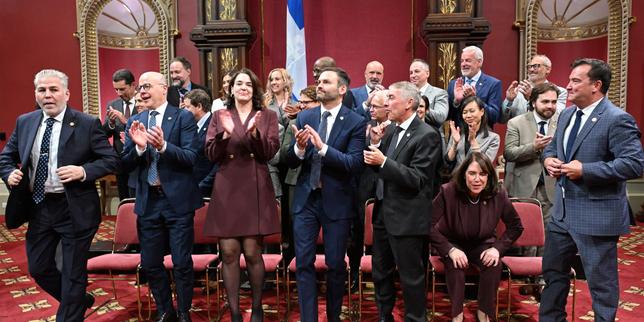
In Quebec, separatists now hold provincial power and intend to sever ties with the British monarchy. Paul St-Pierre Plamondon led the Parti Québécois back to governing status in the October 2026 election, arriving in office with a promise to abolish the Crown's presence in the province, cut off funding to the lieutenant-governor, and push Quebec toward independence once Donald Trump leaves the White House.
It makes for sharp political theater. It also runs straight into a constitutional wall built to stop any single province from rewriting the Crown out of Canadian law on its own. For another view, see: this related article.
After decades covering constitutional battles and federal-provincial brinkmanship, I have watched plenty of governments treat centuries of legal architecture like a stubborn curtain they can simply pull down. Usually, the curtain stays up until the courts or the plumbing of the state reminds everyone how the building is wired. In Quebec City, that tension is already visible. When St-Pierre Plamondon's cabinet took office in October 2026, Lieutenant-Governor Manon Jeannotte stepped aside from presiding over the swearing-in ceremony at his request, watching from a screen rather than sitting at the center of the ritual. Symbolically, it was a striking break. Legally, the machinery behind the throne did not disappear.
Why Separatists Target the Crown Before a Referendum
A monarchy looks easy to attack. In a province where many voters remain cautious about leaving Canada altogether, campaigning against an overseas monarch and a ceremonial viceregal office is a much lower-stakes fight. Polls have long shown skepticism toward the monarchy in Quebec, and framing King Charles III and the lieutenant-governor as leftover symbols of British conquest gives the Parti Québécois a clean grievance without forcing every swing voter to commit immediately to full secession. Further reporting on this matter has been shared by NPR.
There is also a practical political calculation at work. Governing in a minority situation, with fierce economic pressure and tariff turbulence coming from Washington, leaves a new premier looking for visible markers of authority and ideological motion. Taking on the Crown signals resolve to the sovereignist base. It tests Ottawa's appetite for a constitutional fight. And it softens the ground ahead of a future referendum by conditioning voters to view Canadian institutions as foreign rather than shared.
Consider how that strategy works in practice. Suppose a premier wants to show momentum in the first hundred days without triggering an immediate economic shock. Defunding a viceregal office with an annual budget around $1.3 million and redirecting that money toward homelessness sounds like populist common sense on a campaign stump. Voters hear "housing and help for people on the street" instead of "constitutional litigation."
Yet politics and constitutional law operate on different clocks. A speech can abolish a symbol in ten minutes. Rewiring how statutes become valid law takes years, if it is possible at all inside Canada's current framework.
The Unanimity Rule That Locks the Doors
Canada's constitution is notoriously difficult to amend, and the rules around the monarchy are among the strictest clauses in the book. Under Section 41(a) of the Constitution Act, 1982, changing the office of the monarch, the governor general, or a lieutenant-governor requires unanimous consent from the federal House of Commons, the Senate, and all ten provincial legislatures.
Read that again. Every single province.
That means a government in Quebec City cannot simply pass a provincial bill declaring the monarchy abolished and expect the rest of the federation to shrug. Even if a premier invokes provincial constitutional authority under other sections of the constitution—as Quebec politicians did when moving away from the mandatory legislative oath to the King—legal scholars and litigants have repeatedly argued that a province cannot unilaterally strip out core pillars of the federal-provincial order.
| Mechanism or Lever | What Quebec Leaders Aim to Do | Main Legal or Practical Obstacle |
|---|---|---|
| Unilateral abolition bill | End the monarchy's legal role in Quebec by statute | Requires unanimous federal and ten-province consent under Section 41(a) |
| Defunding the lieutenant-governor | Cut provincial budget support (around $1.3 million) and shift funds | Courts have held governments cannot do indirectly what the constitution bars directly |
| Bypassing royal assent | Have bills take effect without the lieutenant-governor's signature | Risks invalidating legislation and triggering a major constitutional crisis |
| Oath and ceremony boycotts | Marginalize the Crown in swearing-in and legislative rituals | Sparks court injunctions and challenges to legislative legitimacy |
The real danger is not merely that a court strikes down a bold statute years from now. The danger is procedural paralysis.
In Quebec's parliamentary system, royal assent is the final step that turns a bill passed by the National Assembly into enforceable law. If a government tries to starve the lieutenant-governor's office of resources, ignore the office, or reassign its duties without constitutional authority, every subsequent law can become a target in court. Imagine a housing bill, a labor rule, or a budget measure challenged months later on the ground that it never validly received royal assent. Suddenly, a symbolic fight over the Crown threatens ordinary governance.
Courts in Canada have also pushed back against clever workarounds. Constitutional specialists frequently point to the Supreme Court's general principle that governments cannot use indirect measures—like cutting funds or renaming functions—to accomplish indirectly what the constitution forbids them from doing directly. Starving an office is not the same thing as lawfully abolishing it.
What the Competitors Miss About History and Identity
Surface coverage tends to treat Quebec's push against the monarchy as a straightforward clash between French-speaking nationalists and an English king. That framing is too neat, and it misses why this issue has always been complicated inside Quebec itself.
For generations, French-speaking elites and ordinary Quebecers had mixed, evolving relationships with the Crown. After 1763 and into Confederation in 1867, British constitutional structures—and the Crown's place within them—coexisted alongside French civil law, Catholic institutions, and later hard-won provincial autonomy. Many Quebecers today oppose the monarchy not out of a burning desire to secede tomorrow, but because an inherited European throne feels outdated in North America.
There is another blind spot that often gets pushed to the sidelines when sovereignty debates heat up: Indigenous rights and sovereignty. First Nations and Inuit leaders across Quebec have repeatedly stressed that unilateral constitutional moves or secession plans cannot treat Indigenous nations as an afterthought. Treaties, land claims, and overlapping jurisdictions do not vanish because a provincial premier dislikes a viceregal title.
And look at the broader Canadian picture. When Prime Minister Mark Carney's federal government faces trade friction and tariff threats from Washington, Ottawa has strong incentives to keep constitutional fires contained rather than opening a chaotic multi-province negotiation over the Crown. Other provinces have their own economic and political priorities, and almost none of them want to reopen the constitutional Pandora's box just to hand Quebec a symbolic victory.
The Gray Area Between Symbol and Crisis
Not every move against the monarchy carries the same weight, and drawing a line between ritual and illegality matters. Dropping a ceremonial attendance here, debating the historical weight of a crown emblem there, or arguing over how much taxpayers should spend on viceregal hospitality are familiar political arguments in a democracy.
Problems escalate when a government treats constitutional rules as optional obstacles rather than binding constraints. Once litigants seek injunctions over whether lawmakers are properly seated or whether laws were validly enacted, the dispute moves out of opinion columns and into courtrooms.
For anyone watching Quebec's next chapter, the test is straightforward. Watch whether St-Pierre Plamondon's government keeps its anti-monarchy campaign focused on political theater and budget optics, or tries to cross the line into unilaterally stripping away constitutional powers. One creates headlines; the other creates a legal crisis that could stall the very policies the government wants to pass.