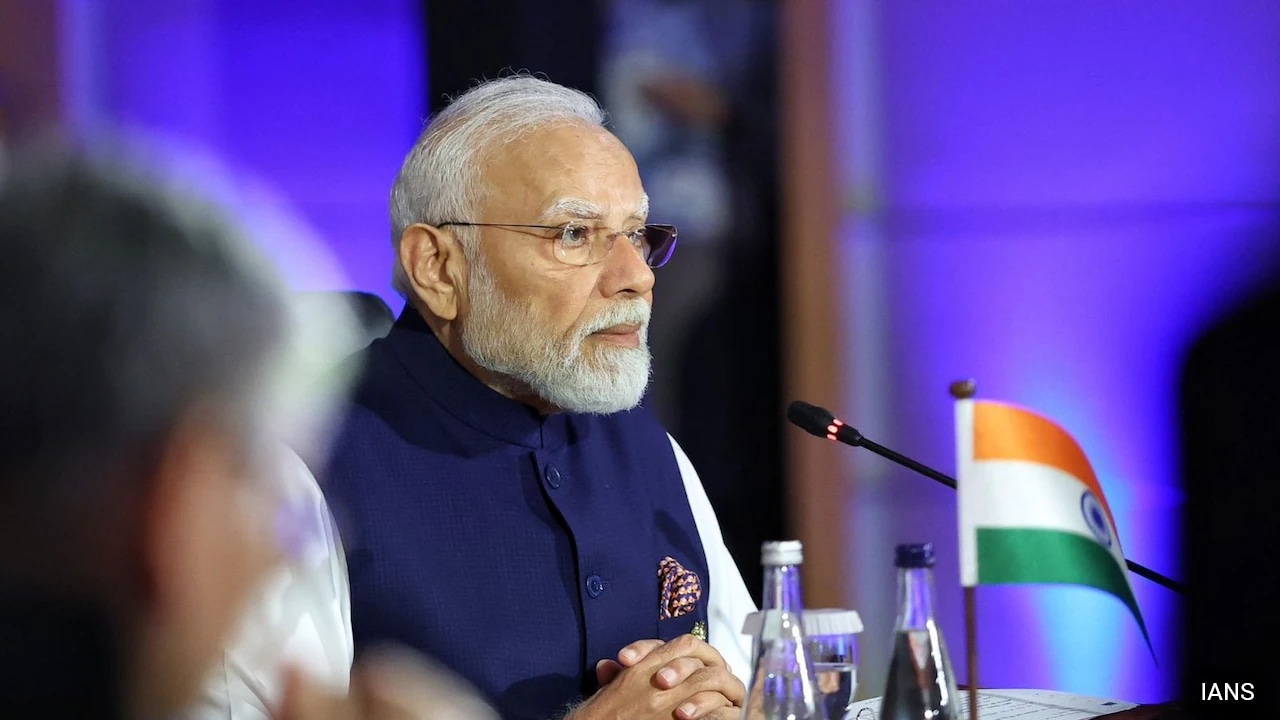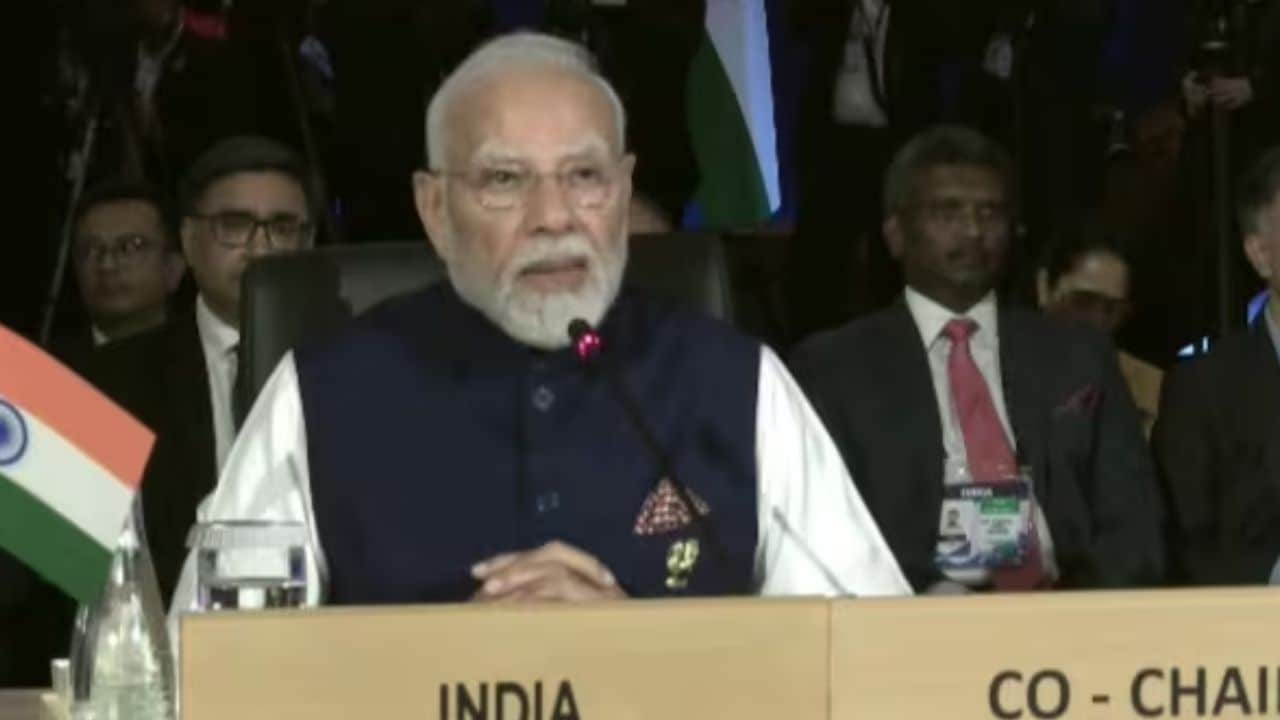
Geopolitical alignment in the Indo-Pacific is shifting from zero-sum bloc competition toward multi-vector institutional cooperation, and Indian Prime Minister Narendra Modi's address at the ASEAN Summit provides the exact operational blueprint for this transition. Rather than treating Southeast Asia as a binary battleground between major powers, New Delhi’s doctrine frames regional stability as a function of supply chain resilience, maritime rule-of-law, and sovereign development capacity. Understanding this strategic posture requires stripping away diplomatic rhetoric and examining the underlying game theory, trade mechanics, and security architecture that govern India-ASEAN relations.
Standard media coverage treats speeches at the Association of Southeast Asian Nations (ASEAN) Summit as routine diplomatic signaling. That reading misses the structural reality. When an Indian Prime Minister asserts that cooperation, not competition, must shape the future, the statement operates as a direct counter-proposition to hegemonic containment strategies and unilateral economic coercion. It defines a third operational model for middle and emerging powers caught between systemic rivals.
The Game-Theoretic Logic of Cooperative Deterrence
In classical international relations theory, great power rivalry defaults to a zero-sum Prisoner's Dilemma: one state’s security or market share gain equals another’s loss. For the ten member states of ASEAN, participating in a pure zero-sum contest carries existential economic risk. Southeast Asian economies rely on open maritime trade routes, diversified foreign direct investment, and friction-free access to both Western consumer markets and Asian manufacturing networks.
India’s strategic framing alters the payoff matrix by introducing a non-zero-sum coordination game. By anchoring its regional engagement in ASEAN Centrality—the principle that Southeast Asian institutions must remain the primary diplomatic convener in the region—New Delhi lowers the political cost of partnership for smaller states. Countries like Vietnam, Indonesia, and the Philippines do not have to choose between security alignment and economic growth when dealing with India, because India’s stated objective is capability transfer rather than sphere-of-influence exclusivity.
This approach creates what strategists term cooperative deterrence. Instead of building formal mutual-defense alliances that trigger immediate counter-escalation from rival powers, India and ASEAN build distributed resilience. When regional states share maritime domain awareness, standardize digital payment rails, and integrate manufacturing nodes, the economic and diplomatic cost of any single actor attempting unilateral coercion rises sharply. Deterrence emerges from dense, interdependent networks rather than forward-deployed tripwires.
The Three Pillars of the India-ASEAN Operational Framework
To move beyond diplomatic declarations, India’s Act East Policy—upgraded from the 1990s Look East Policy—organizes cooperation into three distinct functional domains. Each pillar addresses a specific structural vulnerability in the Indo-Pacific system.
1. Physical and Digital Connectivity Infrastructure
Trade agreements fail when physical logistics and payment clearing systems remain fragmented. Historically, economic integration between South Asia and Southeast Asia suffered from missing terrestrial links through Myanmar and underdeveloped maritime feeder routes across the Bay of Bengal.
India’s operational response targets both hard infrastructure and digital public infrastructure (DPI):
- Terrestrial Corridors: Projects like the India-Myanmar-Thailand Trilateral Highway and the Kaladan Multi-Modal Transit Transport Project aim to bypass maritime chokepoints and connect India’s landlocked Northeast directly to Southeast Asian manufacturing hubs.
- Maritime Linkages: Developing deep-water ports along India’s eastern seaboard—such as Visakhapatnam, Chennai, and the transshipment hub at Great Nicobar—reduces transit times to the Strait of Malacca and integrates Indian ports into ASEAN maritime supply chains.
- Digital Payment Interoperability: Linking India’s Unified Payments Interface (UPI) with national payment systems in Singapore (PayNow), Malaysia, and Thailand eliminates correspondent banking friction. This reduces cross-border remittance costs and enables small and medium enterprises (SMEs) to settle trade directly in local currencies.
The causal mechanism is straightforward: lowering transaction and logistics costs organically shifts trade flows without requiring protectionist tariffs or state-directed subsidies.
2. Maritime Security and Rules-Based Governance
Over sixty percent of global maritime trade transits the Indo-Pacific, with the South China Sea and the Strait of Malacca serving as primary arteries. Unilateral territorial claims, grey-zone maritime harassment, and militarization of artificial features threaten the freedom of navigation upon which both Indian and ASEAN economies depend.
India’s cooperation model avoids provocative naval posturing in favor of institutional and technical capacity building:
- Legal Adherence: Both India and ASEAN explicitly anchor maritime disputes in the 1982 United Nations Convention on the Law of the Sea (UNCLOS). Emphasizing UNCLOS establishes an objective legal baseline for Exclusive Economic Zones (EEZs) and navigation rights.
- Domain Awareness and Hydrography: Through the Information Fusion Centre – Indian Ocean Region (IFC-IOR), India shares real-time white-shipping data, tracks illegal, unreported, and unregulated (IUU) fishing, and conducts joint hydrographic surveys with ASEAN navies.
- Defense Industrial Transfers: The export of shore-based supersonic cruise missile systems (such as the BrahMos transfer to the Philippines) and coastal radar networks provides ASEAN states with asymmetric coastal defense capabilities. These transfers strengthen national sovereignty without requiring foreign military bases on ASEAN soil.
3. Supply Chain Diversification and Trade Rebalancing
The COVID-19 pandemic and subsequent geopolitical tariff wars exposed the danger of single-country manufacturing concentration. Multinational corporations now execute "China Plus One" strategies, seeking alternative production bases that combine scale, workforce availability, and regulatory predictability.
However, the existing ASEAN-India Trade in Goods Agreement (AITIGA), signed in 2009, created structural imbalances. Indian manufacturers faced rising trade deficits as goods from third countries entered India via ASEAN states with lower value-addition thresholds.
Reforming AITIGA is therefore the central economic priority in Modi’s cooperative framework. By renegotiating rules of origin, streamlining customs procedures, and harmonizing technical standards, New Delhi and ASEAN aim to build true production-sharing networks. Under a modernized trade architecture, raw materials or intermediate components produced in India can be assembled in Vietnam or Thailand and exported globally, turning potential trade competitors into complementary nodes within a single value chain.
Structural Bottlenecks and Execution Constraints
A rigorous strategic assessment must account for friction. While the conceptual alignment between India and ASEAN is clear, four operational bottlenecks routinely slow execution.
First, asymmetric implementation speeds create bureaucratic drag. ASEAN operates strictly by consensus among ten diverse political systems, ranging from high-income financial hubs like Singapore to developing economies like Laos and Cambodia. India’s own federal bureaucracy, despite rapid digitization, still involves multi-ministry clearances for cross-border infrastructure financing. When two slow-moving administrative apparatuses intersect, project timelines routinely stretch by years.
Second, regional instability in Myanmar disrupts terrestrial connectivity. Myanmar is the sole land bridge between India and Southeast Asia. Ongoing civil conflict and fractured territorial control along the Sagaing Region and Chin State have stalled construction on the Trilateral Highway and complicated border trade. Until security stabilizes along the Indo-Myanmar frontier, India-ASEAN trade will remain overwhelmingly dependent on maritime shipping lanes.
Third, divergent threat perceptions within ASEAN limit collective security action. Maritime ASEAN states (such as the Philippines, Vietnam, Indonesia, and Malaysia) face direct territorial friction in the South China Sea and actively seek external balancing partners. Mainland ASEAN states (such as Cambodia and Laos) maintain deep economic and political ties with Beijing and resist any ASEAN communiqué that appears overly critical of Chinese maritime actions. India must calibrate its security cooperation bilaterally with willing maritime states while keeping multilateral ASEAN engagements focused on non-traditional security threats like disaster relief, cyber defense, and counter-terrorism.
Fourth, capital allocation constraints limit India’s ability to match rival infrastructure financing. India cannot outspend state-backed capital outflows from larger economies on mega-infrastructure loans. Instead, New Delhi must rely on targeted concessional lines of credit, private-sector joint ventures, and high-margin technical assistance—such as digital public infrastructure deployment and space-based remote sensing—where capital intensity is low but strategic utility is high.
Comparative Strategic Models in the Indo-Pacific
To evaluate the durability of India’s cooperative model, it helps to contrast it against the two competing frameworks currently operating in Southeast Asia.
The Hegemonic Integration Model relies on massive state-directed infrastructure lending, asymmetric trade dependencies, and bilateral diplomatic leverage. While this model delivers rapid physical infrastructure in the short term, it frequently generates sovereign debt distress, trade deficits for host nations, and political backlash when economic leverage is weaponized for territorial or diplomatic concessions.
The Alliance Containment Model prioritizes formal military alliances, minilateral security groupings, and strict technological decoupling. While effective at establishing hard military deterrence, this model forces Southeast Asian nations into uncomfortable binary choices, threatens their primary export relationships, and risks militarizing diplomatic disputes.
The India-ASEAN Cooperative Equilibrium occupies the middle ground. It rejects alliance obligations and debt-heavy financing in favor of open architecture, sovereign capacity building, and interoperable standards. By respecting ASEAN’s desire for strategic autonomy, India secures long-term diplomatic goodwill and steady market access without triggering the immune response that overt great-power coercion provokes.
Measuring Success Beyond Summit Communiqués
Analysts tracking the trajectory of India-ASEAN relations should ignore diplomatic adjectives and monitor four quantitative and structural indicators over the next 36 months:
- AITIGA Review Completion and Rules-of-Origin Enforcement: The concrete metric of trade health is not gross bilateral trade volume, which can mask one-way transit dumping, but the growth of balanced, two-way trade in intermediate manufacturing goods following the conclusion of the AITIGA review.
- Cross-Border UPI Transaction Volume: As digital payment linkages expand from Singapore, Malaysia, and Thailand to Indonesia and the Philippines, tracking retail and SME settlement volumes will reveal whether digital connectivity is translating into real commercial integration.
- Defense Export and Training Cadence: Sustained defense cooperation will show up in follow-on orders for coastal radar systems, patrol vessels, and missile platforms, alongside increased participation in the ASEAN-India Maritime Exercise (AIME).
- Trilateral Highway Corridor Milestones: Any verifiable progress on completing missing road links and customs checkpoints through Myanmar—or viable maritime bypass alternatives linking Chennai and Kolkata directly to Da Nang and Laem Chabang—will determine whether physical supply chain integration moves from policy papers to freight manifests.
The Strategic Play for Regional Stakeholders
For policymakers, corporate supply chain strategists, and institutional investors operating in the Indo-Pacific, the operational takeaway from India’s ASEAN doctrine is clear: do not structure regional exposure around a single dominant manufacturing hub or a single security guarantor.
Corporate supply chain architects should immediately map "India-ASEAN Dual-Node" production workflows—leveraging India’s upstream chemical, pharmaceutical, software, and heavy engineering base alongside ASEAN’s downstream electronics assembly and packaging ecosystems. Governments and multilateral development banks should co-finance digital public infrastructure interoperability and maritime domain awareness networks, where modest capital injections yield outsized regional stability. In a fragmented global economy, durable advantage belongs to the actors building open, multi-directional networks that make coercion prohibitively expensive.