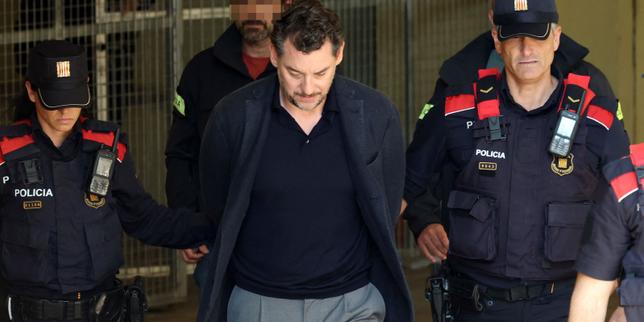
The sudden vacancy of a founding patriarch in a multi-billion-dollar private enterprise represents the ultimate stress test for corporate governance. When that vacancy is accompanied by a criminal investigation targeting the designated successor—forcing a temporary step-down—the organization faces a compounding crisis. The recent departure of the eldest son from the executive leadership of the global fashion retail group Mango, in order to focus on his legal defense following the investigation into his father’s death, isolates a critical intersection of familial succession risk, operational continuity, and brand equity vulnerability.
Managing this inflection point requires separating emotional narrative from institutional architecture. For private closely held giants like Mango, survival depends on executing an immediate decoupling strategy: isolating the individual’s legal liabilities from the firm's balance sheet and operational decision-making machinery.
The Dual-Crisis Framework: Structural and Reputational Disruption
A corporate crisis of this nature operates along two distinct vectors that feed into each other if left unmanaged. The first vector is structural operational disruption; the second is external stakeholder reprisal.
[Criminal Investigation of Successor]
       │
       ├─► Structural Disruption ──► Executive Vacancy ──► Decision Bottlenecks
       │
       └─► Stakeholder Reprisal  ──► Credit Risk / Brand Erosion
The Operational Vector
Private retail empires frequently rely on centralized decision-making architectures. The sudden exit of a top executive creates an immediate power vacuum at the apex of the hierarchy. This structural disruption manifests in delayed capital allocation, frozen strategic pivots—such as international supply chain reconfigurations or major digital infrastructure overhauls—and a paralysis among mid-level executives who lack the mandate to execute high-risk maneuvers. The primary risk here is not a drop in daily store sales, but the stagnation of long-term strategic velocity while competitors adapt in real-time.
The Stakeholder Vector
While Mango is a privately held entity and shielded from the immediate volatility of public equity markets, it remains deeply dependent on external financial ecosystems.
- Banking Consortia and Credit Facilities: Large-scale retail operations require massive, revolving credit lines to fund inventory procurement cycles months in advance. Material change-of-leadership clauses and reputational risk covenants in debt agreements can trigger reviews by compliance departments, potentially raising borrowing costs or freezing credit extensions.
- Supply Chain Ecosystems: Long-term manufacturing contracts in key textile hubs rely on institutional stability. Subcontractors and logistics partners manage their own risk profiles; perception of structural instability at the client level can lead to demands for accelerated payment terms, squeezing working capital.
- Wholesale and Franchise Partners: Globally, franchise models dictate a significant portion of geographic expansion. Institutional uncertainty dilutes partner confidence, slowing down international footprint growth.
The Strategy of the Temporary Step-Down
The decision of the eldest son to provisionally vacate his leadership position is not a passive retreat; it is a calculated corporate defense mechanism designed to establish a legal and operational firewall.
       [Firewall Strategy]
               │
   ┌───────────┴───────────┐
   ▼                       ▼
Corporate Entity      Individual Asset
(Protected)          (Isolated Legal Defense)
By removing the target of a criminal investigation from active management, the enterprise formally decouples its brand and corporate identity from the personal legal liabilities of the individual. This isolation strategy achieves several immediate structural objectives.
Liability Containment
The primary objective of the firewall is to prevent the judicial investigation from bleeding into corporate operations. When an executive facing serious personal legal scrutiny remains at the helm, the company’s internal communications, board minutes, and strategic decisions risk becoming entangled in discovery processes or judicial oversight. A provisional exit halts this integration, ensuring that the legal defense remains strictly an individual asset, funded and managed outside the corporate balance sheet.
Stabilization of Debt Covenants
Financial institutions evaluate risk based on stability and predictability. By installing a clean, uncompromised interim leadership structure, the firm signals to creditors that its operational governance remains intact. This proactive move neutralizes the "governance risk" premium that lenders might otherwise tack onto credit renewals, preserving the firm's weighted average cost of capital.
Preservation of Brand Equity
In consumer-facing industries, brand equity is highly sensitive to executive conduct. While the founding patriarch's death creates a somber narrative, an ongoing criminal investigation involving top leadership introduces toxic brand associations. Stepping down mitigates consumer backlash, prevents activist boycotts, and protects commercial relationships with department stores and digital marketplaces that enforce strict ethical sourcing and governance standards for their partners.
Contingency Governance: The Interim Leadership Blueprint
Executing a temporary leadership transition under crisis conditions requires adherence to a strict operational blueprint. The transition cannot appear ad-hoc; it must follow a transparent, systematized protocol to maintain internal and external confidence.
Immediate Activation of the Succession Protocol
The board must instantly ratify an interim management structure, ideally leveraging a non-family professional executive—such as an incumbent COO or CFO—or a seasoned independent board member. This choice signals to the market that the business is governed by professional institutional standards rather than dynastic impulse.
Redefining the Scope of Authority
The interim leader’s mandate must be explicitly defined and communicated to prevent organizational drift. This involves a bifurcated approach to authority:
- Operational Continuity: Full autonomy must be granted to maintain standard business configurations, optimize inventory, manage marketing allocations, and execute pre-approved capital expenditures.
- Strategic Freeze: Major mergers, acquisitions, fundamental shifts in brand positioning, or high-leverage structural changes should be paused unless delayed execution risks systemic value destruction. The interim period is about stabilization, not reinvention.
De-escalation of Internal Power Struggles
In family-controlled enterprises, the sudden removal of a primary heir often triggers latent factionalism among sibling groups, branch families, or long-standing executives. The interim governance framework must include explicit checks and balances, ensuring that no single faction can permanently capture institutional control during the temporary vacancy. This is typically achieved by forming an extraordinary steering committee composed of balanced internal and independent stakeholders.
Long-Term Risk Mitigation: The Path Forward
The events unfolding at Mango serve as a stark case study in the vulnerability of concentrated governance structures. For any large-scale private enterprise to survive systemic executive shocks, it must transition from a person-centric model to an institution-centric model.
Person-Centric Architecture  ──►  Institution-Centric Architecture
(High Concentration Risk)          (Distributed Risk Profile)
The first limitation of family-led conglomerates is often the reluctance to dilute control in exchange for structural resilience. To mitigate future vulnerabilities, the enterprise must permanently embed independent oversight into its core architecture. This involves expanding the board of directors to include a majority of independent non-executive directors with deep experience in international retail logistics and crisis management. These individuals provide the objective distance necessary to make hard governance decisions without the distorting influence of family dynamics.
Furthermore, the organization must formalize an emergency succession playbook that operates automatically, independent of human intervention or emotional consensus. This playbook must clearly delineate the chain of command, specify communication protocols for banking partners, and outline predetermined media response strategies. By removing ambiguity from the equation, the firm ensures that if a leadership vacuum occurs, the institutional machinery adapts instantly, preserving operational velocity and protecting long-term enterprise value.
The ultimate trajectory of Mango depends on its speed of execution. The provisional step-down of the eldest son buys the company time, but the installation of a transparent, professionalized, and independent interim governance structure is what will ultimately determine its capacity to weather the storm. Strategic permanence must always take precedence over individual legacy.