Nimal sits at a small, scarred wooden table in a kitchen that smells faintly of kerosene and coconut milk. He is staring at a flickering television screen, but his eyes are actually fixed on a small, cracked smartphone. On the screen, a WhatsApp message remains unread. His brother, Suneth, is thousands of miles away in a warehouse near Haifa. Outside Nimal's window, the lush, humid greenery of rural Sri Lanka feels worlds apart from the dry, percussive chaos of the Middle East. Yet, the air in this kitchen is thick with a tension that has nothing to do with the tropical heat.
When the Middle East breathes, Sri Lanka holds its breath.
This is not a matter of abstract geopolitics or distant maps. For millions of families across this island nation, the "West Asia crisis" is not a headline. It is a kitchen-table crisis. It is the sudden, sharp realization that the money that pays for tuition, medicine, and the rising cost of rice is tied to a region currently engulfed in a terrifying instability.
The Sri Lankan government recently pulled a lever. It announced a "relief package" designed to cushion the blow of this escalating conflict. On paper, it looks like a series of administrative adjustments—subsidies, fuel price stabilization, and support for returning workers. In reality, it is a desperate shield held up against a storm that no one in Colombo can control.
The Invisible Pipeline of Survival
Sri Lanka’s economy is a delicate machine powered by the sweat of its citizens abroad. Think of it as a vast, invisible pipeline. On one end, you have men and women leaving behind their children to work in construction sites, hospitals, and homes across the Gulf and the Levant. On the other end, billions of dollars in remittances flow back into the island, keeping the national reserves from hitting zero.
When war breaks out in the Middle East, that pipeline doesn’t just leak; it threatens to burst.
The relief package is the government’s admission that the safety net is fraying. The measures include a dedicated credit line for small businesses struggling with supply chain disruptions and a specific framework to repatriate workers who find themselves in the direct line of fire. But how do you compensate a mother for the fear that her son might not make it to the airport? How do you calculate the "relief" for a father whose income has evaporated because the shipping lanes in the Red Sea have become a gauntlet of drones and missiles?
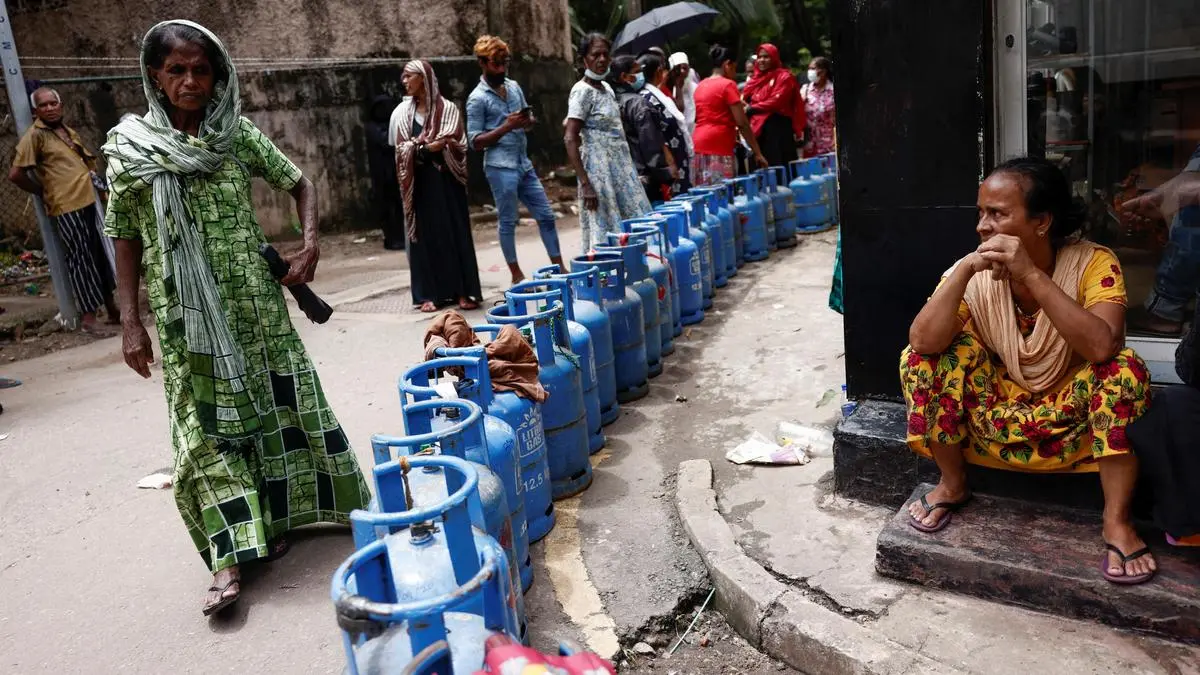
The stakes are visceral. Sri Lanka is still reeling from its own internal economic collapse a few years ago. The memory of miles-long fuel lines and darkened streets is fresh. The wound is barely scarred over. Now, the volatility in West Asia threatens to rip that wound wide open again.
The Ghost of 180 Dollars
Consider the math of a typical migrant worker. Let’s call her Priyanthi. She sends home roughly $300 a month. That money is sliced into precise portions: $100 for her parents' medication, $100 for her children’s schooling, and $100 for the debt she took on just to buy her plane ticket.
If the cost of shipping rises—which it has, as vessels reroute around the Cape of Good Hope to avoid the Red Sea—the price of flour in Priyanthi’s village goes up. If the price of oil spikes because of regional instability, the bus her children take to school doubles its fare. Suddenly, Priyanthi’s $300, which used to be a lifeline, is barely a tether.
The government’s relief package attempts to address this by fixing the price of certain essentials and offering low-interest loans to families of migrant workers. It is a noble effort to fight a wildfire with a garden hose. The reality is that the Sri Lankan rupee is a passenger on a ship steered by global powers and regional militias.
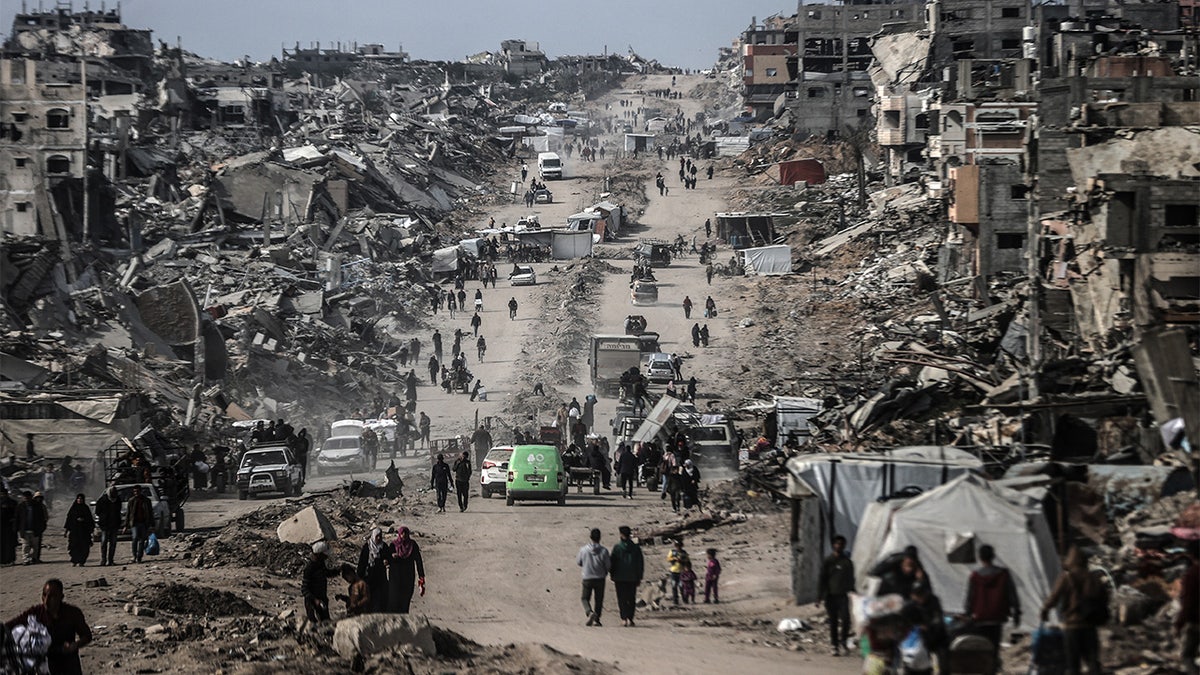
The "crisis" isn't just about the bullets being fired in Gaza or Lebanon. It is about the systemic shock to a world that relies on the Middle East as its central nervous system for energy and logistics. When that system suffers a stroke, the extremities—countries like Sri Lanka—feel the numbness first.
The Shipping Lane Stranglehold
We often talk about "global markets" as if they are ethereal spirits. They are not. They are physical boxes on physical ships.
Because of the conflict, freight insurance premiums have skyrocketed. Shipping companies are passing these costs down to the consumer. For a nation that imports its fuel, its wheat, and its specialized machinery, these "unseen costs" are a silent tax on every citizen. The government’s package includes provisions for exporters, particularly in the tea and garment sectors, to help them navigate these rising costs.
Sri Lankan tea, famous the world over, is sitting in warehouses because the cost of getting it to its primary markets in the Middle East and Russia has become prohibitive. A tea plucker in the central highlands, far removed from the geopolitical maneuvering of world leaders, finds her daily wage threatened because a container ship cannot safely pass through the Suez Canal.
It is a reminder that in the modern world, isolation is a myth. We are all entangled in a web of mutual dependence. When we pull a thread in one corner, the whole fabric bunches up.
The Human Weight of Policy
The most significant part of the relief announcement isn't the numbers; it’s the contingency for the "Returnees."
There are hundreds of thousands of Sri Lankans currently working in the Middle East. If the conflict widens, a mass exodus would be a logistical and humanitarian nightmare. The government has signaled the creation of a "reintegration fund." This is intended to help workers who are forced to flee the war zones to find employment or start businesses back home.
But imagine the psychological weight of that return. You leave your home in search of a better life, endure the loneliness of the diaspora, and then return not with the spoils of your labor, but as a refugee from someone else's war. The relief package can provide a loan, but it cannot provide the years lost to a dream that was incinerated by a missile.
The officials in Colombo speak of "macroeconomic stability" and "risk mitigation." These are cold terms for a very warm, human fear. They are trying to build a levee against a rising tide of uncertainty. They are watching the oil tickers in London and New York with the same intensity that a farmer watches the clouds during a drought.
The Fragility of the Recovery
Sri Lanka was supposed to be in its "recovery phase." After the Sovereign Default of 2022, the country has been following a strict, often painful, path toward stabilization. The IMF dictates the terms, the people pay the price, and the hope is that, eventually, the ship levels out.
The West Asia crisis is the "black swan" event that no one wanted to see.
It tests the resilience of a nation that is already exhausted. The relief package is an attempt to prove to the populace that the state is still a protector. It is an attempt to prevent another "Aragalaya"—the mass protests that toppled the previous administration. The government knows that if the price of bread and fuel becomes unbearable again, the social contract will vanish.
This is why the package focuses so heavily on the energy sector. By absorbing some of the shocks of global oil price hikes, the state is trying to buy time. They are hoping the conflict remains contained. They are betting on a return to a status quo that was already precarious.
The Silent Kitchen
Back in the kitchen, Nimal finally sees his phone light up.
"I am safe. We are staying inside today. Don't worry about the money this month, I will send extra when the port reopens."
Nimal breathes out, a long, shaky exhale. He looks at the "relief package" news scrolling across the TV. It mentions a subsidy for electricity. It mentions a grace period for loans. He knows these things help. He knows they are better than nothing.
But he also knows that his family’s future is being decided by people who don't know his name, in cities he will never visit, for reasons that have nothing to do with him. He is a spectator to his own life, waiting to see if the world will allow him to survive.
The relief package is a map, but the terrain is shifting underfoot. It is a brave attempt to govern the ungovernable. As the sun sets over the Indian Ocean, casting long, golden shadows across the coconut groves, the island waits. It waits for the next headline, the next shipment, and the next message from a brother who is just trying to find a way back home.
Survival is not a statistic. It is the quiet, desperate hope that the world stays quiet enough for a family to eat.