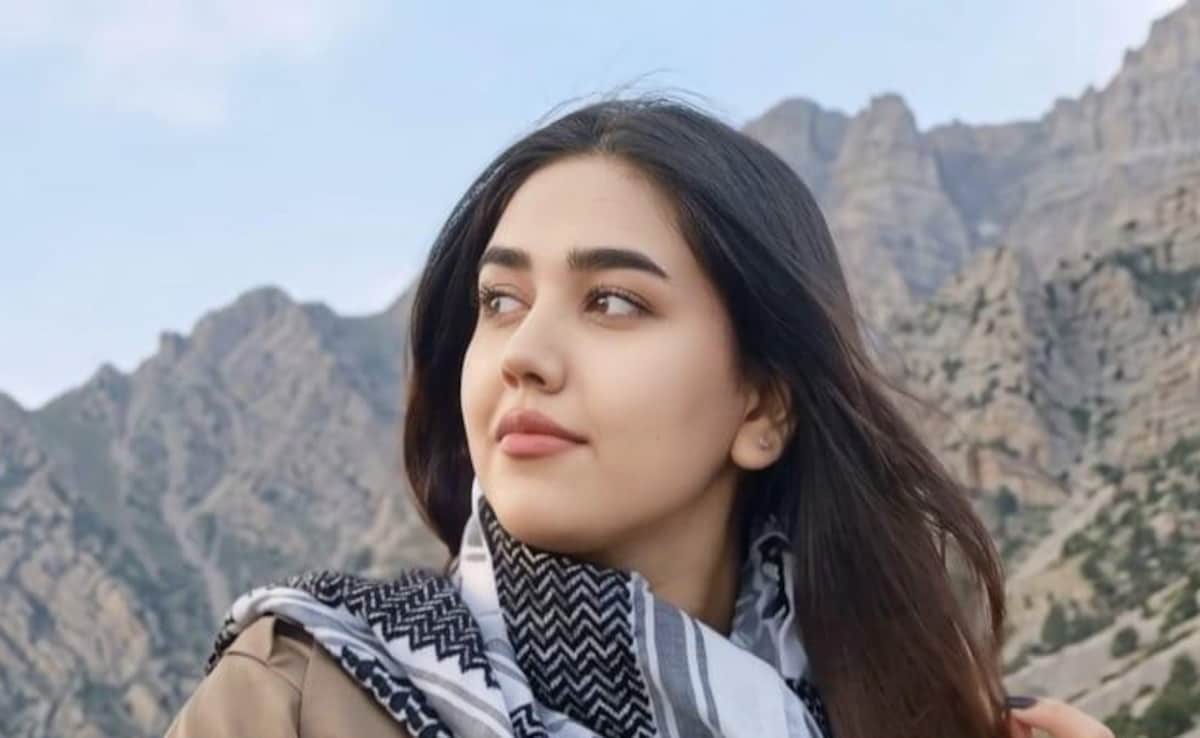
The death of Ghazal Molan in an Iranian missile strike is more than a tragic footnote in a regional conflict. It is a stark reminder of the shifting demographics of Kurdish resistance and the increasing precision of Tehran’s cross-border military operations. Molan, reportedly the youngest female Kurdish fighter at the time of her death, was killed when Iranian forces targeted bases belonging to the Kurdistan Democratic Party of Iran (KDPI) in northern Iraq. Her passing has ignited a fresh wave of scrutiny regarding the recruitment of young women and the geopolitical chess match being played out across the Iran-Iraq border.
The Strike and the Target
In late 2022, the Islamic Revolutionary Guard Corps (IRGC) launched a series of coordinated drone and missile attacks on Kurdish opposition groups stationed in the Koya district of Erbil. These groups have long sought greater autonomy for the Kurdish minority within Iran, and Tehran views them as existential threats to its sovereign stability. The IRGC claimed the strikes were a response to "terrorist" activities and the alleged instigation of domestic unrest inside Iran following the death of Mahsa Amini.
Ghazal Molan was positioned at one of these headquarters. She was not a casual observer. As a member of the KDPI, she represented a generation of young Kurds who felt that political dialogue with Tehran had reached a permanent dead end. The IRGC used Fateh-360 missiles and Shahed drones, weapons systems that have since become famous on international battlefields. This wasn't a localized skirmish. It was a sophisticated demonstration of modern aerial warfare used against an entrenched insurgent political wing.
The Role of Female Combatants in Kurdish Groups
For decades, the image of the female Kurdish fighter—the Peshmerga—has been romanticized by Western media and vilified by regional powers. Within the KDPI and other factions like the PKK or PJAK, women serve on the front lines, in logistics, and within the political bureaus. This is not merely about optics. For these groups, gender equality is a core tenet of their revolutionary ideology.
Young women like Molan often see the military path as the only way to escape the restrictive social and political environment of their home provinces. In the Iranian provinces of Kurdistan and West Azerbaijan, opportunities for young Kurds are frequently stifled by heavy security presence and economic marginalization. Joining a group across the border in Iraq is often framed as a rite of passage, a way to reclaim agency in a world that offers them very little.
Why the Iranian State Targeted Koya
Tehran’s logic for the strike that killed Molan is grounded in the concept of "forward defense." By striking the KDPI in Iraq, the Iranian government aims to decapitate the leadership of the Kurdish movement before it can filter back into Iranian territory. During the 2022 protests, the Iranian government grew increasingly paranoid that these armed groups were smuggling weapons across the border to fuel a domestic uprising.
While the KDPI maintained that their presence in Iraq was largely political and administrative, the IRGC argued that the bases served as training grounds for urban warfare. The strike on Koya was intended to send a message to both the Kurdish leadership and the Iraqi government in Baghdad. Tehran wanted to prove that Iraqi sovereignty would not protect those it deemed "counter-revolutionary."
The Human Toll of High-Tech Warfare
Molan’s death highlights a disturbing trend in regional conflict: the use of high-precision ballistics against non-state actors in civilian-adjacent areas. The KDPI camps in Koya are not isolated military fortresses. They are often integrated with housing for families, schools, and offices. When a missile hits a headquarters, the collateral damage is almost guaranteed.
Molan was barely twenty. Her age became a rallying cry for activists who viewed her death as the ultimate proof of the regime's brutality. Conversely, state-aligned media in Iran used her youth to argue that Kurdish groups were "radicalizing children" and using them as shields. This information war is just as volatile as the physical one. Every casualty is repurposed as a tool for propaganda, often stripping away the individual humanity of the person who died.
The Geopolitical Fallout
The death of an Iranian-Kurdish citizen on Iraqi soil creates a diplomatic nightmare. Iraq’s Ministry of Foreign Affairs repeatedly condemned the violations of its airspace, yet it lacks the military capability to deter Iranian incursions. The United States, which maintains a presence in Erbil, also condemned the strikes, but did little to intervene. This leaves the Kurdish groups in a precarious position—they are useful allies when fighting groups like ISIS, but they are often abandoned when they become an inconvenience to the larger players in the Middle East.
The Growing Distance Between Leadership and the Youth
There is a widening gap between the veteran Kurdish leaders, who remember the skirmishes of the 1980s, and the new recruits like Molan. The older generation is often more inclined toward the slow grind of diplomacy and international lobbying. The younger generation, fueled by the immediacy of social media and the visceral anger of current domestic repression, is often more radicalized.
Molan was a product of this new reality. She grew up in an era where the internet provided a window into a different world, yet her physical reality remained one of checkpoints and surveillance. This dissonance creates a powerful incentive for militancy. When a young person feels they have no future within the system, they will look for meaning outside of it, even if that meaning leads to an early grave.
The Reality of the Borderlands
The border between Iran and Iraq is one of the most porous yet heavily monitored regions in the world. It is the land of the Kolbars—porters who carry goods across the mountains on their backs to survive. It is also the land of the shadow war.
Iranian intelligence services have a deep reach into the Kurdistan Region of Iraq. Assassinations and kidnappings of activists are common. The missile strike that killed Molan was simply the most overt expression of a long-standing policy of neutralisation. The IRGC doesn't just want to defeat these groups; it wants to make the cost of membership so high that recruitment dries up.
However, history suggests the opposite often happens. Every martyr like Ghazal Molan becomes a recruitment poster for the next generation. The funeral ceremonies for these fighters often turn into mass protests, further fueling the cycle of violence.
Assessing the Military Impact
From a purely tactical standpoint, the strikes were effective. They damaged infrastructure and forced the KDPI to rethink its security protocols. But strategically, the killing of a young woman fighter backfired. It drew international attention back to the Iranian government’s treatment of Kurds at a time when Tehran was already under heavy fire for its domestic crackdown.
The IRGC's reliance on missile technology shows they are unwilling to engage in a messy ground war in the mountains. They prefer the "push-button" approach, which allows them to claim victory without risking Iranian lives on the ground. This creates a terrifying environment for those in the camps, as death can come from the sky at any moment, without warning.
The Narrative of the Youngest Fighter
The designation of Molan as the "youngest" is significant. It implies a loss of potential and a life cut short before it truly began. For the Kurdish cause, she is a symbol of innocence sacrificed. For her critics, she is a cautionary tale of the dangers of extremist ideologies.
The truth likely sits somewhere in the middle. She was a young woman who made a choice in an impossible situation. To understand her death, one must understand the lack of choices available to a young Kurd in Iran. The Iranian state sees these individuals as militants first and citizens second. This dehumanization is the fuel that keeps the conflict burning.
The international community's response has been characterized by "thoughts and prayers" and empty diplomatic gestures. There is no appetite in Washington or Brussels to engage in a direct confrontation with Iran over the rights of Kurdish minorities. This leaves the Kurds in their perennial state of being "the world's largest ethnic group without a state," caught between the hammers of various regional powers.
The cycle of strikes and retaliation shows no sign of slowing. As long as the underlying issues of Kurdish autonomy and human rights remain unaddressed, more young people will cross the mountains to join the struggle. They are fully aware of the risks. They have seen the footage of the missiles hitting Koya. They know what happened to Ghazal Molan.
The mountains remain the only place where these young fighters feel they can speak their own language and dream of a different future. But as the technology of war advances, even the highest peaks offer little protection from a government determined to silence its critics. The death of Molan isn't an isolated event; it is a preview of the high-tech attrition that will define the next decade of this forgotten war.
The persistence of these groups, despite the overwhelming military might of the IRGC, suggests that the Kurdish issue cannot be solved through ballistics alone. Every missile that falls reinforces the narrative of oppression. Every young fighter killed becomes a permanent fixture in the collective memory of the resistance. The Iranian government can destroy buildings in Koya, but it has yet to find a way to destroy the impulse that sends twenty-year-olds like Molan into the line of fire.