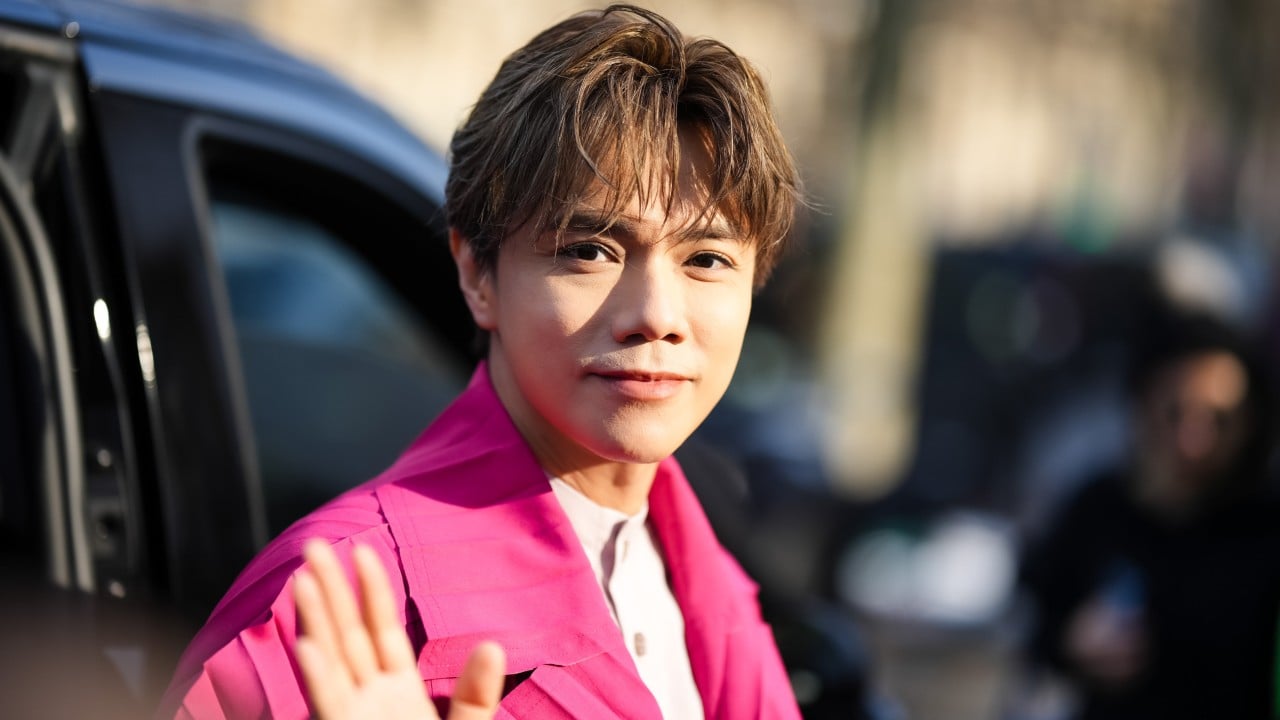
Hins Cheung stood on a stage where the air usually carries nothing but the sweet, soaring notes of a Canto-pop ballad. But recently, the atmosphere around the veteran singer has thickened with something far heavier than music. It is the weight of a political litmus test, a digital trial by fire that has become the standard tax for any artist attempting to bridge the narrowing gap between Hong Kong and mainland China.
The controversy began not with a missed note or a scandalous headline, but with an appointment. The Culture, Sports and Tourism Bureau of Hong Kong named Cheung a "mentor" for a youth development program. It was meant to be a straightforward passing of the torch—a seasoned professional helping the next generation find their rhythm. Instead, it became a lightning rod.
Mainland netizens began digging. They unearthed years-old social media posts, fragmented comments, and photos from 2014, interpreting them through a modern lens of absolute loyalty. To his critics across the border, Cheung wasn’t just a singer; he was a symbol of past dissent. To the Bureau, however, he was something different: a necessary bridge.
The Digital Echo Chamber
Imagine a young musician in a cramped Hong Kong flat, tuning a guitar while scrolling through a feed of vitriol. This student sees their idol—a man who has filled the Coliseum dozens of times—being dismantled in real-time over nuances of history and identity. The stakes for this student are no longer just about mastering a chord progression. They are about navigating an invisible minefield where a single "like" from a decade ago can detonate a career before it starts.
The backlash was swift and loud. On platforms like Weibo, the rhetoric sharpened. Demands for his removal grew into a chorus of ideological purity. This is the new reality of the Greater Bay Area’s cultural exchange. It is an ecosystem where the art is often secondary to the artist's perceived stance on the sovereignty of the soil beneath their feet.
The Bureau didn’t flinch. In a rare display of bureaucratic resolve, they defended the choice. They pointed to his professional achievement, his influence, and his willingness to contribute to the city’s cultural future. They chose to see the artist, not the digital ghost.
Why a Mentor Matters
Mentorship is a fragile thing. It requires a level of vulnerability that is increasingly rare in a world of curated personas. When Cheung steps into a room with a twenty-year-old songwriter, he isn't bringing a political manifesto. He is bringing thirty years of knowing how to protect a voice, how to handle the crushing pressure of a debut, and how to survive in an industry that eats its young.
If we disqualify every mentor who has ever lived through a period of social upheaval, we are left with a vacuum. We end up with mentors who have never felt the pulse of their city, who have never struggled with the complexity of their own identity, and who have nothing to offer but safe, sterilized platitudes.
The Bureau’s defense suggests a belief in the power of evolution. It implies that a person’s value isn't frozen in a timestamp from ten years ago.
The Invisible Stakes
There is a quiet fear that permeates these discussions. It’s the fear that the "human" is being scrubbed out of the humanities. When the government defends an artist against a digital mob, it isn’t just about protecting one man’s contract. It’s about preserving the idea that Hong Kong can still be a place where professional merit carries its own weight.
The tension is palpable. On one side, there is the mainland’s demand for clear-cut, unambiguous patriotism. On the other, there is Hong Kong’s messy, complicated, and often contradictory cultural history. Hins Cheung sits exactly at the intersection of those two forces. He is a Guangzhou-born singer who found his soul in Hong Kong, making him the perfect representative of the region’s friction—and its potential.
Critics argue that by keeping him, the Bureau is being tone-deaf to the "will of the people." But which people? The vocal minority on a social media app, or the thousands of young locals who look at Cheung’s career as a roadmap for what is possible?
Beyond the Screen
The reality of the situation is far more nuanced than a comment section allows. To be a mentor in today’s Hong Kong is to be a lightning rod. You are teaching more than music; you are teaching how to exist in the "between."
Cheung has spent years refining his craft, transitioning from the soulful "My Way" to the grand, theatrical productions of his recent tours. He has learned how to speak to both sides of the border, often through the universal language of a well-placed melody. If that isn't the definition of a mentor for a city trying to find its new voice, it’s hard to say what is.
The Bureau’s stance effectively drew a line in the sand. They signaled that while they hear the noise from the north, they are prioritizing the practical needs of the south. They are betting that the lived experience of a seasoned artist is more valuable than the optics of a quick firing.
A Lesson in Resilience
For the students in the program, the lesson has already begun. They are watching how a professional handles a crisis. They are seeing that loyalty to one’s craft and one’s community can sometimes mean standing still while the storm rages.
Cheung’s silence on the matter has been its own kind of music. He hasn't engaged in a shouting match. He hasn't groveled. He has simply continued to be Hins Cheung—a man who understands that in the long run, the song outlasts the scandal.
This isn't just about a mentorship role. It’s a proxy battle for the soul of Hong Kong’s creative industry. If the city loses the ability to support its own, it loses the very thing that made it a cultural powerhouse in the first place. The Bureau isn't just defending a singer; they are defending the right to be complicated.
The stage lights eventually dim, and the digital outrage eventually finds a new target. What remains is the work. The young artist who learns how to breathe through a high note because of a tip from a mentor will remember that moment long after the hashtags have faded.
We often talk about "culture" as if it’s a static thing we can protect with rules and vetting processes. It isn’t. Culture is the sound of a voice echoing in a hall, the sweat on a performer’s brow, and the uncomfortable, necessary conversations that happen when different worlds collide.
Hins Cheung continues to teach. The Bureau continues to watch. And the city continues to sing, even when the notes are strained and the lyrics are hard to reconcile with the world outside the theater doors.
The mentor stays. The music continues. The bridge holds, for now.