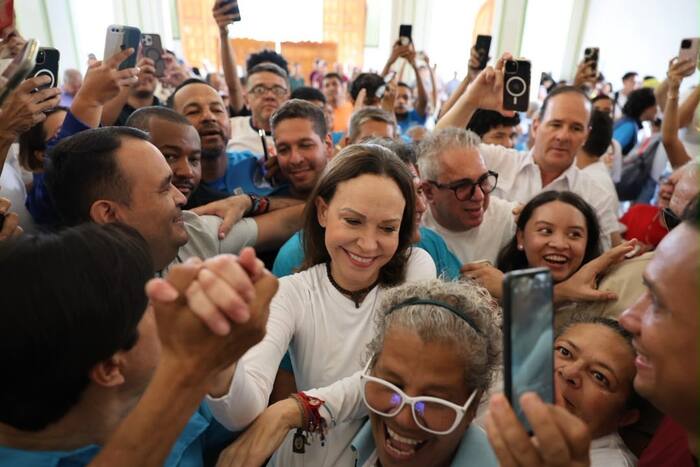
She walked back into a country where the arrest warrants haven't been torn up, the courts still answer to Miraflores Palace, and the democratic institutions are hanging by a thread. When Venezuelan opposition leader María Corina Machado returned after months in exile, the headlines immediately split into two predictable camps. One side called it a triumphant spark for liberation. The other dismissed it as political theater in a country where authoritarianism has already hardened into concrete.
Both takes miss the real story.
Having tracked Latin American political transitions and hybrid regimes for over a decade, I can tell you that exiled leaders rarely come home because the regime suddenly grew a conscience. They return because staying away carries a steeper price than walking into the lion's den. For Machado, distance was slowly eroding the street-level momentum she spent years building across Venezuela's fractured opposition. Yet coming back doesn't magically restore free elections, independent judges, or a fair press. Instead, it forces a collision between raw popular legitimacy and an entrenched state apparatus that has survived sanctions, hyperinflation, and mass migration.
Why Machado Left and Why Exile Was Slowly Killing Her Movement
To understand why her return matters, you first have to look at why she left in the first place. After the disputed 2024 presidential election—where independent tally sheets collected by opposition volunteers pointed to a decisive victory for Edmundo González Urrutia, the candidate Machado backed after her own disqualification—Caracas launched an aggressive crackdown. Security forces detained thousands of protesters, poll workers, and campaign organizers. Arrest warrants piled up. González fled to Spain to avoid prison, and Machado eventually went underground before leaving the country to rally international pressure from abroad.
Exile buys you safety. It also buys you irrelevance if you stay away too long.
I've watched this exact dynamic play out from Minsk to Managua. When an opposition figure operates from Washington, Madrid, or Bogotá, their daily reality disconnects from the people still rationing water and stretching devalued bolívares in Maracaibo or Valencia. State media in Caracas exploited her absence relentlessly, painting her as an elite figure lobbying for foreign pressure from comfortable hotel lobbies while ordinary Venezuelans absorbed the economic fallout. You can't organize neighborhood committees over encrypted video calls forever. At some point, leadership requires physical presence, even when that presence puts your freedom on the line.
The Reality on the Ground in Caracas Right Now
So what did Machado actually step back into? Not a softening dictatorship.
Doubts over Venezuelan democracy haven't just deepened—they've ossified into institutional reality. The National Electoral Council (CNE) remains tightly aligned with the ruling United Socialist Party of Venezuela (PSUV). The Supreme Tribunal of Justice routinely rubber-stamps political disqualifications without due process. Independent broadcast media inside the country has been largely dismantled, leaving millions reliant on state channels or fragmented WhatsApp networks for basic news.
If you're expecting her arrival to trigger an immediate collapse of the government, stop. That's not how entrenched authoritarian systems work.
The Venezuelan state relies on a tightly bound coalition of military leadership, intelligence services like SEBIN and DGCIM, and economic networks that benefit from state-controlled contracts and resource extraction. As researchers at organizations like the Washington Office on Latin America (WOLA) and the International Crisis Group have repeatedly documented, regimes with this kind of patronage structure don't fold simply because a popular figure holds a rally. They adapt, absorb the shock, and wait for the crowd to go home.
What Most Analysts Miss About Opposition Leverage
Here's where conventional punditry gets tripped up. People measure opposition success by a single binary metric: did the president leave office this week? When the answer is no, they declare the opposition dead.
That's a lazy way to read political leverage.
Machado's real power has never been control over state institutions—she has none. Her asset is coordinating capacity. Before her exile, she accomplished something Venezuelan opposition politicians failed to do for twenty years: she united rival factions behind a single primary process, mobilized tens of thousands of citizen election monitors, and proved she could turn out massive crowds in traditional Chavista strongholds.
By returning, she puts the government in a lose-lose bind:
- If authorities arrest her, they instantly shatter whatever fragile diplomatic normalization they've negotiated with regional neighbors like Brazil and Colombia, while giving Washington fresh justification to tighten financial and oil-sector restrictions.
- If authorities leave her free, she regains the ability to tour the country, rebuild local organizing networks, and keep domestic discontent visible to the outside world.
Neither option solves the regime's underlying legitimacy crisis. Both options keep the political cost of repression high.
The International Factor Isn't Saving Anyone
A lot of commentary around Machado's return assumes that Washington, Brussels, or neighboring Latin American capitals hold the decisive cards. Honestly, that's wishful thinking.
Foreign governments have competing priorities that rarely align neatly with Venezuelan democratization. The United States balances human rights concerns against migration flows at its southern border and global energy supply stability. Neighboring countries like Colombia and Brazil want border security, trade continuity, and fewer refugees straining their public services—goals that often push them toward pragmatic engagement with Caracas rather than confrontation. European governments issue strong statements from Brussels while struggling to enforce meaningful consequences on the ground.
International pressure matters, sure. Targeted sanctions, visa bans, and diplomatic isolation raise the personal cost for regime insiders. But external actors won't negotiate a democratic transition on behalf of Venezuelans if there isn't organized, visible pressure inside the country forcing the issue. Machado knows this. That's precisely why she came back instead of continuing a perpetual speaking tour abroad.
Three Fault Lines That Will Decide What Happens Next
Forget the dramatic speeches for a second and watch the mechanics. Over the coming months, three concrete indicators will tell you whether Machado's return shifts the political balance or gets absorbed by the state apparatus.
1. Freedom of Movement Inside Venezuela
Watch whether she is allowed to travel outside Caracas. In past cycles, Venezuelan authorities have avoided the optics of arresting high-profile leaders in the capital while quietly blocking their flights, setting up military checkpoints on highways, and detaining local drivers or hotel owners who host them in the provinces. If Machado can hold rallies in Zulia, Táchira, and Bolívar without her logistical team disappearing into custody, her organizing network is intact. If she's effectively boxed into Caracas, the regime has successfully contained her without making her a martyr.
2. Cohesion Between Caracas and Exile Leadership
Exiled leaders and domestic organizers almost always develop friction. Those abroad tend to favor maximalist demands and tougher international sanctions because they aren't facing immediate arrest. Those inside the country often have to make tactical compromises just to keep grassroots networks alive. Whether Machado and figures like Edmundo González maintain a unified strategy—or start sending mixed signals to foreign diplomats—will determine if the opposition speaks with one voice or fractures back into competing camps.
3. Crackdowns on Mid-Level Organizers
Dictatorships rarely target the famous face first when they want to break a movement. They go after the campaign treasurer, the regional coordinator, the sound technician, and the local activist handing out flyers. Keep a close eye on reports from human rights monitors like Foro Penal. A spike in arrests of mid-tier opposition staffers is the clearest sign that the state is systematically dismantling her operational capacity while keeping her free for international cameras.
How to Follow This Story Without Falling for Spin
If you want to track Venezuela's democratic crisis accurately over the next few months, stop reading breathless social media threads that promise regime change by Friday—or claim the opposition is finished by Monday. Cross-reference state announcements against independent human rights trackers like Foro Penal, monitor regional reporting from outlets like El Pitazo and Efecto Cocuyo that still report from inside the country under heavy censorship, and watch how neighboring governments in Bogotá and Brasília respond to every arrest or diplomatic snub. Real political shifts in Caracas won't arrive in a single headline; they'll show up in whether ordinary Venezuelans still feel safe enough to show up in the street.


