The ideological marriage between Donald Trump and the populist right is hitting a wall of high-stakes foreign policy. When Tucker Carlson publicly questioned Trump’s recent aggressive posture toward Iran, it wasn't just another soundbite in a noisy news cycle. It was a flare sent up from the base of the America First movement. The friction stems from a specific Easter message where the former president used inflammatory language to threaten Tehran, a move that Carlson—now the de facto gatekeeper of the anti-interventionist right—viewed as a betrayal of the very isolationism that fueled Trump’s 2016 rise.
This isn't about personality. It is about a fundamental struggle for the soul of conservative geopolitics. For years, the alliance between the "forever war" skeptics and the Trump brand was held together by a shared enemy: the neoconservative establishment. But as Trump reverts to the bellicose rhetoric of the traditional hawks he once mocked, the men who helped build his intellectual platform are starting to push back. They are asking a question that would have been unthinkable five years ago. Who is actually in charge of the GOP's crystal ball?
The Rhetoric of Escalation
Trump’s Easter message was not a measured diplomatic cable. It was a raw, expletive-laden warning that suggested a return to the "maximum pressure" campaign of his first term, but with a more volatile edge. To the casual observer, it looked like standard Trumpian bravado. To the populist intellectuals who have spent the last decade trying to dismantle the military-industrial complex, it looked like a lapse into the very "war-mongering" they claim to despise.
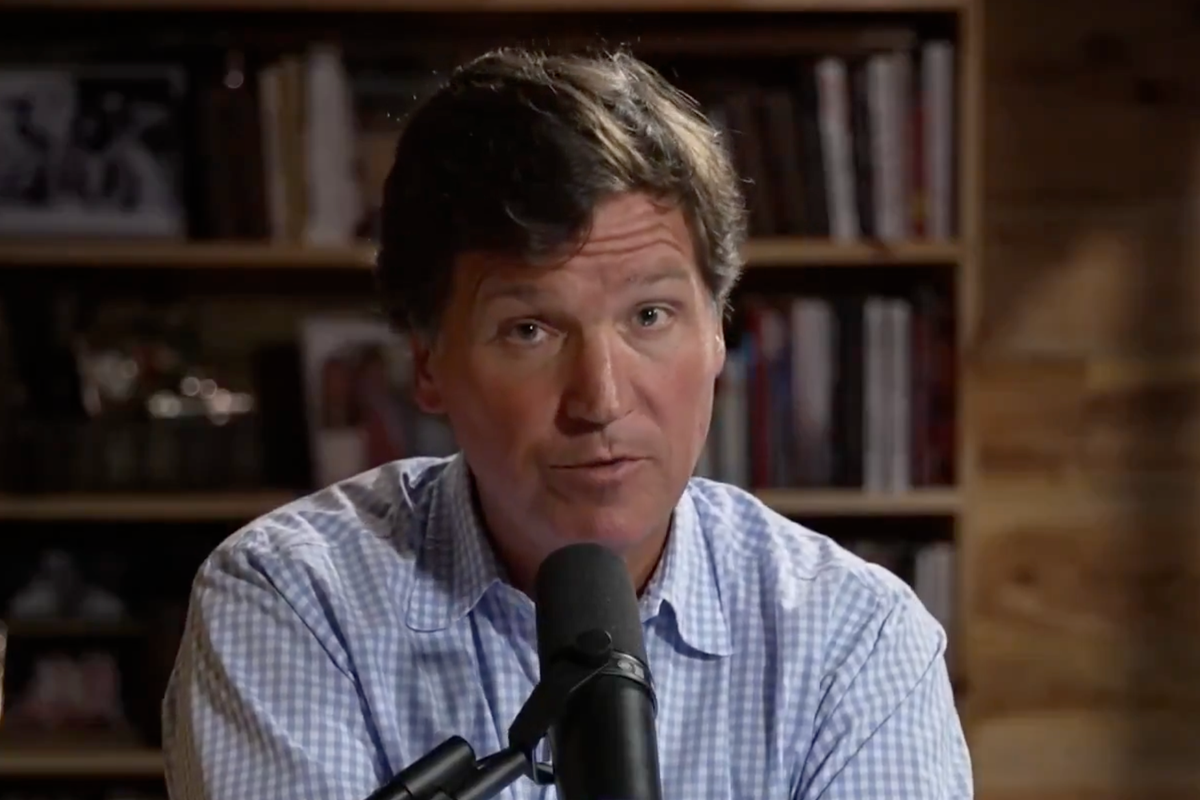
Carlson’s response was surgical. By asking "Who do you think you are?" he wasn't just critiquing a social media post; he was challenging the authority of a leader to unilaterally pivot back toward Middle Eastern entanglement. This represents a massive shift in the power dynamic. In the past, Trump was the sun around which all conservative media orbited. Now, the media figures who validated him are setting the boundaries for his behavior.
The math of this disagreement is simple. The populist wing of the party believes that every dollar and every life spent in the Middle East is a resource stolen from the American border or the American working class. When Trump threatens Iran, he isn't just threatening a foreign adversary. He is threatening the internal logic of the "America First" doctrine.
The Ghost of John Bolton
To understand why this rift matters, you have to look at the personnel shifts that defined the first Trump administration. The tension between the "America First" loyalists and the "traditional hawks" was a constant theme from 2017 to 2021. Figures like John Bolton represented the old guard—those who view American hegemony as something to be maintained through proactive military threats.
Trump spent years distancing himself from that legacy. He campaigned on bringing troops home and ending "stupid" wars. However, his recent rhetoric suggests that the influence of the hawks never truly left the building. Whether it’s due to the influence of billionaire donors who prioritize Israeli security or a personal desire to appear "tougher" than the current administration, Trump is drifting back toward a policy of interventionism.
Carlson and his allies see this as a trap. They recognize that if Trump wins another term and fills his cabinet with the same breed of hawks, the populist revolution is over. It will have been nothing more than a cosmetic rebranding of the same foreign policy that has governed Washington since the 1990s. The skepticism we see today is a preemptive strike against a second-term Bolton.
A Base Divided by the Map
The GOP voter base is no longer a monolith on foreign intervention. You have the "Jacksonian" wing—voters who don't want to start fights but want to end them with overwhelming force if provoked. Then you have the "Burkean" or "Pauline" isolationists, who believe the United States has no business policing the globe regardless of the provocation.
Trump is trying to speak to both, but the two positions are becoming increasingly irreconcilable.
- The Hawks: Focus on Iran as an existential threat to global stability and energy markets. They see Trump’s rhetoric as a necessary deterrent.
- The Populists: View Iran as a distraction. They argue that the real "invasion" is happening at the southern border and that any focus on Tehran is a gift to the defense contractors.
When Carlson calls out Trump, he is speaking directly to that second group. He is reminding them that the "movement" is bigger than the man. This is a dangerous moment for Trump because his greatest strength has always been his perceived authenticity. If his base begins to see him as a puppet for the same interests he claims to fight, the enthusiasm that drives his rallies will begin to evaporate.
The Strategic Miscalculation
There is a pragmatic argument that Trump’s team is making behind the scenes. They believe that by appearing more aggressive than the Biden administration, they can paint the current president as weak and indecisive. This is a classic campaign tactic. But it ignores the fact that a significant portion of the GOP's new coalition—younger voters and disaffected Democrats—joined because they were tired of the "tough guy" posturing that leads to decade-long occupations.
The irony is thick. For four years, the mainstream media labeled Trump a Russian asset or a dangerous isolationist. Now, he is being criticized by his own flank for being too much of a globalist enforcer. It suggests that the political spectrum has folded in on itself.
If you look at the polling data regarding American involvement in foreign conflicts, there is a clear trend toward exhaustion. Most Americans, regardless of party, are more concerned about the price of eggs than the centrifuges in Natanz. By leaning into an expletive-fueled threat against a foreign power on a religious holiday, Trump may have misjudged the mood of a country that is simply tired of the noise.
The Media Middleman
Tucker Carlson’s role in this cannot be overstated. Since leaving cable news, he has positioned himself as an independent broker of truth for the right. He doesn't need a network to reach millions, and he doesn't need Trump’s permission to criticize him. This independence makes him more dangerous to Trump than any Democratic opponent.
When Carlson asks "Who do you think you are?" he is signaling to the rest of the conservative media ecosystem that it is safe to dissent. He is giving permission to other influencers to hold the former president’s feet to the fire. This creates a feedback loop where Trump is forced to choose between his instinct for escalation and his need for a unified base.
This is the "loyalty tax" that Trump is finally having to pay. He spent years demanding absolute fealty from his supporters. Now, those supporters are demanding fealty to the ideology they thought he represented. They are holding him to the standard he set in 2016, and they are finding him wanting.
Institutional Pressure and the Donor Class
We cannot ignore the role of money in this pivot. Political campaigns are expensive, and the donors who cut the largest checks often have specific interests in the Middle East. There is a long-standing tension between the populist rhetoric of the campaign trail and the pragmatic requirements of fundraising.
The "America First" movement was always a grassroots phenomenon. It was funded by small-dollar donations and fueled by digital energy. But as the legal fees mount and the general election approaches, the need for institutional "Big Money" becomes more pressing. Much of that money comes from individuals who view a hard line on Iran as non-negotiable.
Trump is caught in a pincer movement. On one side, he has the voters who want him to ignore the rest of the world. On the other, he has the donors and the military establishment who insist that he maintain the global order. Every time he leans toward the donors, a figure like Carlson will be there to point it out to the voters.
Beyond the Social Media Post
What happens if this rift widens? If Trump continues to use Iran as a rhetorical punching bag, he risks alienating the very people who provide his intellectual cover. Without the defense of the populist media, Trump is just another politician making threats he may or may not be able to keep.
The "Easter Message" was a symptom of a deeper malaise. It showed a candidate who is perhaps relying too much on his old playbook—the one that says "strength" is measured by the volume of your voice and the sharpness of your insults. In a world that has grown increasingly complex and dangerous, that playbook is losing its efficacy.
The populists are looking for a grand strategist, not a tavern brawler. They want a leader who understands that the true measure of American power is its ability to remain uninvolved in peripheral conflicts. By threatening Iran, Trump signaled that he might still be interested in the old games. Carlson’s critique was a reminder that the world has moved on, and if Trump wants to lead the movement he started, he needs to move with it.
The real danger for the GOP isn't a policy disagreement; it's a loss of identity. If the party can't decide if it is the party of "no more wars" or the party of "maximum pressure," it will find itself paralyzed at the very moment it needs to be most decisive. The confrontation between the most famous talk-show host on the right and the leader of the Republican Party is a preview of the internal warfare that will define the next four years of American conservatism.
Stop looking at the tweets and start looking at the structural shifts. The alliance is fraying because the goals are no longer aligned. One side wants a return to 1950s-style dominance, and the other wants to pull the shutters closed and focus on the home front. You cannot do both. You cannot be the world’s policeman and its biggest critic at the same time. Trump is trying to walk that line, and he is starting to stumble.