Staying silent about Israel used to be the default setting for many Jewish communities in the UK. You supported the state, you kept internal disagreements quiet, and you didn't air "family business" in public. That era is over.
The UK’s most senior progressive rabbis are now sounding an alarm that’s hard to ignore. They aren't just worried about Israel’s security or its borders. They're warning that the country’s current political trajectory poses an existential threat to Judaism itself. When the actions of a Jewish state become fundamentally incompatible with Jewish values, it’s not just a political crisis. It’s a religious one.
The Breaking Point for Progressive Judaism
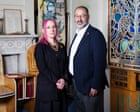
Rabbi Charley Baginsky and Rabbi Josh Levy, the co-leads of the newly unified Progressive Judaism movement, are being remarkably blunt. Representing about a third of British synagogues, they’ve watched the rise of far-right figures like Bezalel Smotrich and Itamar Ben-Gvir with growing dread.
The core of the issue isn't just a disagreement over policy. It’s about what Judaism stands for. Baginsky argues that we've reached a point where the direction of the Israeli government is making it nearly impossible to reconcile the state’s actions with the values of compassion and justice that define the faith.
It’s a heavy charge. They’re saying that if "Religious Zionism" becomes synonymous with the hardline, exclusionary nationalism seen in the West Bank, the moral bedrock of the religion is at risk. For many in the UK, the Zionism they were raised with was about a democratic refuge and a light unto the nations. The current reality? It feels more like a slow-motion car crash involving the values they teach in Hebrew school.
Why Silence is No Longer an Option
For decades, the "loyalty" test in many Jewish circles was simple: don't criticize Israel in front of "outsiders." But Levy and Baginsky are flipping that script. They’re arguing that criticism is actually a Jewish obligation.
Think about it. If you believe your faith is rooted in the pursuit of justice, how can you look away when those values are being trashed in the name of that same faith?
- It's not disloyal to demand better.
- It's not "self-hating" to want an Israel that treats all its inhabitants with dignity.
- It’s actually the most Jewish thing you can do.
They've literally written the book on this. Their new collection of essays, Progressive Judaism, Zionism and the State of Israel, features 40 different voices—rabbis, lay leaders, and thinkers—wrestling with these exact questions. The goal? To prove that the Jewish community isn't a monolith. You can love the land and the people while absolutely loathing the direction of the current government.
The Price of Speaking Out
Taking this stand hasn't been easy. Just last year, Baginsky and Levy were booed off stage at a rally for Israeli hostages in London. Their crime? Calling for an end to the war and a path toward a Palestinian state.
That moment was a wake-up call. It showed just how deep the divisions run. But it also triggered a massive wave of support from people who were tired of feeling like they had to choose between their conscience and their community.
There’s a real fear that the "proprietorial Zionism" of the far-right is sucking all the oxygen out of the room. By claiming they speak for all Jews, extremist ministers in Israel are effectively hijacking the brand. The Progressive movement is trying to take it back. They want to show that there is a "textual, deep, and rich" Zionism that recognizes Palestinian self-determination as a necessity, not a threat.
Breaking the Monopoly on Holy Sites
It’s not just about the war or the West Bank. The "existential threat" extends to how Judaism is practiced. Recent moves in the Knesset to give the Chief Rabbinate total control over the Western Wall are a direct slap in the face to non-Orthodox Jews worldwide.
If a bill passes that criminalizes egalitarian prayer at the Kotel, it basically tells millions of Reform and Liberal Jews that they don't count. It turns a national sacred site into a private club for one specific, rigid interpretation of the law.
When the Israeli government moves to "outlaw" the way you pray, the "existential" part of the threat becomes very personal, very fast. It severs the link between the Diaspora and the state.
What Happens Next
The "tug of war" within Jewish congregations isn't going away. Honestly, it’s probably going to get more intense. But the shift here is that the leaders of Progressive Judaism are no longer trying to hide the tension. They’re leaning into it.
If you’re feeling conflicted about your relationship with Israel, here’s how to navigate the current landscape:
- Accept the complexity. You don't have to have a "perfect" take. It’s okay to be a passionate Zionist and a fierce critic of the Israeli government at the same time.
- Find your "polyvocal" space. Seek out communities and discussions that allow for disagreement. The idea that "diversity is weakness" is a lie used to shut down debate.
- Educate yourself on the alternatives. Look into the work of organizations that build bridges between Israeli Jews and Palestinians. Support the groups on the ground fighting for democracy and religious pluralism.
- Speak up in your own circles. Don't let the loudest, most extreme voices be the only ones representing what "Jewish values" look like in 2026.
The era of blind support is over. What’s replacing it is something much harder, but arguably much more honest: a Judaism that refuses to let its values be sacrificed at the altar of political expediency.