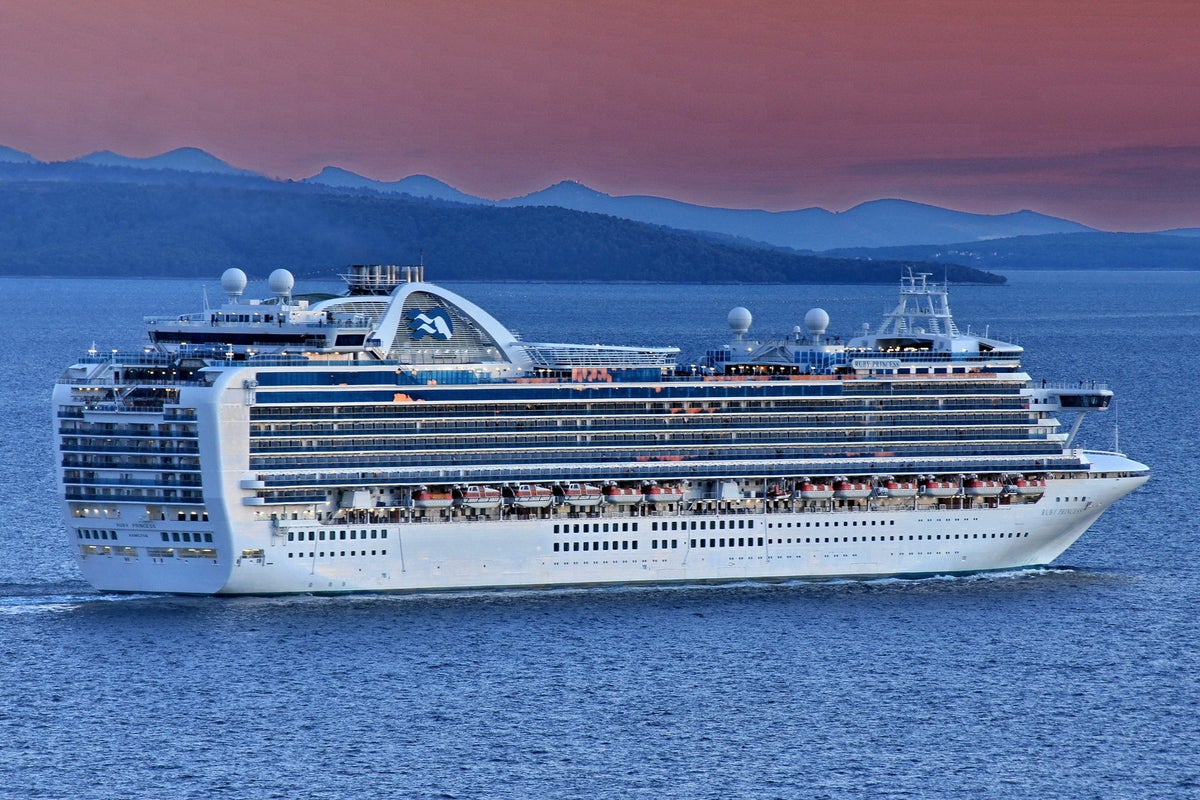
Public health officials just gave global travelers a collective sigh of relief, declaring the recent hantavirus outbreak aboard a luxury cruise liner officially over. The maritime industry is already spinning this as a triumph of modern sanitation and rapid response.
They are wrong. You might also find this related coverage insightful: Why England Fans Need to Ignore the Hype and Pack Smart for Mexico City.
The declaration that a cruise ship virus is "over" relies on a fundamental misunderstanding of how pathogen transmission, cruise ship architecture, and data reporting actually work. I have spent fifteen years analyzing maritime biosafety and auditing shipboard HVAC infrastructure. When an agency like the CDC or the World Health Organization rubber-stamps a ship as clean, they aren't saying the risk is gone. They are saying the incubation window for a specific, tracked cluster has closed.
By treating this all-clear as a green light to return to business as usual, the travel industry is setting itself up for an even harsher reality check. As reported in detailed articles by The Points Guy, the implications are widespread.
The Mathematical Flaw of the Incubation Window
The consensus narrative is simple: no new cases reported within twice the maximum incubation period equals a safe vessel. For hantavirus cardiopulmonary syndrome (HCPS), which generally has an incubation period of one to eight weeks, health authorities wait out a specific timeline before issuing a press release.
This metric is dangerously reactive. It assumes that passive surveillance—waiting for a passenger to get sick, visit a hospital ashore, get tested, and have those results routed back to maritime authorities—is an accurate reflection of a ship's current biosecurity status.
It isn't. Cruise ships are transient cities with a rotating door of thousands of people every seven to fourteen days. If a passenger contracts the virus on day six of a cruise, leaves the ship, and doesn't develop symptoms until week five while back home in Ohio, that case rarely gets mapped back to the vessel in real time. The data is lagged, fragmented, and heavily reliant on local doctors recognizing a rare disease and asking about the patient's travel history from a month prior.
To declare an outbreak over based purely on the absence of newly linked cases is to confuse a lack of data with a lack of risk.
The Rodent Myth: Why Deep Cleaning Won't Save You
The standard operating procedure during a shipboard outbreak involves deep cleaning. Crew members in hazmat suits scrub down galleys, power-wash corridors, and mist cabins with high-grade disinfectants.
This creates a false sense of security. Hantaviruses are not like norovirus. You do not catch hantavirus because the previous passenger failed to wash their hands after using the buffet tongs. Hantavirus is shed in the urine, droppings, and saliva of infected rodents. Transmission to humans occurs almost exclusively through aerosolization—when dried rodent waste is disturbed and microscopic viral particles become airborne, where they are inhaled.
Imagine a scenario where a supply pallet loaded at a tropical port contains a small population of infected rats. They nest in the deep hold of the ship, far beneath the passenger decks, where they chew through wiring and nest in insulation. Scrubbing the carpets in a Deck 9 suite does absolutely nothing to touch the viral reservoir breeding in the belly of the vessel.
The structural reality of modern mega-ships makes complete eradication near impossible once a population takes root. These vessels feature thousands of miles of interstitial spaces, false ceilings, pipe chases, and ventilation shafts. It is a subterranean paradise for rodents. A ship is a floating HVAC closed loop. If the virus enters the ductwork, a surface wipe-down is nothing more than theater.
The Blind Spot in Shipboard Air Filtration
Let’s talk about the actual mechanics of cruise ship air handling. The industry frequently boasts about its transition to high-efficiency air filters, particularly after the global respiratory outbreaks of the early 2020s.
But there is a massive gap between land-based hospital standards and maritime execution.
- MERV Ratings vs. Viral Size: Most cruise lines utilize Minimum Efficiency Reporting Value (MERV) 13 or 14 filters. While these are effective at trapping large dust particles and some bacteria, hantavirus particles are tiny—typically ranging from 80 to 120 nanometers in diameter. They pass right through standard maritime filtration unless the system is fully equipped with true HEPA filters operating under perfect pressure seals.
- The Bypass Problem: Even if a ship installs high-grade filters, the physical vibration of a massive vessel at sea constantly compromises the filter racks. Small gaps form around the edges of the filter frames. Air, taking the path of least resistance, bypasses the filter media entirely.
- Moisture and Humidity: Cruise ships operate in high-humidity marine environments. When moisture enters the HVAC system, it can cause filter media to sag or degrade, reducing its particulate capture efficiency significantly.
When health agencies declare an outbreak over without demanding a full, independent engineering audit of the vessel's air handling systems, they are ignoring the primary mechanism of aerosolized transmission.
Dismantling the "People Also Ask" Delusions
When news of a maritime outbreak breaks, the public asks the wrong questions because they're fed sanitized answers. Let's correct the record on the most common assumptions.
- Can you get hantavirus from cruise ship food? No. This isn't food poisoning. You don't get it from a dirty kitchen matrix. You get it from breathing in dust contaminated with rodent waste. If a kitchen is compromised, the risk comes from dust kicked up during cleaning or food preparation, not the cooking process itself. Stop looking at the buffet plates; start looking at the ceiling vents above them.
- Is it safe to book a cabin on a ship that had an outbreak? The official answer is always a resounding yes. The real answer is: only if you know the exact source of the vectors and how they were eradicated. If the cruise line cannot prove they did a full thermal or chemical remediation of the lower cargo holds and replaced the entire HVAC filtration run for that zone, the underlying cause has not been addressed.
- Do standard travel insurance policies cover these outbreaks? Rarely without a fight. Most standard policies have explicit exclusions for communicable disease outbreaks once they become a "known event." If you book after an outbreak is declared over, and it flares up again, your insurer will likely argue you knowingly took the risk.
The High Cost of Real Biosecurity
Achieving genuine safety on a compromised vessel requires measures that cruise lines are desperate to avoid because they destroy profit margins.
True remediation means taking the ship out of service. It requires dry-docking the vessel, sealing it entirely, and utilizing vaporized hydrogen peroxide (VHP) or intense thermal treatment throughout the entire internal volume, including the structural voids. It means stripping out old insulation where rodents nest.
That costs millions of dollars in lost ticket revenue, port fees, and labor. It is far cheaper for a company to do a highly visible surface cleaning, wait out the incubation clock, and lobby health authorities for a clean bill of health based on a lack of new reported cases.
The trade-off is clear. The current regulatory framework prioritizes economic continuity over absolute biological safety. The "all-clear" is a financial metric disguised as a medical one.
The next time you see an official announcement declaring a shipboard outbreak successfully contained, do not assume the vessel is clean. Assume the bureaucracy has simply decided the acceptable threshold of risk has been met to get the cash flowing again. Pack your bags accordingly.