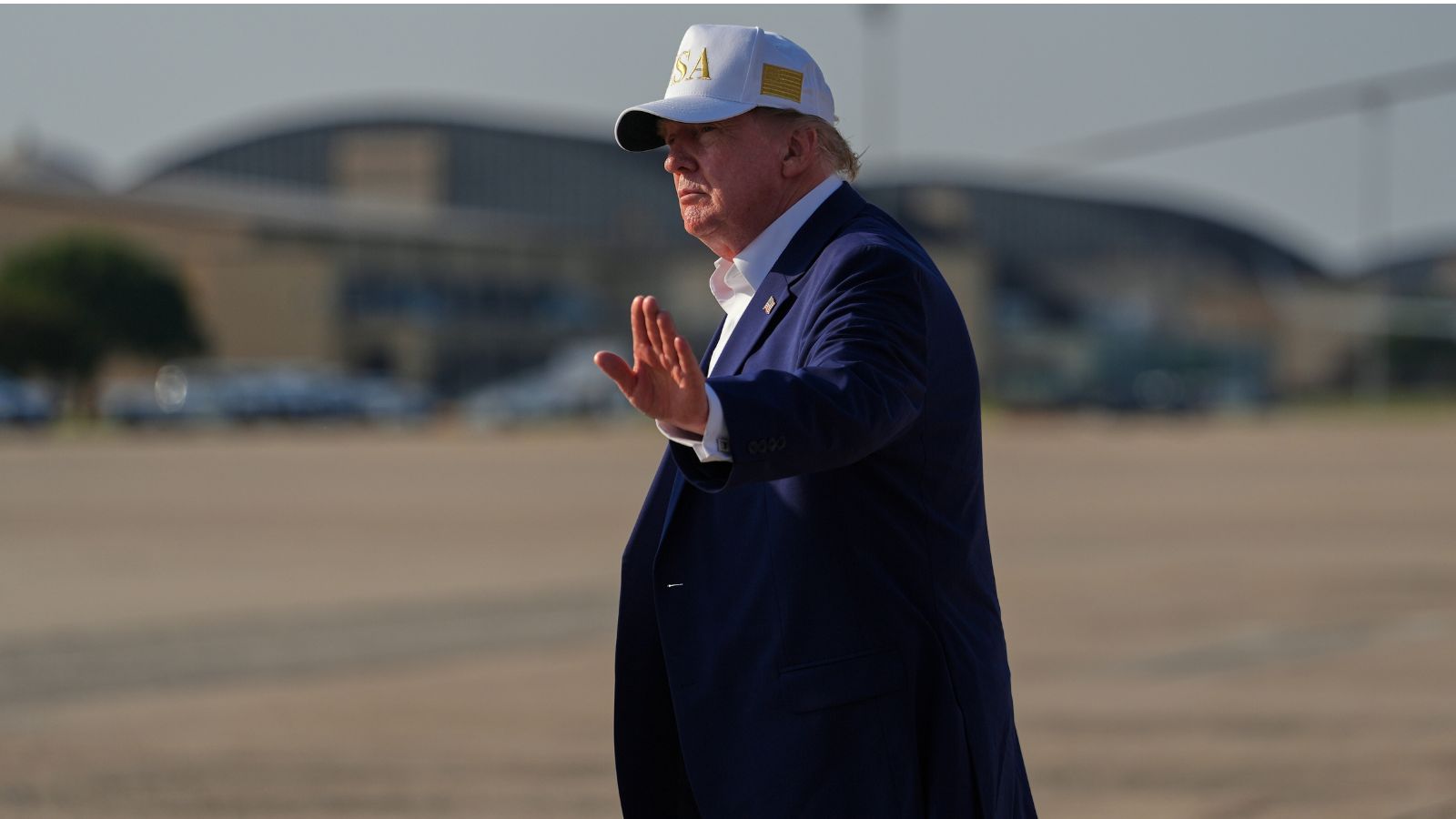
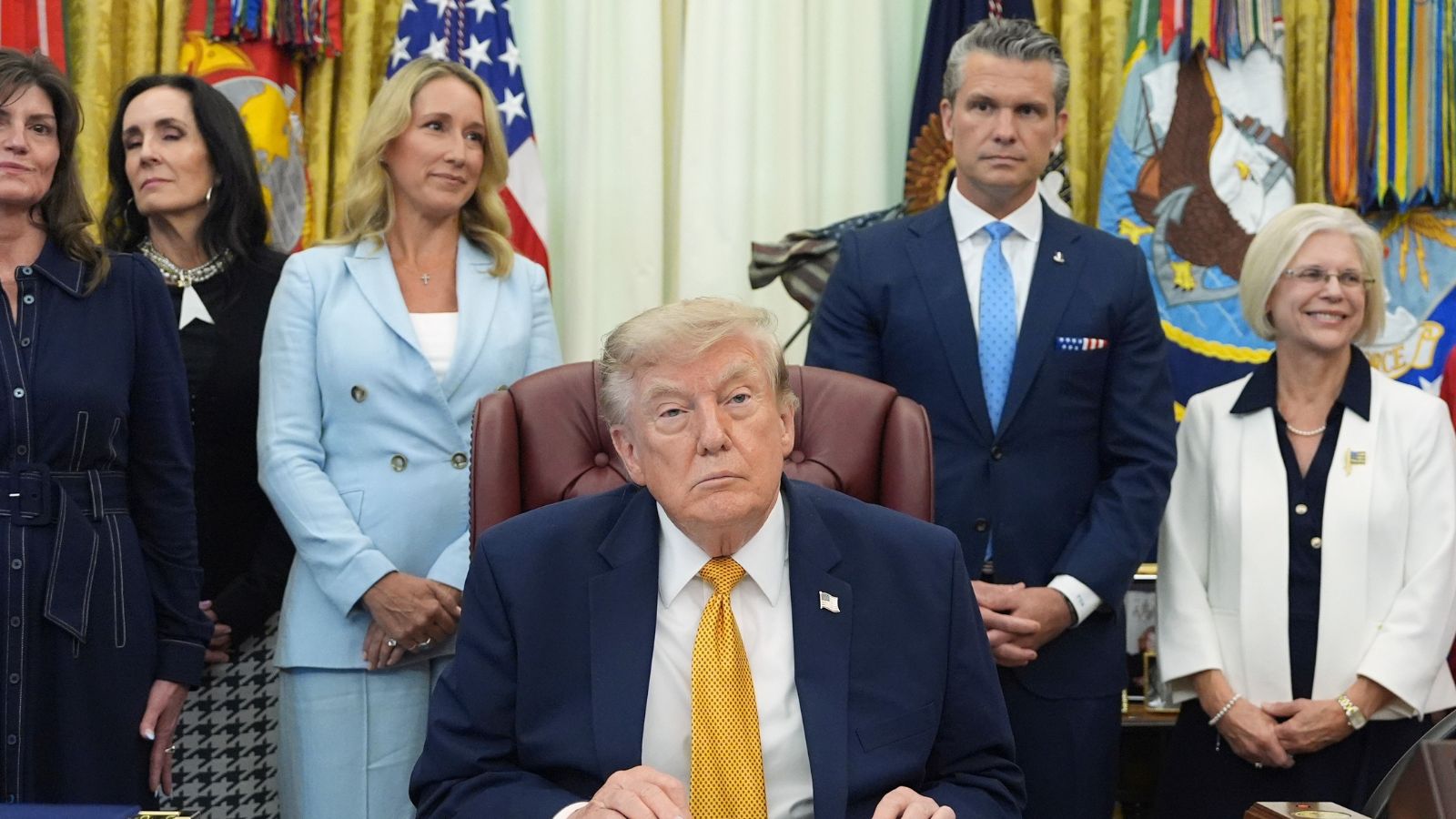
President Donald Trump has chosen to step back from active military escalations against Iran, opting instead to let a compounding financial collapse do the heavy lifting. This quiet strategic pivot trades cruise missiles for monetary attrition.
The Anatomy of Financial Attrition
When White House strategy shifts from kinetic strikes to balance sheet warfare, the metrics of victory change entirely. The primary objective is no longer cratering a hardened underground facility or intercepting retaliatory drone swarms. Instead, the focus locks onto hyperinflation, currency depreciation, and the methodical strangulation of state cash flow. Don't forget to check out our recent coverage on this related article.
For months, the closure of the Strait of Hormuz kept energy markets on edge and spiked crude prices. Yet, as domestic gasoline prices retreated toward more manageable levels, the administration found political breathing room. That stabilization of oil prices removed the immediate domestic urgency that usually forces a president's hand.
[Kinetic Strikes / Military Threats] ---> High Volatility & Oil Spikes
[Naval Blockade & Sanctions]      ---> Hyperinflation & Empty State Coffers
Without the pressure of triple-digit oil crippling domestic consumers ahead of midterm cycles, Washington can afford to wait. The logic inside the West Wing rests on a cold observation: an active military conflict forces a population to rally around the flag, whereas a cold economic siege exposes structural state failure. To read more about the history of this, USA Today provides an in-depth summary.
Inside Tehran S Balance Sheet Crisis
To understand why Washington is content to watch from the sidelines, one must examine the state of the Iranian rial. Decades of sanctions, paired with the active enforcement of a naval blockade targeting maritime commerce, have hollowed out the central bank's reserves.
- State revenues have plummeted due to restricted petroleum exports.
- Inflation rates have eroded consumer purchasing power to historical lows.
- Military payrolls face severe liquidity constraints, straining the regime's internal security apparatus.
This financial anemia creates deep internal fractures. On one side, civilian administrators argue for pragmatic concessions to prevent total societal collapse. On the other side, hardline security factions insist on maintaining aggressive regional postures and steep maritime tolls. When cash is abundant, these internal contradictions remain manageable. When cash evaporates, governance turns into a brutal triage exercise.
The Limits of Waiting Out an Autocracy
History suggests that betting purely on economic collapse to trigger political capitulation is a high-risk gamble. Authoritarian regimes possess survival mechanisms that democratic planners routinely underestimate.
Control over domestic distribution networks allows ruling elites to insulate themselves from scarcity while shifting the burden entirely onto the working class. Security forces often receive the last remaining drops of state liquidity to ensure their loyalty does not waver, even as civil society frays.
Furthermore, Tehran's counter-strategy relies on outlasting political timetables in Western capitals. By issuing maximalist demands through regional intermediaries—such as calling for total reparations, the complete lifting of sanctions, and permanent termination of naval blockades—Iran's leadership tests the patience of an administration eager to declare a foreign policy win and move on.
The Strategic Calculation Ahead
The confrontation has devolved into a test of institutional endurance. Washington believes that time favors the blockade, calculating that empty state coffers will eventually force a compromise on maritime security regardless of ideological posturing. Tehran believes that foreign impatience and the risk of accidental escalation will eventually crack the coalition assembled against it.
The strategy avoids immediate bloodshed, but it binds American foreign policy to a slow-motion economic squeeze with an unpredictable terminal velocity. The real test is not whether the numbers on the central bank ledger look grim—they do—but whether economic misery alone can rewrite the behavior of a state built to withstand isolation.