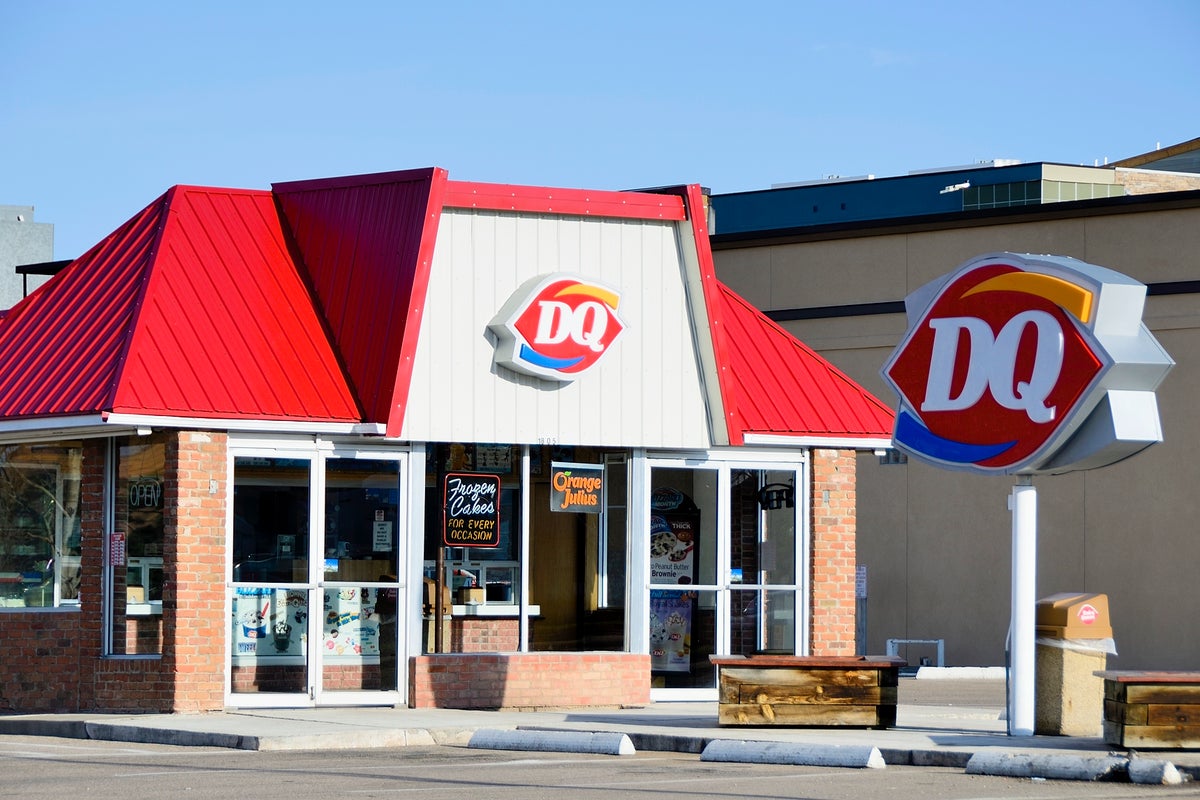
The "lazy consensus" among tech journalists and fast-food executives is that putting AI in a drive-thru is about speed. They want you to believe that a voice bot at a Dairy Queen in Texas is there to shave twelve seconds off your Blizzard wait time. They’ll talk about labor shortages. They’ll talk about "frictionless" experiences.
They are lying to you. Or, more likely, they are repeating a corporate script they don’t actually understand.
I have watched companies burn through eight-figure R&D budgets trying to automate the simple act of asking, "Would you like fries with that?" Most of them fail because they treat the drive-thru as a bottleneck of human inefficiency. In reality, the human is the only thing keeping the system from collapsing. Replacing a $15-an-hour worker with a $100,000-a-year neural network infrastructure isn't about saving on wages. It’s about the brutal, cold-blooded colonization of consumer data.
Dairy Queen isn't "rolling out AI." They are installing a surveillance engine designed to strip-mine your habits under the guise of a convenient soft-serve cone.
The Myth of Operational Efficiency
If you’ve ever sat in a drive-thru, you know the real delays aren't caused by the person taking the order. The delays happen at the fryer, the grill, or the window where a customer can’t find their wallet.
Automating the audio input solves a problem that doesn't exist. Digital ordering via apps already exists. Touchscreens already exist. So why the obsession with voice? Because voice AI allows for passive data extraction.
When you speak to a bot, you aren't just giving an order. You are providing a biometric profile. Large Language Models (LLMs) and speech-to-text systems like those being tested by DQ’s partners aren't just listening for the word "Moolatte." They are analyzing:
- Tone and Sentiment: Are you frustrated? Are you in a rush?
- Demographic Markers: Age, gender, and regional dialect are captured instantly.
- Contextual Noise: Is there a dog barking in the back seat? Are kids screaming for chicken strips?
This isn't about getting your order right. It’s about building a predictive model of exactly what it takes to get you to spend $2.00 more when your stress levels are high. It is the gamification of your hunger, and the "efficiency" gains are a smokescreen for predatory upselling.
The Failure of "Human-Like" Interaction
The competitor articles love to brag about how "natural" these bots sound. They cite high accuracy rates—usually around 85% to 90%.
In any other industry, a 10% failure rate is a catastrophe. If one out of every ten cars didn't brake, the company would be liquidated. In the drive-thru, that 10% failure falls on the "human in the loop." This is the industry’s dirty little secret: the "AI" frequently gives up and silently pings a human worker to take over.
Instead of removing the burden from the employee, the AI adds a layer of digital bureaucracy. The worker now has to monitor a screen, wait for the bot to hallucinate a "Large Gravy Blizzard," and then jump in to apologize to an increasingly irate driver.
I’ve seen the back-end data on these deployments. When the bot fails, the "Total Time to Order" skyrockets. The bot doesn't understand nuance. It doesn't understand "Make that a medium, actually, wait, no, a small." It gets stuck in a logic loop.
The industry calls this "edge case management." I call it a customer service suicide pact.
The Hidden Cost of the Tech Stack
Let’s talk about the math that the C-suite ignores.
To run a truly responsive voice AI at a drive-thru, you need more than just a speaker. You need high-fidelity microphones that can cancel out diesel engines and wind. You need high-speed, low-latency connectivity to the cloud. You need a subscription to a proprietary LLM or a specialized NLP (Natural Language Processing) provider.
When you factor in the licensing fees, the hardware maintenance, and the inevitable "system down" periods where the drive-thru goes dark because the API is lagging, the ROI (Return on Investment) vanishes.
A human worker is remarkably resilient. They don't need a firmware update to understand that it’s raining. They don't require a server rack in the back room to know that a "Cone" means a vanilla soft-serve.
The push for AI at Dairy Queen isn't a CFO-driven decision; it’s a CMO-driven one. It’s a "look how modern we are" play for the shareholders. It’s a vanity project that treats the actual customer as a lab rat in a mid-tier experiment.
The Death of the "Third Place" and Micro-Friction
Sociologists often talk about the "Third Place"—the space between home and work. Fast food used to be a version of this. Even in a drive-thru, there was a brief, human exchange. A joke about the weather, a "have a nice day" that actually sounded like it came from a person.
AI kills this. It replaces a social contract with a transactional script.
When you remove the human element, you remove the social pressure to be polite. This leads to what I call "Terminal Dehumanization." Customers treat the bot like garbage, and that aggression carries over to the window where a real human is still handing out the food. We are training society to interact with machines, and we are losing the ability to interact with each other in the process.
Why "Accuracy" is a False Metric
The industry obsesses over "Order Accuracy." They claim AI will get it right every time.
But AI is trained on historical data. Historical data is biased toward common orders. If you want something off-menu, or if you have a specific allergy requirement that doesn't fit the bot's pre-defined parameters, you are an outlier.
In the world of AI, outliers are errors.
If you have a peanut allergy and try to explain a complex cross-contamination concern to a bot, you are literally betting your life on a probability matrix. The bot isn't "thinking" about your safety. It is calculating the most likely next word in a sentence based on billions of internet comments.
The "controversial truth" is that AI doesn't understand what food is. It understands patterns. And patterns are a poor substitute for judgment.
Stop Trying to "Fix" the Drive-Thru
If brands actually wanted to fix the drive-thru experience, they wouldn't spend millions on voice bots. They would:
- Pay workers enough to care: A motivated human is faster than any bot currently on the market.
- Simplify the menu: The complexity of modern fast-food menus is the primary cause of ordering errors.
- Improve the physical infrastructure: More lanes, better signage, and faster kitchen equipment solve 90% of wait-time issues.
Instead, they choose the shiny object. They choose the path that allows them to collect more data, sell more targeted ads, and eventually replace their workforce with a fleet of expensive, buggy scripts.
The Inevitable Backlash
We are currently in the "novelty phase." People think it’s cool to talk to a robot at Dairy Queen. That will last six months.
Then, the frustration will set in. The first time the bot doesn't understand a heavy accent, or the first time a system glitch charges someone for twelve Dilly Bars instead of one, the "convenience" narrative will shatter.
The companies that win in the next decade won't be the ones that automated their soul out of existence. They will be the ones that used technology to support their people, not replace them.
Dairy Queen is making a bet that you don't value human interaction more than a perceived (but nonexistent) five-second gain in speed. I bet they're wrong.
Drive-thru AI isn't the future of fast food. It’s a high-tech band-aid on a bleeding industry that has forgotten how to serve people.
Next time you’re at a DQ and a mechanical voice asks for your order, remember: you aren't a customer. You’re just training data for a corporation that thinks you’re too slow.
Turn off your engine. Walk inside. Talk to a person.
The machine doesn't care if your Blizzard is upside down. The human at least knows why it matters.