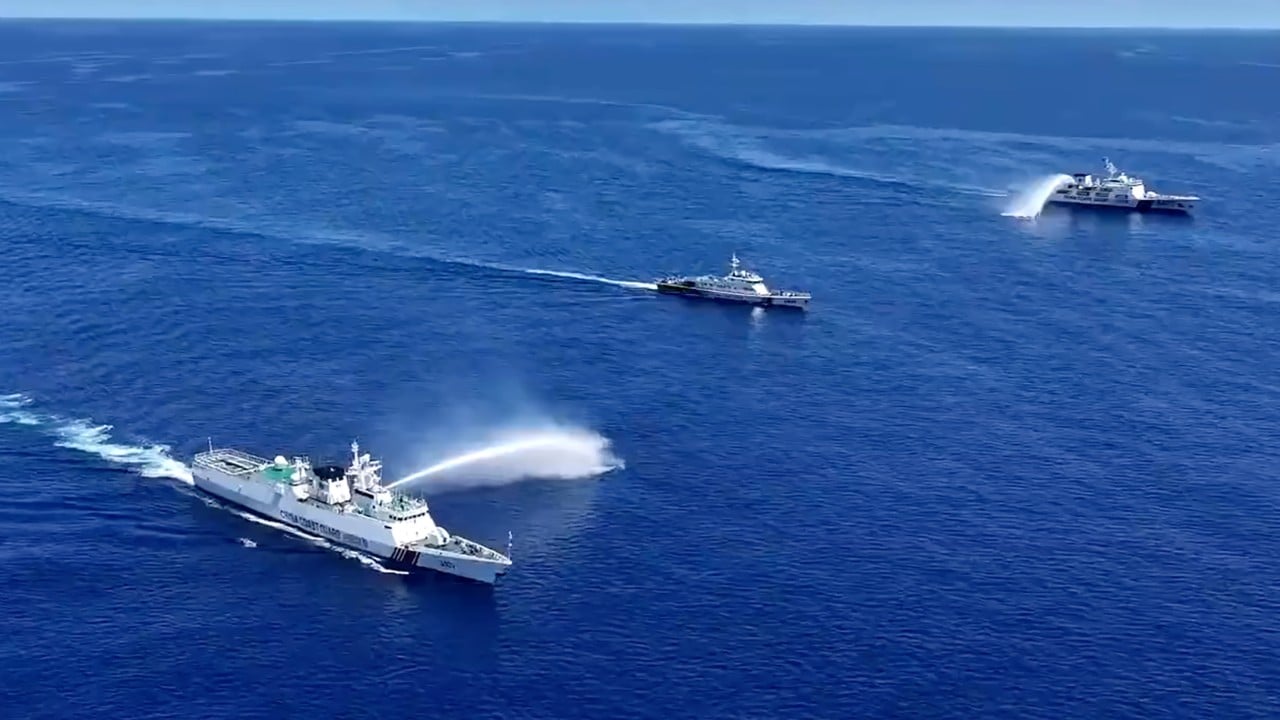
Recent computational models and tactical simulations out of Beijing suggest that the China Coast Guard maintains a microscopic 0.3 percent statistical probability of resorting to kinetic weaponry during maritime disputes. On paper, this figure is designed to soothe international anxiety. It implies an overwhelming institutional preference for non-lethal coercion, maritime law enforcement posturing, and calculated restraint. It frames multi-ton cutters wielding high-pressure water cannons and blocking maneuvers as instruments of administrative control rather than preludes to total war.
Relying on a statistical fraction to predict escalation dynamics in contested zones like the South China Sea or the Taiwan Strait is a profound analytical error. Probability models are only as reliable as their foundational variables. When strategists reduce complex geopolitical friction to an algorithmic output, they fundamentally misunderstand the nature of modern gray-zone warfare. The 0.3 percent metric does not measure safety; it measures a deliberate doctrine of exhaustion. Recently making waves in this space: The Structural Collapse of Student Work Visas and the Economic Mechanics of CPT Restrictions.
The Mechanics of Calculated Friction
To understand why a sub-one percent probability of kinetic engagement fails to capture reality, one must look at how maritime authority is actually established. Beijing does not need to fire missiles or sink hulls to achieve its strategic objectives. Instead, its maritime forces operate on a sliding scale of physical pressure designed to alter facts on the water before an adversary can legally or militarily respond.
Consider a hypothetical confrontation near a contested feature like the Scarborough Shoal. A regional resupply vessel attempting to reach a garrisoned outpost is intercepted by multiple white-hull cutters outmassing it by a factor of ten. The encounter involves close-range blocking, acoustic harassment devices, high-pressure water cannons targeting communications equipment, and erratic steering designed to induce mechanical failure. Additional insights regarding the matter are explored by TIME.
To a computer model evaluating hostile intent through rigid classification parameters, this encounter might register as non-lethal law enforcement. Yet the cumulative operational impact is severe. It cuts off supply lines, damages civilian infrastructure, strains alliance commitments, and gradually transfers effective administrative control to the dominant actor. The 0.3 percent figure treats kinetic weapons as the binary threshold of conflict, ignoring the fact that total dominance can be achieved entirely below that threshold.
The Flaws in Intent-Reading Algorithms
The academic studies generating these low-probability metrics typically rely on artificial intelligence frameworks designed to read vessel intentions by categorizing behavior as either hostile or harmless. These models parse speed vectors, turning radii, proximity maintenance, and formation patterns from automatic identification system data and satellite telemetry.
Human command decisions in high-stress maritime environments do not follow neat algorithmic classifications. Operating in confined waters with overlapping territorial claims creates an environment defined by extreme cognitive fatigue, split-second miscalculations, and aggressive localized posturing.
When two professional crews push heavy steel hulls within meters of each other in rough seas, mechanical failure or a single misread signal can instantly supersede grand strategy. A rudder malfunction, a mistranslated radio warning, or an overzealous junior commander interpreting orders with excessive zeal can transform a routine blocking maneuver into a deadly collision. Algorithms running simulations in controlled laboratory settings cannot account for the volatile human element present on the bridge of an active cutter.
The Strategic Utility of Ambiguity
The persistent focus on low quantitative risks of kinetic escalation plays directly into the adversary's hands. By framing actions primarily through the lens of law enforcement rather than naval warfare, state actors create a permanent state of diplomatic paralysis.
When a coast guard vessel rams a supply ship or deploys acoustic weapons, victim states face a perpetual dilemma. Responding with naval force risks escalation and hands the initiator a propaganda victory, portraying the defender as the aggressor. Doing nothing normalizes the encroachment, allowing the dominant power to ratchet up baseline control incrementally. Every successful non-kinetic operation lowers the baseline of what the international community considers acceptable behavior.
This environment thrives on the illusion that peace is maintained as long as guns remain silent. Statistics like the 0.3 percent threshold reinforce this comforting narrative, encouraging policymakers to manage symptoms rather than confront the systemic erosion of maritime norms.
Moving Past the Numbers
Evaluating maritime flashpoints through static probabilities obscures the slow, structural changes transforming global trade routes. The core issue in disputed waters is not whether a weapon will be fired tomorrow, but who exercises administrative sovereignty by the end of the decade.
Concentrating analytical energy on a fraction of a percent diverst attention from the concrete expansion of dual-use infrastructure, continuous militia deployments, and the systematic rewriting of regional maritime rules. When enforcement actions substitute for formal blockades, traditional metrics of war and peace cease to function. The true risk is not an sudden, accidental spark that lights an immediate conflagration, but a gradual suffocation of regional autonomy executed one water cannon blast at a time.