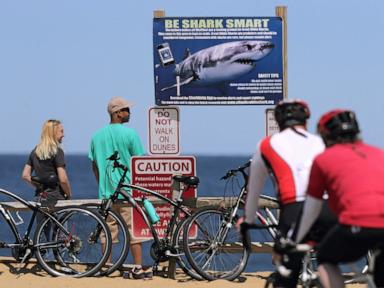
A teenager from Alabama gets grievously injured by a shark in Florida, and the immediate, collective response from lawmakers, tech founders, and terrified parents is a predictable chorus: We need a national shark alert system.
It sounds compassionate. It sounds progressive.
It is dangerously stupid.
The push to build an interconnected, real-time warning grid for shark activity is a classic exercise in security theater. It is an emotional knee-jerk reaction designed to make politicians look proactive and tech companies look useful, while doing absolutely nothing to improve public safety. In fact, if implemented, a national shark alert system will likely cause more beach deaths, not fewer.
We are about to misallocate millions of dollars, induce mass public hysteria, and ignore the actual, silent killers of the coastline because we cannot think rationally about risk.
The Math of Fear Versus the Logic of Reality
Public safety policy must be driven by data, not by the horrific visuals of a rare tragedy.
According to the International Shark Attack File maintained by the Florida Museum of Natural History, the entire globe sees roughly 70 to 80 unprovoked shark bites per year. In the United States, that number typically hovers between 35 and 50. The number of fatalities nationwide is usually in the low single digits. Often, it is zero.
Compare this to the actual hazards of the ocean.
Rip currents kill an average of 100 people every single year in the United States alone. Lightning strikes at beaches kill more people than sharks. Drowning claims thousands of lives on American coastlines annually.
Yet, we do not see a frantic, multi-million-dollar push for a centralized federal lightning detection app that pings your phone every time a cloud darkens. We accept that nature requires personal awareness.
When you look at the raw numbers, creating a national alert system for an apex predator moving through its natural habitat is an insane allocation of public funds. I have watched municipal governments burn through vast portions of their seasonal budgets on drone tracking programs and acoustic monitoring buoys just to appease a panicked public after a high-profile sighting. Every dollar funneled into tracking a passing bull shark is a dollar stripped from funding real, physical lifeguard towers.
Lifeguards save tens of thousands of lives every year by preventing drownings and rescuing swimmers from rip currents. They are the frontline defense. A national alert network is an expensive distraction from the unglamorous, basic infrastructure of beach safety.
The Technological Infrastructure of a Nightmare
Let us look at how this proposed system would actually function. For an alert system to work, it requires actionable data. To get actionable data on sharks, you need continuous, real-time tracking across thousands of miles of coastline.
The current technology relies on three primary methods, none of which scale to a national public safety grid.
Acoustic Telemetry
This requires physically catching a shark, surgically implanting an acoustic tag, and deploying a array of underwater receivers along the coast. When the tagged shark swims within a few hundred meters of a receiver, the system registers the presence.
The flaw is glaringly obvious. You only detect the sharks you have already caught and tagged. The tens of thousands of untagged sharks swimming along the coast remain completely invisible to the network. An alert system based on acoustic telemetry gives a false sense of security; beachgoers assume that no alert means no sharks.
Satellite Tagging
Smart Position and Temperature (SPOT) tags attached to a shark's dorsal fin can transmit location data to satellites, but only when the fin breaks the surface of the water for a sustained period. Sharks spend the vast majority of their lives completely submerged. A white shark could be cruising fifty yards outside the surf line for hours, and the satellite grid would have no idea.
Aerial Drone Surveys
Drones are highly effective at spotting sharks in clear, shallow water on calm days. They are useless in rough surf, murky water, overcast conditions, or at dawn and dusk—which happen to be prime feeding times for sharks. Drone monitoring is also highly localized and labor-intensive. It cannot be scaled into a automated national network.
Imagine a scenario where the federal government launches a unified shark alert app. Because the detection methods are patchy, the data will be a mess of false negatives and false positives. If a town deploys a drone and spots a single nurse shark, an alert goes out, closing the beach and ruining the local tourism economy over a harmless bottom-feeder. Meanwhile, three miles down the coast, an untagged tiger shark swims by a crowded beach undetected because there is no receiver in the water.
The system fails exactly when people rely on it most.
The Psychology of Warning Fatigue
When you saturate the public with alerts about a threat that is statistically negligible, you trigger a well-documented psychological phenomenon: warning fatigue.
If an app pings beachgoers every time a shark is detected within five miles of a county line, the pings will become background noise. Sharks live in the ocean. They are always there. If you fish or surf along the Atlantic or Gulf coasts, you are regularly within striking distance of a shark whether you know it or not.
If the national system alerts people to every routine shark movement, users will mute the notifications within a week. When a genuine, highly dangerous situation occurs—such as a persistent, aggressive individual shark hanging around a specific swimming zone—the warning will be buried in the digital static.
Conversely, if the system is designed to only alert during extreme situations, how do you define the threshold? Who decides when a shark changes from a natural inhabitant to an imminent threat? A bureaucrat sitting in a regional office looking at a delayed data feed cannot make that call. The ocean changes by the minute.
By trying to automate awareness, we strip individuals of their natural caution. We teach people to look at their screens rather than looking at the water.
The Perverse Economic Incentives
We must also look at who benefits from the creation of a national alert grid. It is not the public.
The push for high-tech solutions to natural phenomena is driven by a lucrative security-industrial complex. Private tech vendors, drone manufacturers, and software developers are eager to secure recurring government contracts to build "smart beach" infrastructure. These companies pitch their products to terrified coastal town councils using emotional language and worst-case scenarios.
I have seen small coastal communities buy expensive underwater hardware that sits rotting in the salt water because they cannot afford the long-term maintenance costs. The software platforms require constant updates, cloud storage fees, and dedicated personnel to monitor the feeds.
This is capital that should be going toward hiring more seasonal lifeguards, purchasing better medical equipment, or funding public swimming lessons in underserved communities. Swim literacy saves lives every single day. Shark tracking apps save face for politicians.
Dismantling the Victim Blaming Narrative
The underlying premise of the national alert system movement is that shark attacks happen because beachgoers lack information. The narrative implies that if the victim only knew sharks were in the ocean, they wouldn't have gone in.
This is a subtle, toxic form of shifting the blame. It assumes that the ocean can be tamed, mapped, and micro-managed like a amusement park ride.
The ocean is a wild ecosystem. It is fundamentally indifferent to human convenience. When you step into the surf, you are entering a wilderness that contains large predators. No app can change that reality, and pretending it can is a dangerous lie.
Instead of trying to build an impossible digital shield, we need to enforce basic, unglamorous ocean literacy.
- Stop swimming at dawn and dusk.
- Stop swimming near schools of baitfish or diving seabirds.
- Do not enter the water near sandbars or deep drop-offs where predators hunt.
- Never swim near commercial fishing piers or river mouths.
- Accept that if you enter the water, you are accepting a non-zero element of risk.
We do not need a federal agency tracking the movements of marine life to tell us these things. We need a return to basic personal responsibility and respect for the natural world.
The Real Cost of the Shield
If we proceed down the road of implementing national alert frameworks for every rare wildlife encounter, we will end up with an ocean that is sanitized in theory but more dangerous in practice.
We will create a population of beachgoers who believe that a green checkmark on an official app means the water is safe. They will swim unmonitored, ignore rip current signs, and venture into dangerous waters because the "shark radar" is clear.
The competitor pieces calling for centralized alert networks are selling a comforting illusion. They are catering to the modern demand that every tragedy must have a technological fix.
The ocean cannot be itemized, tracked, and managed by a software dashboard. The solution to a shark attack isn't an app. It is an acknowledgment that the wild cannot be completely tamed, and that our safety will always depend on our own eyes, our own respect for the water, and the physical presence of a lifeguard on the tower.
Turn off the notifications. Look at the flags on the sand. Watch the water. That is the only alert system that has ever worked.