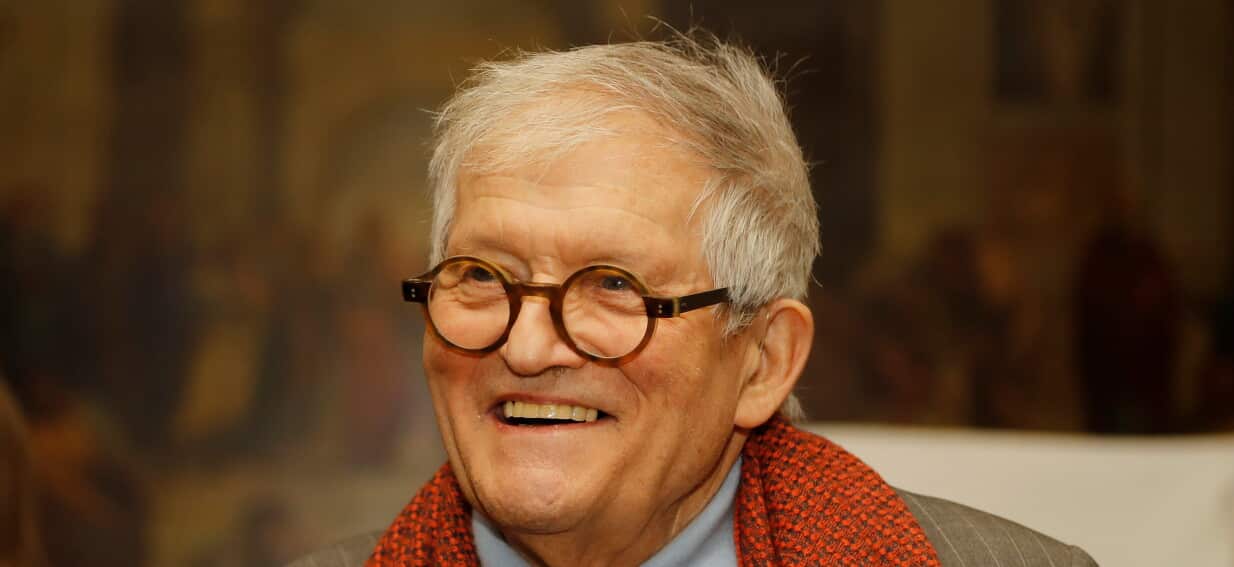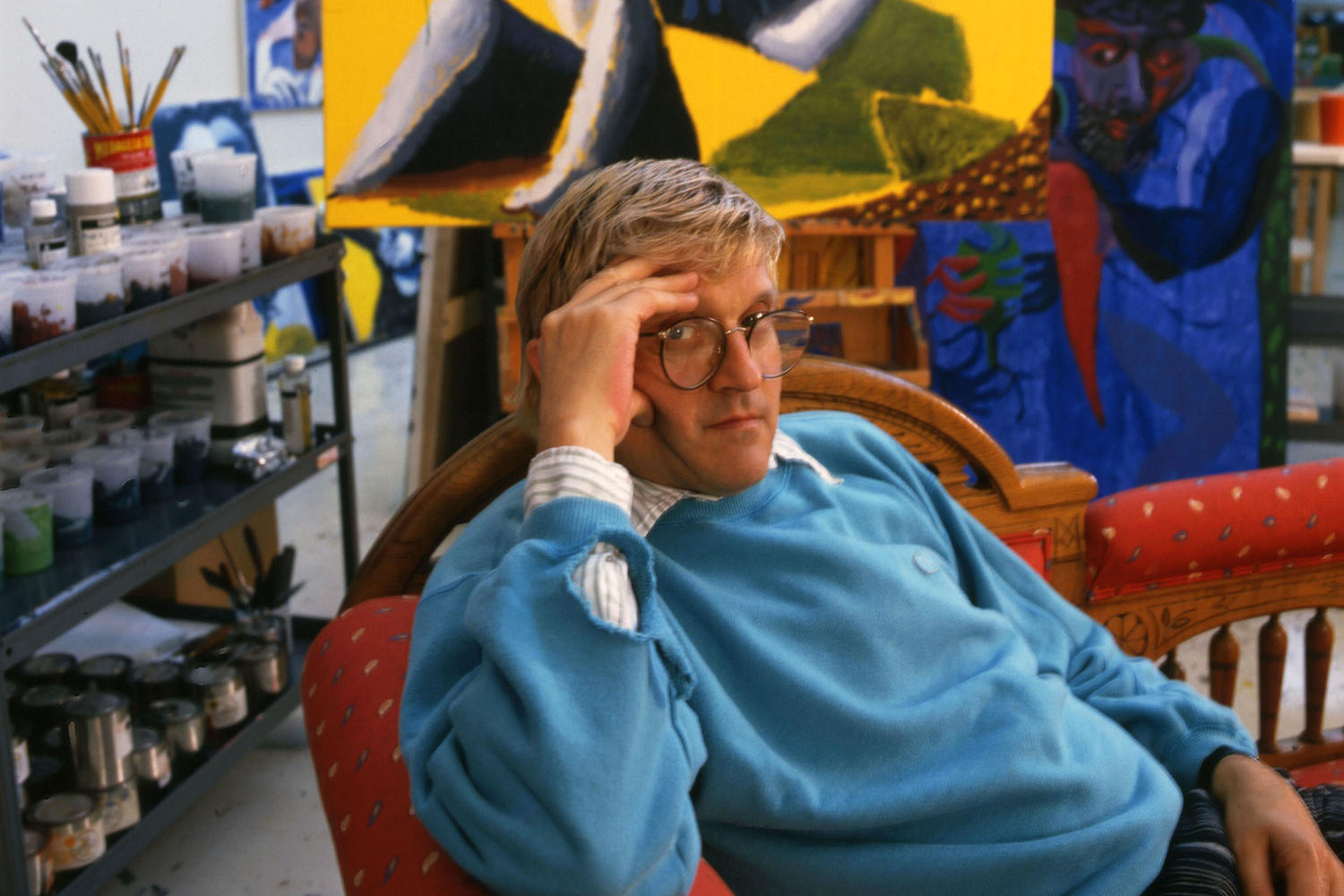
David Hockney never cared about doing what the art world expected. When the gatekeepers told him painting was dead, he went out and painted a swimming pool. When they told him digital art was a gimmick, he picked up an iPad and created masterpieces with his thumbs.
The news that Hockney passed away peacefully in London at the age of 88 marks the end of an era. He didn't just survive decades of shifting trends; he dictated them. From his working-class roots in Bradford to the sun-drenched hills of Los Angeles, Hockney spent his life challenging how we see the world. He remained fiercely independent until his final hours on June 11, 2026, reportedly smoking right up to the end and thumbing his nose at what he called the "bossiness" of modern life.
If you think Hockney was just the guy who painted expensive pools, you're missing the entire point of his career.
The Bradford Boy Who Conquered California
Hockney emerged from the Royal College of Art in London with a gold medal and a refusal to write a final essay because he believed his art should speak for itself. That streak of rebellion defined him. In 1964, he moved to Los Angeles, a city that transformed his palette and his worldview.
Before Hockney arrived, California wasn't a major hub for contemporary art. He saw something others missed: the flat, intense sunlight, the clean lines of mid-century modern homes, and the shimmering blue of backyard swimming pools.
His 1967 masterpiece, A Bigger Splash, captured a fleeting moment in vivid color. It takes seconds for a diver to break the surface of a pool, but Hockney spent two weeks painting that splash with tiny brushes. He loved the contradiction of using a slow, deliberate medium to capture an instant.
His pool paintings weren't just pretty pictures. They were intimate glimpses into his life as an openly gay man at a time when homosexuality was still illegal in the UK. He painted his friends, his lovers, and his surroundings with a level of honesty that felt radical.
Dismantling the Camera’s Lie
In the 1980s, Hockney grew frustrated with photography. He argued that a single photograph is fundamentally flawed because it represents a single, frozen moment from one fixed viewpoint. Humans don't look at the world that way. We move our eyes, we glance around, and time passes as we look.
To fix this, he created his "joiners"—composite pictures made from dozens of individual Polaroid or 35mm prints taped together.
- He photographed a scene from multiple angles over several minutes.
- He layered the prints to create a jagged, shifting landscape.
- The final images forced viewers to experience the passage of time within a flat plane.
By adopting a Cubist approach to photography, he proved that a fractured image could feel more real than a standard snapshot. It was an intellectual inquiry into perspective that eventually led to his controversial 2001 book, Secret Knowledge, where he argued that Old Masters like Caravaggio used optical lenses and mirrors to achieve their realistic effects. The art history establishment hated the theory, but Hockney didn't care. He understood the mechanics of looking better than the critics did.
The Million-Dollar Market vs. the Living Artist
In 2018, Hockney's Portrait of an Artist (Pool with Two Figures) sold at Christie's in New York for $90.3 million. At the time, it set a record for the most expensive work by a living artist sold at auction.
Recent Historical Living Artist Auction Records:
- Jeff Koons, "Balloon Dog (Orange)" (2013): $58.4 million
- David Hockney, "Portrait of an Artist" (2018): $90.3 million
- Jeff Koons, "Rabbit" (2019): $91.1 million
While the media focused on the astronomical price tag, Hockney remained detached from the financial hype. He didn't see a dime of that $90.3 million resale; the profit went to the private collector who owned it. Hockney was already wealthy, but his real currency was time and curiosity.
Instead of repeating his profitable 1970s style to please billionaires, he kept moving. He moved back to Yorkshire to paint massive, multi-canvas landscapes of the English countryside, like the 50-canvas Bigger Trees Near Warter. Then he moved to Normandy, France, in 2019, where he fell in love with the arrival of spring and began drawing on his iPad.
Embracing the Digital Screen
Many traditional painters viewed smartphones and tablets as threats to fine art. Hockney saw them as a liberation.
Using an iPad allowed him to capture changing light instantly without waiting for paint to dry or carrying heavy equipment into a field. He could send a digital drawing of a flower to his friends before he even got out of bed. His 90-meter panoramic iPad frieze, A Year in Normandie, showed that digital tools could produce art on an epic, museum-worthy scale.
Until his death, he maintained a studio in London, where his latest exhibition opened at the Serpentine Galleries in March 2026. He never stopped experimenting, proving that age has nothing to do with creative vitality.
How to Apply Hockney's Philosophy to Your Own Work
You don't need to pick up a paintbrush to learn from Hockney's life. His approach to creativity offers a blueprint for anyone trying to build something original.
First, stop looking for permission. When Hockney wanted to use an iPad, he didn't wait for the art world to approve of digital drawings. If a new tool makes your work faster or more interesting, use it.
Second, change your environment when you feel stuck. Hockney constantly moved between London, Los Angeles, Yorkshire, and France. Each location forced him to deal with new light, different colors, and fresh subjects.
Finally, train yourself to notice the details people ignore. Hockney's entire career was built on the phrase "Love Life." He found beauty in a muddy Yorkshire road, a splash of water, or the way light hits a glass on a table. Turn off your distractions, look closely at your immediate surroundings, and find something worth capturing today. Tate Britain is preparing a massive retrospective of his work next year, but you don't have to wait for a museum show to start seeing the world through his eyes.