Silence.
That is the first thing you notice when you stand three miles back from the mudflats of Boca Chica, Texas, watching a twenty-story skyscraper fall out of the upper atmosphere. The roar hasn't reached you yet. Light travels at nearly three hundred thousand kilometers per second, while sound trudges along through the humid Gulf air at a sluggish three hundred and forty meters, leaving you trapped inside a surreal, silent movie where a cylinder of gleaming stainless steel drops straight toward the earth like a discarded beer can. Also making headlines in this space: Stop Blaming Legacy Tech for Airline Outages Because Your Modern Cloud Is Worse.
Then the sonic booms hit your chest like a physical blow. Crack. Crack.
For decades, we accepted a fundamental, suffocating rule of gravity and economics: to reach space, you have to throw your vehicle away. Imagine buying a brand-new Boeing 747, flying it once from New York to London, and then letting it crash into the Atlantic Ocean while the passengers parachute out. You would never get commercial aviation off the ground. Nobody could afford a ticket. Yet that exact madness governed human spaceflight from the Apollo moon landings right through the early twenty-first century. We built intricate, multi-billion-dollar machines, burned them up in the atmosphere, and dropped their scorched remains into the sea. Additional insights on this are explored by TechCrunch.
On October 13, 2024, that era died in a cloud of liquid methane, superheated exhaust, and two giant mechanical chopsticks.
The Architecture of Audacity
To understand why a rocket booster returning to its launch tower matters to anyone who doesn't own a telescope, you have to look closely at what actually happened during SpaceX’s fifth integrated flight test of Starship.
Most headlines reduced the event to a neat, sterile summary. They told you that the Super Heavy booster separated from the upper stage, plunged back toward South Texas, relit its Raptor engines, and was plucked out of mid-air by the launch tower’s catching arms. Accurate? Yes. Complete? Not even close.
Consider a hypothetical aerospace engineer—let’s call her Elena—who spent the first fifteen years of her career designing landing legs for orbital rockets. In 2015, when SpaceX first landed a Falcon 9 booster on a concrete pad at Cape Canaveral, Elena cried at her desk. It was a triumph of control theory and hydraulics. Yet, inside the engineering rooms, everyone knew the dirty secret of landing legs: they are dead weight. Every kilogram of titanium and carbon fiber bolted onto the bottom of a rocket to help it stand on the ground is a kilogram of payload you cannot send to orbit. Worse, once the rocket lands, you still have to bring in cranes, fold the legs, haul the scorched tube back to a hangar, inspect every bolt, and lift it back onto a launch mount. It takes weeks.
Elon Musk and his engineering team looked at that bottleneck and asked a question that sounded genuinely unhinged to veterans of the industry: What if we delete the landing legs entirely?
Instead of putting the weight on the rocket, put the catching mechanism on the ground. Build a massive steel tower—nicknamed Mechazilla—fitted with two hydraulic arms capable of absorbing the momentum of a two-hundred-and-fifty-ton object falling at terminal velocity. Make the rocket fly backward into a needle's eye, hover for a fraction of a second, and hang itself on a rack like a coat.
If you feel a spike of skepticism reading that, good. You are in excellent company. Inside SpaceX, engineers openly questioned whether the physics could ever tolerate the margins. A gust of wind off the Rio Grande, a fraction of a second of lag in a gimbal actuator, or a single clogged fuel injector would turn a multi-million-dollar launch complex into a crater.
Seven Minutes of Controlled Falling
Let us trace the anatomy of those seven minutes, because the numbers tell a story that adjectives cannot match.
At liftoff, thirty-three Raptor engines ignite simultaneously beneath the Super Heavy booster. Together, they generate roughly seventy-four meganewtons of thrust—more than twice the raw power of the Saturn V rocket that carried astronauts to the moon. Standing seventy-one meters tall and nine meters wide, the booster pushes the combined stack—nearly five thousand metric tons of steel and cryogenic propellant—upward through the thickening resistance of Earth's atmosphere.
Two minutes and forty-five seconds into the flight, at an altitude of roughly seventy kilometers, the two stages separate in a maneuver called hot-staging. The upper Starship ignites its own engines while still attached to the booster, blasting the top of Super Heavy with white-hot exhaust as it pulls away toward space.
Now the booster is alone. It is hurtling upward and outward over the Gulf of Mexico at more than five thousand kilometers per hour.
Here is where human intuition usually fails us. When we think of something falling from space, we picture a gentle float. In reality, Super Heavy is plummeting like a brick into an increasingly dense wall of air. Atmospheric friction heats the stainless steel skin until it glows a dull, angry cherry red. Four massive waffle-shaped grid fins near the top of the booster—each cast from solid steel and larger than a dining room table—pivot furiously to steer the falling cylinder through hypersonic wind currents.
Back in the control room in Hawthorne, California, and at the Starbase launch control center in Texas, flight directors watch telemetry streams cascade across dark screens. Nobody breathes easily. Just weeks earlier, nobody knew if the thermal protection tiles on the upper ship would hold, or if the booster's guidance algorithms could compensate for real-world wind shear near the ground.
I remember watching the live telemetry feed during that descent, my coffee going cold in my hand, waiting for the inevitable fireball. When you have followed spaceflight long enough, you develop a defensive cynicism. You learn to brace for the "rapid unscheduled disassembly"—the industry’s polite euphemism for an explosion. Watching a twenty-three-story building drop out of the sky toward a delicate tower of sensors and fuel lines didn't look like engineering; it looked like hubris.
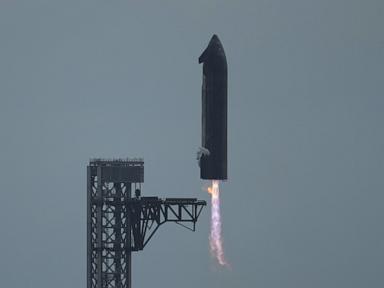
Then, at roughly one kilometer above the mudflats, thirteen of the thirty-three Raptor engines roared back to life.
The Invisible Ballet
To appreciate what happened in the final twenty seconds, think of balancing an upright broomstick on the palm of your open hand while running across an uneven field in a crosswind. Now imagine the broomstick is seventy meters tall, weighs as much as two blue whales, and is actively burning fuel so fast that its center of gravity shifts every millisecond.
The booster did not aim directly at the tower during its initial plunge. That would have been suicide. Until the very last moments, Super Heavy targeted a trajectory aimed safely out over the water. Only when the flight computers verified that all thirteen landing engines had lit cleanly, that chamber pressures were nominal, and that the radar altimeters locked onto the ground did the system commit to the tower.
It nudged sideways.
Three inner engines throttled down, gimballing—swiveling on hydraulic mounts—with microscopic precision to arrest the booster’s lateral drift. Out on the tower, two massive steel arms, padded with shock-absorbing crush cores, swung inward. Two tiny, load-bearing pins protruding from the sides of the booster aligned with the rails on top of the arms.
At T+06:54, the engines cut out. The booster settled onto the arms with a dull, metallic thud that echoed across the coastal plain. Flames licked briefly up the scorched stainless steel hull before automatic fire-suppression systems choked them out.
It didn't tip. It didn't explode. It simply hung there, swaying gently in the Gulf breeze, ready to be lowered back onto the launch mount.
Why a Steel Cylinder Matters to Your Morning Commute
At this point, a reasonable person might ask a blunt question: So what? Why should anyone care if a billionaire’s rocket company catches a giant metal tube in Texas while bridges crumble and grocery prices climb?
It is a fair doubt. Space exploration has always struggled to justify its immediate relevance to terrestrial life. Yet history shows that breakthroughs in transportation infrastructure never look like lifestyle upgrades while they are being built. They look like messy, dangerous industrial experiments.
Consider the nineteenth-century transcontinental railroad, or the early days of container shipping in the 1950s. Before Malcolm McLean standardized the steel shipping container, loading a cargo vessel required armies of dockworkers wrestling individual crates, barrels, and sacks into a ship's hold by hand. It took weeks, cost a fortune, and led to rampant theft and spoilage. Standardization didn't just make shipping faster; it collapsed the cost of moving physical goods across oceans by more than ninety percent, creating the modern global economy in the process.
Starship is the shipping container for orbit.
Right now, launching a kilogram of cargo into low-Earth orbit costs thousands of dollars. Even SpaceX’s own reusable Falcon 9—which completely upended the global launch market over the last decade—still throws away its upper stage on every single flight. With a fully reusable Starship system, where both the Super Heavy booster and the upper spacecraft return intact to be refueled and relaunched within hours rather than months, the cost per kilogram drops by an order of magnitude.
What happens when access to space becomes cheap, routine, and abundant?
First, the invisible infrastructure you rely on every single day transforms. Global satellite internet—already connecting remote villages, disaster zones, and transoceanic flights—scales into a low-latency mesh network capable of serving billions without dead zones. Earth-observation constellations become cheap enough to track methane leaks in real time, monitor crop hydration down to the individual acre, and predict severe weather patterns with days of extra warning.
Second, manufacturing changes. Certain materials—ultra-pure fiber optic cables, specialized pharmaceuticals, and flawless protein crystals for targeted cancer therapies—cannot be manufactured properly under the constant pull of Earth’s gravity. Gravity causes convection currents and sedimentation that introduce microscopic flaws. In microgravity, those defects vanish. Until now, orbital manufacturing remained a boutique science experiment because getting raw materials up and finished products down cost too much. When a single vehicle can haul one hundred metric tons to orbit and bring it back safely, factories in low-Earth orbit stop being science fiction and start looking like basic industrial economics.
The Messy Truth Behind the Triumph
Of course, celebrating the catch shouldn't blind us to the friction and uncertainty that remain. Anyone who tells you the path from here to regular interplanetary travel is smooth is selling you a brochure.
Look closely at what happened to the upper stage on that same October flight. While the booster was caught cleanly in Texas, the upper Starship spacecraft—which continued halfway around the globe before re-entering the atmosphere over the Indian Ocean—suffered visible damage. Plasma burned through the hinge of one of its forward flaps, chewing away steel and thermal tiles like blowtorch flame on cardboard. It survived long enough to execute a controlled splashdown in the ocean, proving the vehicle could still steer while partially melting, yet it underscored a brutal engineering reality: catching the booster is the easier half of the equation.
The booster only goes to the edge of space, moving at roughly Mach 6 or Mach 7. The upper ship reaches orbital velocity—more than twenty-eight thousand kilometers per hour. Bringing a fifty-meter spacecraft back from orbital speed without burning it up, and doing so without spending weeks painstakingly gluing thousands of fragile ceramic heat-shield tiles back onto its belly between flights, remains an unsolved problem at scale.
There are also legitimate environmental and regulatory battles unfolding along the Texas coast. Launching the largest rocket ever built beside a protected wildlife refuge creates noise, vibration, and acoustic shockwaves that rattle windows in neighboring Brownsville and disturb nesting shorebirds. Balancing rapid industrial iteration with ecological stewardship is not a trivial paperwork exercise; it is a genuine tension between two competing visions of human progress.
And yet, standing back to look at the trajectory of the last decade, the momentum is unmistakable.
The Shift in the Sky
Think about the psychological boundary that broke on that Sunday morning in Boca Chica.
For sixty years, humanity treated space as a hostile ocean we could only visit in disposable rowboats. We celebrated whenever a capsule survived the plunge back into our atmosphere, scorched and battered, dangling beneath orange-and-white parachutes while naval destroyers raced across the waves to fish it out before it sank. That was the ceiling of our ambition: survival.
When those two steel arms closed around the Super Heavy booster, survival stopped being the goal. Turnaround became the goal.
Take a hypothetical young girl—let’s call her Maya—who was ten years old in October 2024, watching the livestream on a tablet at her kitchen table. To her parents, watching a twenty-story rocket hover and park itself in mid-air looked like a magic trick, something that violated every rule of physics they grew up believing. To Maya, it looked normal. She will grow up in a world where rockets do not crash into the ocean. To her, throwing away a spacecraft after a single flight will seem as absurd as burning a passenger jet on the runway after every trip.
That is how revolutions actually take hold. They don't arrive with fanfare and philosophical manifestos. They arrive as cold, hard engineering breakthroughs that quietly rewrite what an entire generation considers possible.
Down on the mudflats of South Texas, the salt air is already eating away at the bare stainless steel of the launch tower, crews are welding new thrust structures inside the high bays, and the faint smell of scorched kerosene lingers over the scrubland—waiting for the next time the sky opens up and drops another skyscraper into the waiting arms of the earth.