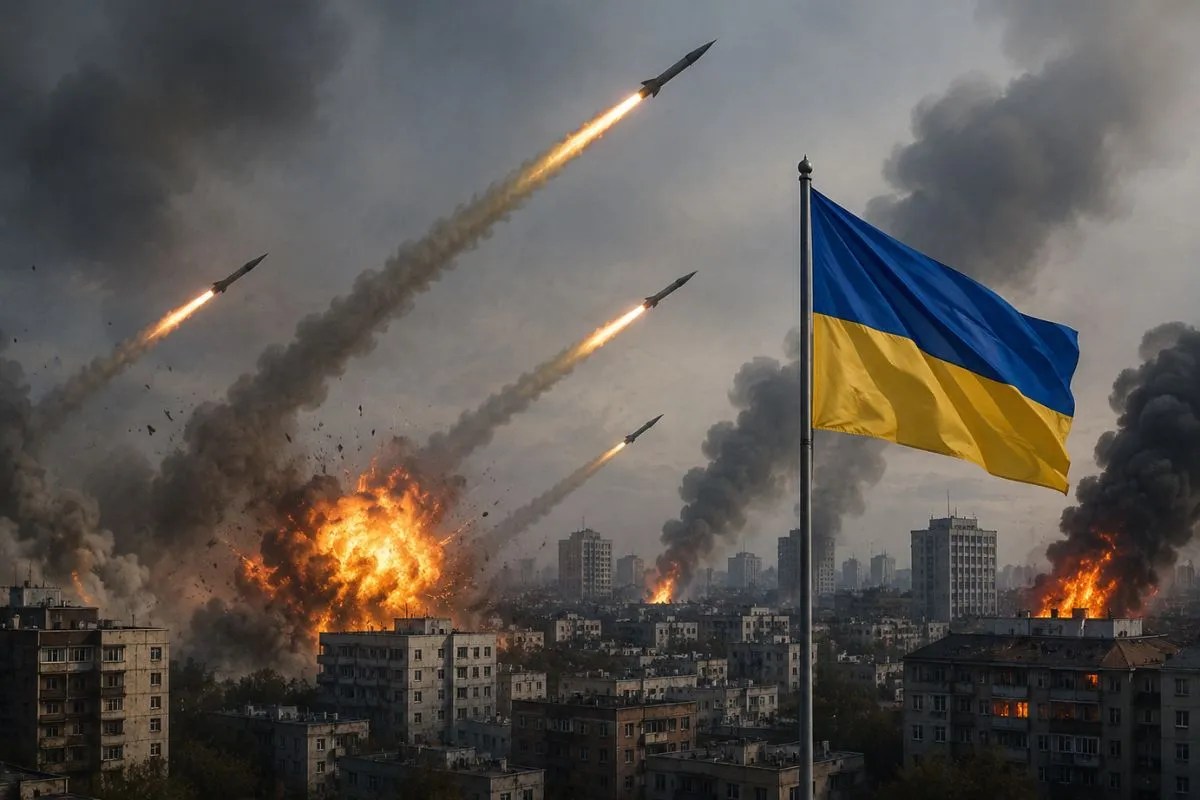
War doesn't care about your expectations. It shatters them on a random Tuesday morning when air raid sirens fail to save the people running for shelter. When a massive barrage of Russian missiles smashed into Kyiv, leaving seventeen dead and structural devastation in its wake, the narrative changed instantly. People talk about interceptors and modern shield systems as if they're invincible. They aren't. This attack punched straight through the city's defenses, exposing brutal truths about modern aerial warfare that military planners hate to admit out loud.
You see headlines screaming about cutting-edge tech every single week. Patriot batteries, NASAMS, Iris-T—names thrown around like magic shields. But reality is messy. Air defense systems get overwhelmed. They run low on interceptors. Saturation attacks work. When dozens of hypersonic and cruise missiles descend simultaneously from different vectors, the math turns against the defenders. Also making headlines in this space: Why the PoJK Protests Are Being Completely Misread by Everyone With a Mic.
The Brutal Reality of Saturation Strikes
Kyiv woke up to explosions that rattled teeth. Seventeen lives ended in seconds. Hundreds more injured. Residential blocks turned into smoking craters.
Military analysts often miss the core mechanism of these massive strikes. Russia isn't just firing random rockets; they're running complex coordination tests. They launch decoy drones, cruise missiles to drain interceptor stocks, and then fast-moving ballistic or hypersonic projectiles aimed at the gaps. Additional details regarding the matter are explored by The New York Times.
If you have ten incoming threats and eight interceptors ready, math dictates disaster.
- Interceptor supply chains are fragile.
- Production lines take years to match wartime consumption.
- No defense net operates at one hundred percent efficiency.
People assume a city capital gets total protection. That's a dangerous illusion. Citizens thought modern radar would catch everything hours before impact. Instead, warning times shrank to mere minutes. When seconds count, evacuation becomes a luxury nobody has.
Why Kyiv's Defense Grid Buckled
The phrase "completely failed" gets thrown around by sensationalist media, but the truth is more nuanced. The defense didn't fail because operators slept on the job. It failed because the physics of modern missile warfare favors the attacker until production scales up drastically.
Hypersonic weapons travel too fast for standard reaction loops. Even elite batteries struggle when projectiles change trajectory mid-flight.
"We are fighting a math problem where the enemy holds more pieces on the board than we have shields to cover them," an anonymous defense contractor mentioned during a recent briefing on regional security.
✨ Don't miss: The Ten Year Mirage and the Survival of Keir Starmer
Honest assessments matter here. Western allies keep shipping gear, but logistics take time. Deliveries crawl while factories struggle to build complex guidance chips. Every lost missile battery takes months to replace. The gap between battlefield demand and industrial output creates deadly windows of vulnerability.
What Comes Next for Urban Warfare
Civilians bear the heaviest burden. They adapt by living in metro stations, setting up makeshift basements, and tracking apps that ping seconds before impact. Normalcy is dead.
If you're watching this conflict from afar, strip away the politics for a second. Look at the raw infrastructure. Power grids, water plants, apartment complexes—everything becomes a target when total war returns to Europe.
The myth of the impenetrable sky needs to die. Until production lines turn out five times as many interceptors, cities like Kyiv remain dangerously exposed to high-volume bombardment. Keep your eyes on the supply chains, not just the flashy weapon announcements. That is where this war is actually won or lost.