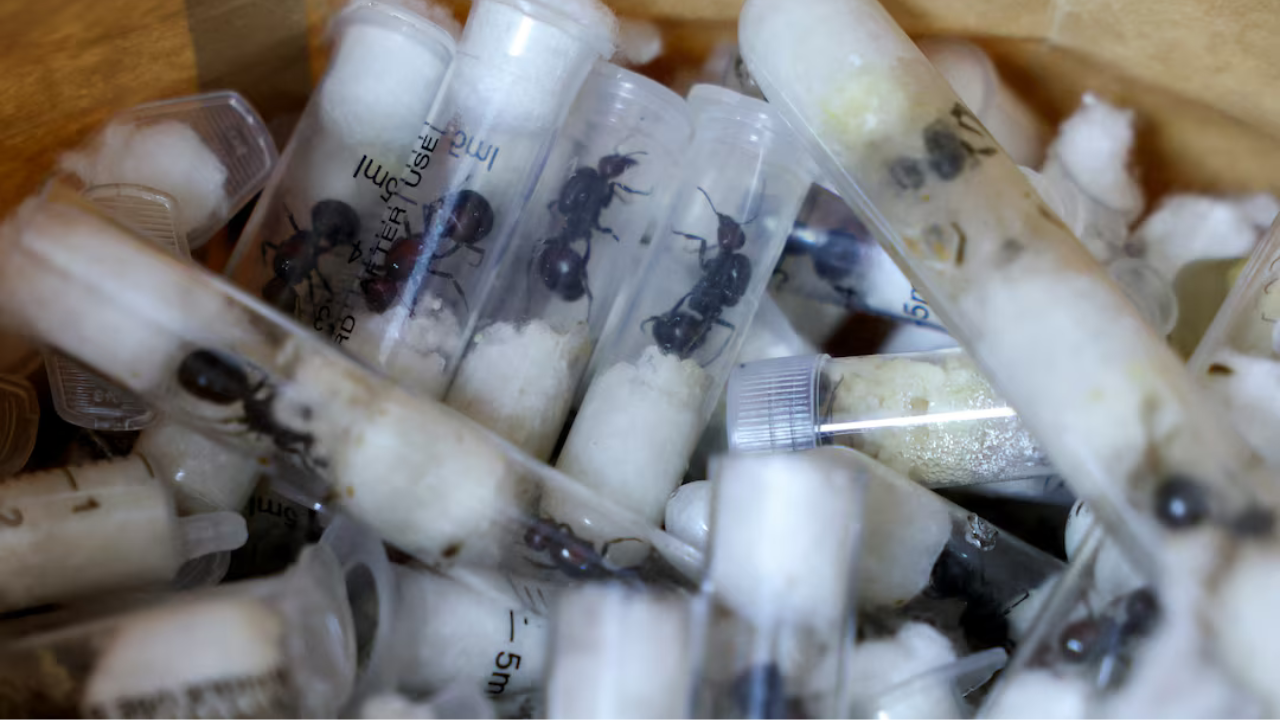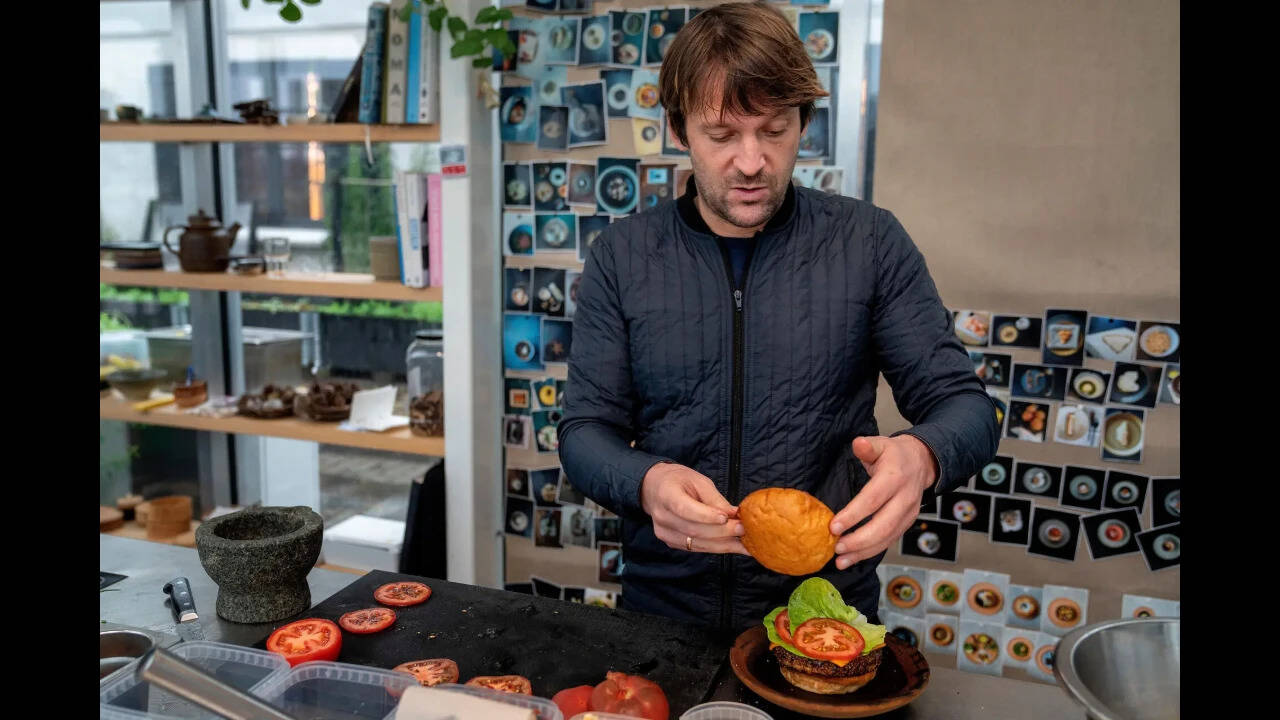
The air in a three-Michelin-star kitchen does not smell like rosemary or roasting duck. It smells like ozone, high-pressure dishwashers, and the copper tang of adrenaline. It is a silent, vibrating frequency where a misplaced micro-green is treated like a localized tragedy. For decades, René Redzepi sat at the apex of this vibrating world, the undisputed architect of "New Nordic" cuisine, turning moss, ants, and fermented plums into a religion.
Then, he walked away.
But this wasn't the graceful exit of a weary maestro. It was a collapse. When Redzepi announced his resignation from Noma following a localized wildfire of abuse allegations, he didn't offer the standard corporate "spending more time with family" script. He admitted that the culture he built—the very one that redefined global gastronomy—was poisoned. He said an apology was not enough.
To understand why a man at the height of his power would dismantle his own throne, you have to look past the beautiful plates of lichen. You have to look at the bruises.
The Cost of a Perfect Plate
In the culinary world, there is a long-standing, masochistic pride in suffering. We have lionized the "shouting chef," the visionary who throws sauté pans and belittles teenagers in white coats for the sake of a perfect reduction. We bought the books. We watched the shows. We cheered for the intensity.
But behind the swinging doors of Noma, that intensity had a human price. Allegations surfaced of a workplace that functioned less like a creative studio and more like a high-stress meat grinder. Former staffers spoke of a culture of fear, of verbal eviscerations that left permanent scars, and of an environment where the pursuit of excellence became a justification for cruelty.
It is easy to look at a list of allegations and see HR violations. It is harder to see the exhausted twenty-four-year-old commis chef standing over a prep table at 3:00 AM, hands trembling, wondering if their career will end because a radish wasn't sliced to the exact micron.
Redzepi’s departure is the first real crack in the foundation of the "Kitchen God" archetype. For the first time, the industry's most influential figure admitted that the brilliance of the food cannot atone for the brokenness of the people making it. If the best restaurant in the world is built on a foundation of misery, is it actually the best?
The Myth of Necessary Cruelty
There is a persistent lie told in creative industries: that greatness requires a monster.
We tell ourselves that Steve Jobs had to be cold, that Kubrick had to be obsessive, and that Redzepi had to be a tyrant. We believe that if you remove the pressure, the diamond disappears. This creates a dangerous feedback loop. Young chefs enter the industry expecting to be hazed. They endure it because they think it’s the "price of admission." Then, when they finally get their own kitchens, they inflict the same trauma on the next generation.
It is a cycle of inherited violence.
Redzepi’s resignation is an admission that this logic is flawed. By stating that "an apology is not enough," he is acknowledging that the damage is systemic. You cannot simply say "sorry" for a decade of normalized screaming and expect the kitchen to suddenly become a sanctuary.
Consider the logistical reality of Noma. This was a place that charged hundreds of dollars per head, where diners flew from Tokyo and New York just to taste the fermented essence of a forest floor. The stakes were astronomical. But the invisible stakes—the mental health of the staff, the physical toll of 16-hour days, the emotional erosion of constant criticism—were never on the menu.
The Silence of the Nordic Woods
The irony is that Noma’s brand was built on "sustainability." Redzepi preached about the ethics of foraging, the importance of local ecosystems, and the respect we owe to the earth. Yet, the human ecosystem inside his own walls was being depleted.
We are currently witnessing a Great Reckoning in the hospitality sector. It isn't just about Noma. From the smallest neighborhood bistros to the glittering towers of fine dining, workers are asking a simple question: Why?
Why should a job in food require the sacrifice of one's dignity?
The data suggests the industry is at a breaking point. Labor shortages are not just about wages; they are about a refusal to return to the "old way." When the most famous chef on the planet steps down because he can no longer justify his own methods, the "old way" is officially dead.
Redzepi's exit isn't just a news story for foodies. It is a case study in the failure of modern leadership. It proves that you can win every award, earn every star, and achieve every dream, only to find that the person you became to get there is someone you can no longer stand to see in the mirror.
Beyond the Apology
What does "more than an apology" actually look like?
It looks like structural change. It looks like mandatory mental health support, realistic working hours, and the abolition of the unpaid internship—a practice Noma famously relied on for years before finally beginning to pay its stages. It looks like a world where a chef’s skill is measured not just by the flavor of their sauce, but by the retention rate of their staff.
Redzepi is attempting a pivot. He plans to turn Noma into a giant food laboratory, a move that signals the end of the traditional restaurant model as we know it. He is, in effect, blowing up the lab because the experiment became toxic.
This is a lonely path. For a man whose identity was entirely fused with the brand of "The World's Best Chef," stepping into the shadows of resignation is a form of professional suicide. But perhaps it is the only way to be reborn.
The industry is watching. Every line cook who has ever been called a "failure" for a burnt crouton is watching. Every owner who thinks their temper is a sign of "passion" is watching.
We are moving into an era where the "human element" is no longer a secondary concern. The plate is secondary. The sauce is secondary. The person holding the knife is the only thing that matters.
As the lights go out in the dining room of Noma, the silence is heavy. It isn't the peaceful silence of a forest. It is the ringing silence that follows a scream.
The era of the Kitchen God is over. The era of the human being has to begin. If it doesn't, then all the awards and all the stars in the sky won't be enough to save us from the bitterness of what we’ve cooked.
The fire is out. Now, we wait to see if anything can grow from the ashes that doesn't taste like regret.