The air in Doha usually carries the heavy, salt-crusted scent of the Persian Gulf, a humid weight that sticks to the skin. But lately, a different kind of pressure has settled over the city. It is the invisible weight of a closing door. For decades, Qatar has played the world’s most dangerous game of musical chairs, positioning itself as the indispensable middleman—the one place where enemies could sit in the same air-conditioned room and speak the unspeakable. That era is dying.
When the news broke that Qatar had issued a final ultimatum to Iran, the global markets barely flinched, but the diplomatic corridors of the Middle East went cold. This wasn't just another headline about regional friction. It was a seismic shift in the tectonic plates of power. Qatar, the tiny peninsula that has spent billions to ensure it is never forced to pick a side, has finally been backed into a corner.
The Architect of the Middle Ground
To understand the gravity of this moment, you have to look at the map. Qatar is a thumb of land jutting into a sea of volatility. To its south lies Saudi Arabia; across the water sits Iran. Survival for the Qataris hasn't been about military might—it has been about being useful to everyone. They hosted the Taliban. They housed the largest American airbase in the region. They kept the lights on in Gaza. They spoke to Tehran when no one else would.
But the "neutrality" they sold to the world was always a fragile commodity. It relied on a specific global order, one where the United States was willing to tolerate a double-dealing ally for the sake of regional stability. That tolerance has evaporated.
Consider the perspective of a mid-level Qatari diplomat. For twenty years, your job was to balance the checkbook of global grievances. You took the calls from Washington, then you took the calls from Tehran, and you smoothed the edges. Now, the phone is ringing, and the voice on the other end isn't asking for a meeting. It’s demanding a divorce.
The Shadow of Mar-a-Lago
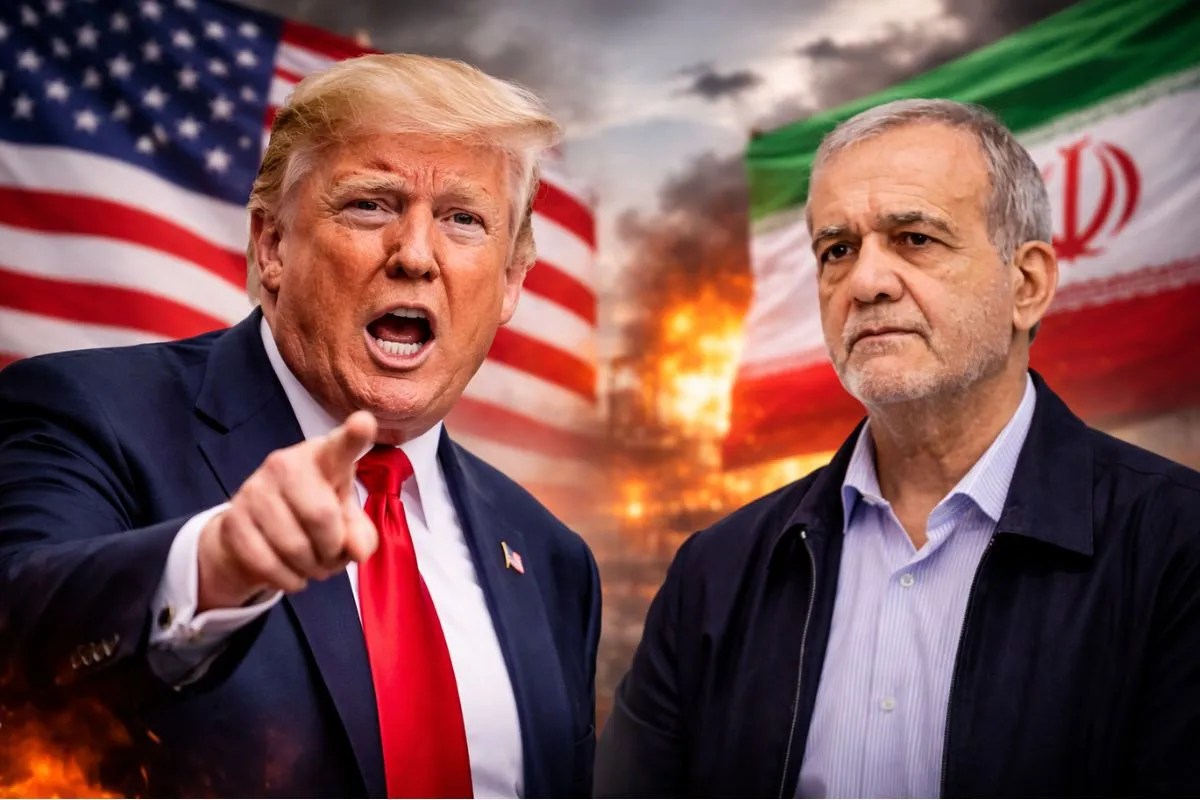
The catalyst for this sudden hardening of Doha’s heart isn't found in the local souks, but in the political shift currently sweeping across the Atlantic. Donald Trump’s return to the global stage has changed the calculus of risk. His rhetoric regarding Iran has never been subtle, but his recent threats have carried a new, sharper edge. He has made it clear that the time for "strategic ambiguity" is over.
Qatar saw the writing on the wall. They realized that if they didn't distance themselves from Iran now, they would be swept away in the coming storm of sanctions and political isolation. The "final ultimatum" issued to Tehran—the warning that the window for peace is slamming shut—is Qatar’s way of frantically signaling to the West: We are not with them.
This is a business decision as much as a political one. Qatar’s wealth is built on liquefied natural gas (LNG). Their North Field is the largest gas field in the world, and they share it—physically and geologically—with Iran. Imagine two straws stuck into the same milkshake. This shared resource has always necessitated a level of cooperation, a "keep your enemies close" philosophy. But the risk of being sanctioned out of the global banking system is a far greater threat than a disagreement over gas extraction.
The Human Cost of High-Stakes Poker
Behind the dry reports of "ultimatums" and "diplomatic shifts" are human lives hanging in the balance. Think of the Iranian expatriates in Doha, the business owners who have built lives in the shadow of this delicate balance. They are the first to feel the chill. Bank accounts are being scrutinized. Visas are becoming harder to renew. The bridge that Qatar provided wasn't just for spies and diplomats; it was a lifeline for people who wanted to believe the world wasn't as binary as the politicians claimed.
The tragedy of the "last ultimatum" is the loss of the gray area. In a world of black and white, there is no room for the negotiator. When Qatar tells Iran that the room for peace is gone, they are essentially admitting that their own reason for being—their identity as the Great Intermediary—is under threat.
Why This Time Is Different
In the past, these threats were often seen as performative. A little bit of chest-thumping to satisfy Washington, followed by a quiet reassurance to Tehran. Not this time. The language coming out of Doha is uncharacteristically blunt. They aren't just relaying a message from the Americans; they are expressing a genuine fear for their own sovereignty.
The reality is that Iran is increasingly isolated, and Qatar can no longer afford to be the last person standing on the sinking ship. The Iranian economy is a ghost of its former self, haunted by years of pressure. If Qatar remains its primary gateway to the world, Qatar becomes the target.
We often talk about geopolitics as if it were a game of chess, cold and calculated. But chess doesn't account for the smell of fear in a boardroom. It doesn't account for the frantic late-night sessions in Doha where officials realize that the multi-billion dollar safety net they built—the World Cup, the museum's, the global investments—could all be dismantled by a single executive order from the White House.
The Invisible Stakes
If Iran ignores this final warning, the fallout won't just be felt in the diplomatic bags. We will see it in the price of energy. We will see it in the increased military presence in the Strait of Hormuz. We will see it in the quiet withdrawal of Qatari investment from projects that have even a tangential link to Iranian interests.
The world is watching a masterclass in survival. Qatar is attempting to pivot at high speed, shedding its skin as a mediator to become a fortress of Western-aligned interests. It is a painful, messy process. It involves betraying old "understandings" and burning bridges that took decades to build.
But in the high-rise offices of Doha, the view is clear. The horizon is darkening, and the time for talking has passed.
The silence that follows a final ultimatum is often louder than the threat itself. It is the silence of a door being locked from the inside. Qatar has made its choice, not because it wanted to, but because the alternative was extinction. The middle ground is gone. The sand has shifted. And now, we wait to see if anyone is left to answer the call.
The salt-crusted air of the Gulf is still heavy, but the humidity no longer feels like a blanket. It feels like a shroud. The game of musical chairs has ended, the music has stopped, and Qatar has grabbed the last seat, leaving its neighbor across the water standing alone in the dark.