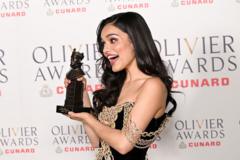
The Olivier Awards usually function as a high-gloss commercial for London theatre, but the 2026 ceremony at the Royal Albert Hall told a more fractured story. While Rachel Zegler clutched her Best Actress in a Musical trophy for Evita and a literal animatronic bear dominated the tally, the industry behind the black-tie finery is vibrating with a quiet, systemic panic. This was the night the West End finally admitted that the "middle" has disappeared, replaced by a binary of massive IP-driven blockbusters and high-stakes celebrity vehicles.
The Polarisation of the Stalls
Paddington The Musical did not just win; it colonised. With seven awards including Best New Musical, the production represents the pinnacle of the "safe bet" era. It features a sing-along score by Tom Fletcher and state-of-the-art tech, designed to capture the 17.6 million tourists who flooded London in 2025. This record attendance, ironically, is what makes the industry so fragile. We are seeing more people in seats but less variety on the stage.
The "why" is simple and brutal: production costs have doubled in a single decade. When it costs £5 million to mount a musical that once cost £2 million, the room for error vanishes. You either build a spectacle like Paddington that can run for a decade, or you hire a global film star for a twelve-week "event" to guarantee the box office.
The Zegler Effect and the Star Subsidy
Rachel Zegler’s win for Evita at the London Palladium was the evening’s most predictable triumph. Her performance was objectively powerhouse, but her presence in London is part of a larger, necessary transaction. Jamie Lloyd’s production of the Lloyd Webber classic relied on Zegler’s international profile to justify its existence.
This is the "Star Subsidy." Without a Zegler, or a Bryan Cranston—who led the cast of the Best Revival winner All My Sons—these productions simply do not happen in the commercial sector anymore. Cranston’s run at Wyndham’s Theatre was a masterclass in American tragedy, yet it was also a financial firewall. The industry is now dependent on a rotating door of Hollywood elite to fund the prestige that the West End used to produce internally.
The Subsidised Deficit Crisis
While the commercial West End celebrated its £1 billion revenue year, a darker reality sat in the back of the Royal Albert Hall. Over half of the UK's subsidised theatres—the engines that actually develop new talent—are forecasting operating deficits this year.
The Olivier winners list reflected this tension. Jack Holden’s Best Actor win for Kenrex at The Other Palace was a victory for the "scrappy" side of the tracks. It is a one-man true crime show that moved from the fringe to the West End. However, these transfers are becoming rare. As public funding fails to keep pace with inflation, the pipeline that brought shows like Kenrex or Punch (which took home two awards) to the big stage is leaking.
We are approaching a point where the only "new" work the West End can afford is work that has already been stress-tested by a massive social media following or a pre-existing movie franchise.
The Illusion of the Nap Schedule
Much was made of Bryan Cranston’s "nap schedule" and the endurance required for his role in All My Sons. While the anecdote is charming, it obscures the exhaustion felt by the people who don't have a trailer or a private driver. Equity, the actors' union, is currently locked in negotiations for a landmark pay rise, citing that the record-breaking revenues mentioned by the Society of London Theatre (SOLT) are not trickling down to the stage management and ensemble.
The gap between the "Star" and the "Staff" has never been wider. If you are the person inside the Paddington suit—or in this year's case, James Hameed and Arti Shah who shared the Best Actor in a Musical award for the role—you are the face of a million-pound brand, but you are likely still struggling to find an affordable flat in Zone 3.
The 50th Anniversary Reality Check
The 2026 Oliviers marked the 50th anniversary of the awards, and the broadcast's return to the BBC felt like a desperate grab for relevance. Theatre is currently more popular than it has been in decades, yet the business model is more precarious than ever.
The success of Wicked (celebrating 20 years) and Phantom of the Opera (40 years) shows that the West End is excellent at preservation. But the 2026 winners suggest a future where the only thing that survives is the spectacular. The mid-scale play, the experimental new musical without a "name" attached, and the subsidised powerhouse are being squeezed out by the sheer weight of energy costs and insurance hikes.
We are left with a theatre landscape that looks like a high-end luxury mall: a few giant anchor tenants that everyone recognizes, and very little space for anything else. The applause for Zegler and the bear was real, but the silence between the cheers was the sound of an industry holding its breath.
Investment must shift from the spectacle to the infrastructure, or the 60th anniversary will be a celebration of a museum rather than a living art form.