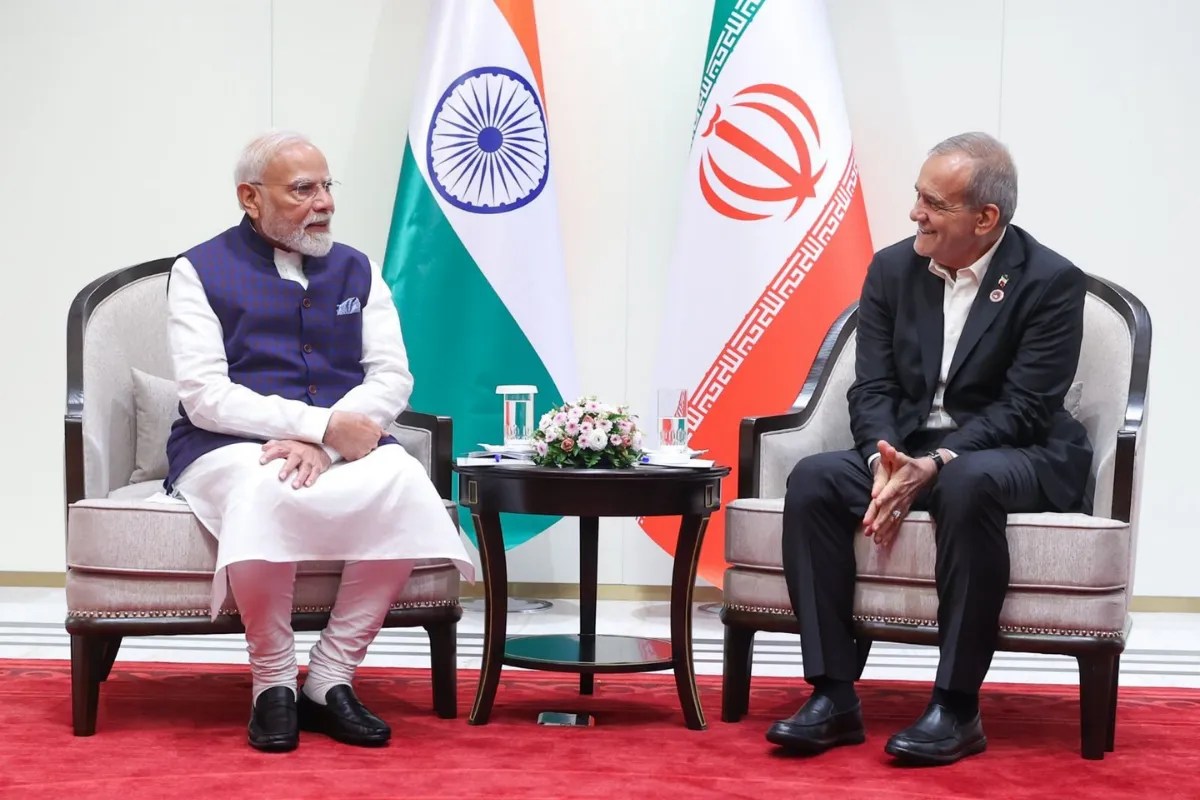
Prime Minister Narendra Modi’s direct assertion to Russian President Vladimir Putin that contemporary international relations require a transition from an era of endless war to an era of conflict termination exposes a fundamental shift in diplomatic signaling. Strategic dialogue between New Delhi and Moscow has long relied on diplomatic ambiguity, balancing historical defense dependencies with emerging economic realities. When a state actor alters its public lexicon from routine strategic partnership defense to explicit temporal demands regarding conflict resolution, the underlying cost function of that bilateral relationship has shifted.
The traditional architecture of India-Russia engagement rested on three structural pillars: legacy defense procurement, subsidized energy supply chains, and strategic autonomy alignment in multilateral forums. Each pillar operated under a specific set of risk assumptions that have been radically destabilized by prolonged military friction in Eastern Europe. Analyzing this diplomatic pivot requires examining the structural pressures forcing New Delhi to redefine its risk calculus.
The Economic Mechanism Of Secondary Exposure
Economic friction operates through secondary exposure and logistical bottlenecks rather than direct bilateral trade friction. India’s strategic trade with Russia has expanded significantly, primarily driven by discounted crude oil imports. This mechanism provided an immediate macroeconomic cushion, lowering domestic inflationary pressures and insulating the Indian economy against broader global supply chain shocks.
However, this transactional alignment incurs hidden operational costs. Western secondary sanctions, maritime insurance restrictions, and SWIFT network exclusions have transformed routine trade transactions into a complex labyrinth of workarounds. The settlement of trade balances in alternative currencies creates accumulation risks, where surplus capital in non-convertible or restricted currencies limits liquidity deployment.
The Defense Supply Chain Vulnerability
Military operational readiness remains tightly bound to legacy Soviet and Russian hardware. Over sixty percent of India’s military inventory historically traced its origins to Russian manufacturing plants. Maintaining this inventory requires a continuous flow of spare parts, component upgrades, and technical maintenance assistance.
Prolonged high-intensity conflict alters manufacturing priorities within the supplying nation. Industrial capacity redirects entirely toward domestic replenishment, starving export partners of critical maintenance components. This creates a severe operational deficit for military planners. When hardware cannot be serviced or upgraded according to lifecycle schedules, readiness rates decline exponentially. This vulnerability exposes the hidden cost of prolonged war: the degradation of a partner's conventional deterrence capabilities due to supply chain starvation.
Strategic Autonomy In A Polarized Framework
Diplomatic independence requires the capacity to diversify partnerships without triggering punitive isolation from opposing blocs. New Delhi’s foreign policy framework is built upon multi-alignment. Engaging Washington, Tokyo, and Canberra through frameworks like the Quadrilateral Security Dialogue while simultaneously maintaining traditional ties with Moscow demands precise equilibrium.
The continuation of active military conflict complicates this equilibrium. Western capitals increasingly view third-party economic engagement with Moscow as an indirect subsidy of war-fighting capacity. Consequently, the diplomatic cost of maintaining neutrality scales non-linearly over time. An endless conflict forces intermediate powers into binary choices, eroding the very operational space required for strategic autonomy.
The Divergence Of Strategic Horizons
Diplomatic rhetoric functions as an indicator of divergent future horizons. For Moscow, sustaining a protracted strategic posture is an existential calculation linked to regime security and sovereign defiance of Western security architecture. For New Delhi, the primary horizon is economic elevation, domestic manufacturing expansion, and securing undisputed primacy within the Indo-Pacific theater.
An ongoing war absorbs diplomatic capital that could otherwise be deployed toward regional stability, maritime security, and economic integration. The demand for an end to hostilities is therefore an assertion of national priority. It signals that New Delhi’s strategic calculus no longer views the collateral damage of a protracted European conflict as an acceptable background condition for bilateral partnership.
Strategic Execution For Bilateral Realignment
Bilateral continuity under conditions of systemic friction necessitates a deliberate decoupling of transactional trade from geopolitical endorsement. Moscow must recognize that New Delhi’s insistence on peace is not a concession to external pressure, but a rational defense of its own development imperatives. Future diplomatic leverage will depend on the speed at which supply chain localization can decouple Indian defense readiness from Russian manufacturing dependencies, rendering bilateral ties immune to the outcomes of European theater conflicts.