The air off the coast of northern British Columbia does not smell like politics. It smells of crushed salt, decaying kelp, and the cold, damp promise of rain that has been traveling across the Pacific for thousands of miles.
On a morning when the fog hangs so low it swallows the masts of the fishing boats in Prince Rupert, you can stand on the dock and feel the immense weight of an invisible line. It is a line drawn in the water, a legal barrier that stops massive crude oil tankers from entering these fjords. To the people who live here, it feels like a shield. To those looking at a map of global trade from an office in Calgary or Toronto, it can look like a tourniquet.
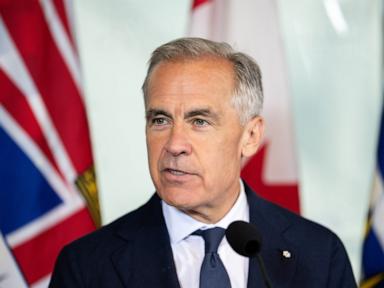
When Mark Carney, the former central banker turned political advisor, signaled that Canada’s northern Pacific tanker ban is not going anywhere, he wasn't just confirming a policy. He was acknowledging a deep, structural fracture in how a nation envisions its future. On one side of the ledger is Alberta, desperate to move its landlocked bitumen to hungry markets in Asia. On the other is a pristine coastal ecosystem that has rejected the mechanics of the global oil trade.
Between them lies a complex compromise that tries to satisfy both sides but leaves everyone slightly uneasy.
The Geography of Friction
To understand why a piece of federal legislation can cause such bitter division, you have to look at the map through two entirely different lenses.
Imagine a pipeline worker named Darren. He is a hypothetical composite of the thousands of men and women who spent the last decade working the camps in northern Alberta. For Darren, energy is not an abstract concept or an environmental hazard. It is the mortgage on his home, the hockey gear for his kids, and the pride of a province that kept the Canadian economic engine humming for a generation. From Darren’s perspective, Canada is a giant resource storehouse that has locked its own front door.
Every barrel of oil that cannot reach the ocean is sold to the United States at a heavy discount. It feels like money left on the table. It feels like a national failure.
Now, shift the lens one thousand kilometers west.
Consider a coastal community member, someone whose family has harvested salmon and herring from the waters around the Great Bear Rainforest for generations. To them, a single catastrophic oil spill is not a statistical risk to be mitigated by an insurance policy. It is an existential full stop. It is the end of an entire way of life. They do not see the tanker ban as an economic impediment. They see it as a baseline requirement for survival.
This is the gridlock that Canadian politicians have inherited. The federal government attempted to resolve it with a geographic split-screen: keep the northern coast locked down under the Oil Tanker Moratorium Act, but push through the Trans Mountain pipeline expansion further south, emptying into the busier, already industrialized waters near Vancouver.
It is a strategy of containment. But containment is a fragile thing.
The Banker’s Ledger
When a figure with Carney’s international financial pedigree steps into this arena, the conversation changes from raw emotion to cold calculus. The message is clear: the northern ban stays because stability is worth more to global investors than another round of domestic political warfare.
The global energy market is no longer the predictable beast it was twenty years ago. The transition toward lower-carbon systems is messy, non-linear, and incredibly expensive. International capital does not like uncertainty. It does not like long, drawn-out legal battles with Indigenous nations that stretch on for decades and end in project cancellations.
By drawing a hard line in the sand—or rather, in the water—the government is attempting to offer investors a predictable framework. The northern coast is off-limits. The southern corridor is open.
Consider what happens next when that certainty is challenged. For years, advocates for the oil sector argued that a northern pipeline route, ending at a deep-water port like Kitimat, was the most efficient way to reach Asia. It is days closer to Tokyo and Shanghai than the southern route. The waters are deep, the channels wide enough for the largest vessels on earth.
But efficiency on a spreadsheet does not always translate to reality on the ground.
The northern tanker ban was codified into law because the social license to operate there simply did not exist. The coastal First Nations made it clear that any attempt to force a pipeline through their ancestral lands to feed tankers in their waters would be met with unrelenting resistance.
The decision to maintain the ban is an admission that some costs are too high to bear, even for a resource-dependent economy.
The Southern Pressure Valve
Because the north is closed, the entire weight of western Canada’s energy ambitions has been pushed south. The Trans Mountain pipeline expansion is the manifestation of that pressure.
It was an extraordinarily painful project to bring to life. It cost billions more than originally budgeted. It required the federal government to step in and buy the pipeline outright to ensure its completion. It sparked mass protests, hunger strikes, and political crises that pitted province against province.
But it exists. It is operational.
Every day, hundreds of thousands of barrels of oil move from the landlocked prairies, through the rocky peaks of the mountains, and down into the Burrard Inlet. From there, tankers navigate the narrow waters of the Salish Sea, heading out past Vancouver Island into the open ocean.
This is the compromise Canada has chosen. It is an imperfect, sweating pressure valve.
To the critics in Alberta, the compromise feels half-hearted. They look at the northern ban and see a permanent ceiling placed on their growth. They note that American ports in Alaska face no such bans, and that global demand for energy continues to rise, regardless of Canada’s internal moral struggles. If the world is going to consume oil, they ask, why shouldn't it be Canadian oil, produced under strict environmental regulations, rather than crude from regimes with no regard for human rights?
It is a powerful argument. It is an argument built on the reality of global demand.
Yet, the counter-argument is built on the reality of place. Go back to that dock in Prince Rupert. Look out at the water where the humpback whales feed, where the spirit bears roam the edges of the old-growth forest. If you tell the people there that their home must be risked to balance the national trade deficit, the answer will always be no.
The Myth of the Easy Answer
We often treat these debates as simple disagreements between progress and preservation. They are not. They are deep conflicts between two different ideas of what a country should be.
One version sees Canada as an economic powerhouse defined by its ability to conquer its vast, unforgiving geography and bring its wealth to the world. The other version sees Canada as a custodian of some of the last truly wild places on earth, where the value of an intact ecosystem outweighs the numbers on a quarterly GDP report.
The current policy stance tries to live in both worlds at once. It wants to be an energy superpower and a climate leader. It wants to build pipelines and ban tankers.
This dual identity creates a strange, halting rhythm in Canadian public life. We move forward by inches, constantly checking the rearview mirror, trying to appease constituencies that are fundamentally unappeasable.
The confirmation that the northern ban will remain unchanged tells us that the government believes the political and social cost of reopening this wound is too great. They have decided that the Trans Mountain route must be enough. It is the line they have chosen to defend.
But lines on a map do not stop the world from turning. The pressure from the prairies will not disappear just because a politician confirms a policy. The global demand for energy will fluctuate, and the people who rely on that industry for their survival will continue to look for ways out to the sea.
Meanwhile, the fog will continue to roll into the inlets of northern British Columbia. The tides will rise and fall against the rocky shores, carrying nothing but the wild life that has always been there. For now, the water remains quiet. The silence is expensive, it is hard-fought, and it is fiercely defended by those who know exactly what they have to lose.