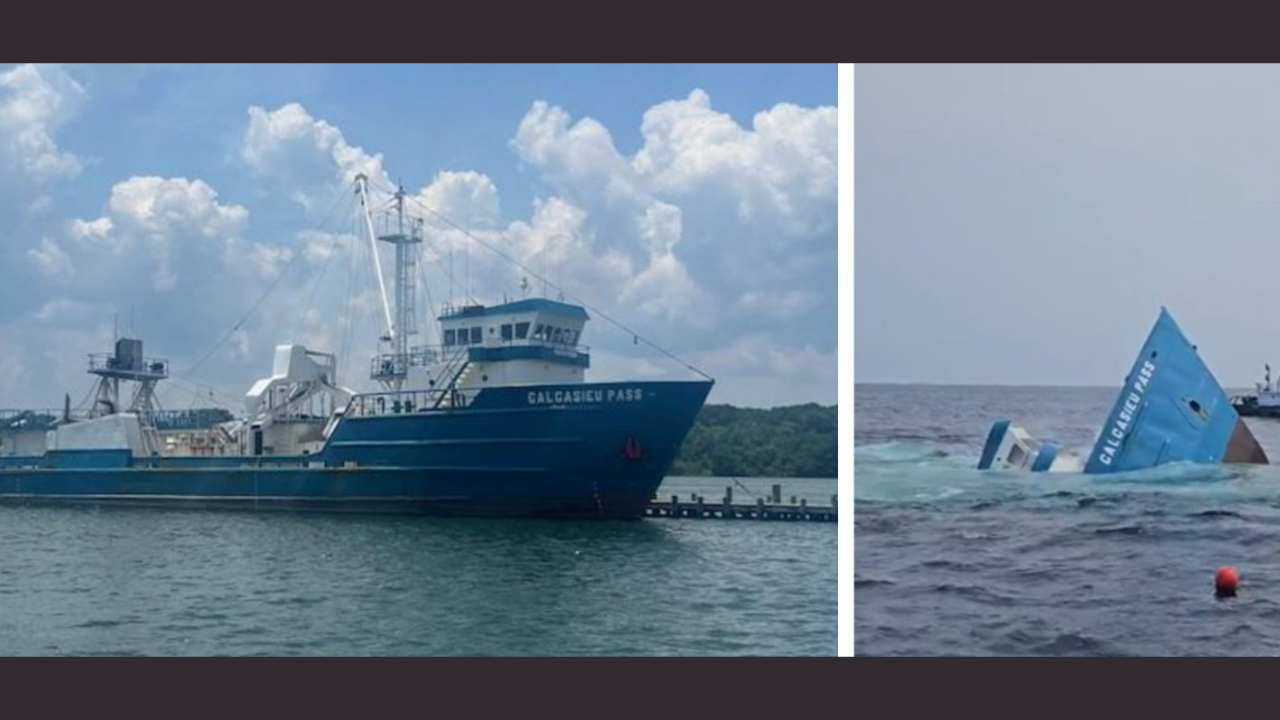
They sank a 180-foot vessel off the coast of Delaware, and the hand-wringing started before the bubbles even stopped rising.
Read the standard coverage of this event and you will find the exact same lazy consensus recycled by environmental reporters and armchair marine biologists alike. The headline practically writes itself: State dumps massive steel hull into the Atlantic, creates artificial reef, fails to measure fish populations. The implication is obvious. Government bureaucrats are playing with giant toys in the ocean without doing the homework to prove it works. It sounds like classic public-sector waste. It sounds like reckless ocean dumping disguised as conservation.
That narrative is completely backwards.
The critics fixating on immediate fish counts are exposing their own ignorance of marine ecology, fisheries economics, and basic benthic biology. Demanding a fish census the moment a retired vessel hits the seafloor is like pouring the concrete foundation for a skyscraper and complaining that nobody has leased the penthouse suite yet. Worse, the obsession with raw fish headcounts misses the entire point of why coastal states sink ships in the first place.
If you want to understand what is actually happening off the Mid-Atlantic coast, stop looking at the fish. Look at the steel, the biology of attachment, and the brutal economics of modern fisheries management.
The Lie of Instant Ecological Gratification
When a 180-foot commercial vessel goes down—stripped of fuels, oils, asbestos, and floatables under strict Environmental Protection Agency and Coast Guard protocols—it does not arrive on the seabed as a reef. It arrives as sterile, barren metal sitting on a flat expanse of sand and mud.
The Mid-Atlantic Bight, stretching from Cape Cod to Cape Hatteras, is overwhelmingly featureless. For miles on end, the continental shelf looks like an underwater desert of shifting silt. Native species like black sea bass, tautog, scup, and summer flounder cannot thrive on a flat mud bottom. They require vertical relief. They need crevices to hide from predators, hard surfaces to anchor sponges and barnacles, and structural complexity that disrupts ocean currents to create nutrient-rich eddies.
Here is the biological reality that armchair critics ignore: colonization takes years, not news cycles.
During the first six months, a sunken hull is little more than a visual curiosity. Bacteria form a primary biofilm. Hydroids and barnacles begin to settle. By year two, blue mussels, anemones, and soft corals encrust the steel. Only after this benthic community establishes a self-sustaining food web do juvenile fish recruit to the structure in meaningful numbers. According to long-term benthic monitoring studies conducted by marine ecologists—including research published in the Bulletin of Marine Science and data tracked by the Atlantic States Marine Fisheries Commission—artificial reefs often require three to five years to reach trophic maturity.
Complaining that fish populations remain "unmeasured" right after deployment isn't a gotcha moment. It is a fundamental misunderstanding of biological succession. Measuring fish populations on a brand-new shipwreck tells you nothing about the reef's carrying capacity. It only measures how many nomadic predators happened to swim past a giant metal box that week.
Attraction Versus Production The Debate Nobody Understands
If you push past the superficial media outrage, you hit the genuine scientific battleground of artificial reefs: the attraction-versus-production hypothesis.
Marine biologists have argued over this for decades. Does a sunken ship actually produce new fish biomass by providing critical habitat, food, and shelter that increases survival rates? Or does it simply attract existing fish from surrounding areas, concentrating them into one convenient location where commercial and recreational fishermen can wipe them out faster?
I have watched coastal states burn millions of dollars on reef programs without ever explaining this distinction to the taxpayers footing the bill. When state agencies fail to frame the debate properly, critics fill the vacuum with cynicism.
Here is the nuance the mainstream coverage misses entirely: attraction and production are not mutually exclusive, and in the Mid-Atlantic, structure itself is the limiting factor.
In tropical waters like the Florida Keys, natural coral reefs already provide abundant hard-bottom habitat. Dropping a ship there mostly redistributes fish. Off the coast of Delaware, New Jersey, and Maryland, natural rock ledges are scarce. Without hard substrate, larval invertebrates drift in the water column until they die. When you introduce 180 feet of vertical steel relief onto a barren sand plain, you aren't just stealing fish from the reef next door. You are creating a brand-new trophic engine from scratch.
More importantly, modern reef management uses spatial zoning to solve the overfishing trap. By placing artificial reefs in designated zones—and pairing them with strict seasonal closures, size limits, and gear restrictions—states turn concentrated fish populations into manageable fisheries rather than slaughterhouses.
Why Counting Every Fish Is a Colossal Waste of Taxpayer Money
Let’s address the core complaint head-on: why didn't Delaware deploy a team of scientific divers, remotely operated vehicles, and hydroacoustic surveyors to establish a baseline fish count?
Because biological monitoring at that scale costs more than sinking the ship.
To get a statistically valid population estimate on an offshore artificial reef in the North Atlantic, you cannot just send a guy down with a clipboard and a GoPro. Visibility off Delaware routinely drops to less than five feet. Currents rip across the continental shelf at two to three knots. Divers are severely limited by bottom time and decompression schedules at depths exceeding 80 to 120 feet.
To do real science, you need multi-beam sonar surveys, baited remote underwater video systems (BRUVs), acoustic telemetry tagging, and years of repeated seasonal sampling to account for migratory shifts. A rigorous, multi-year quantitative assessment of a single reef site easily runs into the hundreds of thousands of dollars—often eclipsing the entire budget allocated to acquire, clean, tow, and sink the vessel.
Imagine a scenario where a state marine agency has $500,000 in dedicated reef funds, generated primarily through federal Sport Fish Restoration grants (funded by excise taxes on fishing tackle and boat fuel, not general income taxes). They have two choices:
- Spend $150,000 cleaning and sinking three decommissioned vessels, creating thousands of square feet of permanent benthic habitat, and spend $350,000 on academic surveys to count the fish on just one of them.
- Spend the entire $500,000 deploying verified, EPA-compliant reef structures across multiple sites, relying on existing state trawl surveys, recreational harvest reporting, and proven regional ecological models to track stock health.
The academic purist demands Option 1. The marine resource manager who actually understands return on investment chooses Option 2 every single time. We already have thirty years of peer-reviewed data from the Delaware Department of Natural Resources and Environmental Control (DNREC) and neighboring states proving that steel hulls in the Mid-Atlantic become thriving ecosystems. Re-proving gravity every time a boat hits the bottom is bureaucratic masturbation.
The Uncomfortable Truth About Who Actually Pays for Reefs
If you want to dismantle the media narrative completely, follow the money.
Critics love to frame artificial reef deployments as reckless environmental experiments funded by unwitting taxpayers. In reality, artificial reef programs in the United States are among the most successful user-pays conservation models in the world.
Under the Dingell-Johnson Act and the Wallop-Breaux Amendment, every time an angler buys a fishing rod, a reel, a tackle box, or a gallon of marine fuel, a federal excise tax goes directly into the Sport Fish Restoration Trust Fund. That money is distributed back to state agencies specifically for fisheries management, boating access, and habitat enhancement.
Recreational anglers and charter boat captains aren't victims of Delaware's reef program; they are its primary financiers and loudest advocates.
And the economic multiplier is staggering. Studies by the American Sportfishing Association and state sea grant programs consistently show that artificial reefs generate millions of dollars in annual economic activity for coastal communities. Charter captains save thousands in fuel costs because they don't have to run 60 miles offshore to the continental shelf edge to put clients on fish. Tackle shops, marinas, hotels, and waterfront restaurants thrive because anglers have reliable, accessible fishing grounds within 15 to 25 miles of the inlet.
When a journalist complains that fish populations remain unmeasured, they are ignoring the metric that actually keeps the program alive: angler effort, catch-per-unit-effort (CPUE), and coastal economic output.
The Real Risks Nobody Is Talking About
To pretend artificial reefs are flawless would be just as dishonest as pretending they are useless. If we are going to hold state agencies accountable, we need to stop asking amateur questions about immediate fish counts and start interrogating the real engineering and ecological failure points.
1. Structural Collapse and Scouring
A 180-foot fishing vessel is not an indestructible monolith. Hurricanes and winter nor'easters generate massive bottom surge even at depths of 100 feet. Over twenty to thirty years, saltwater corrosion and storm energy collapse upper superstructures, flattening the vertical profile that makes ships attractive to pelagic species. Worse, strong currents cause scouring—washing sand out from under the bow and stern until the hull buries itself into the seabed, drastically reducing its surface area.
2. Invasive Species Highways
Hard structures placed in soft-bottom environments act as stepping stones for invasive marine organisms. Species like the invasive orange cup coral or certain non-native tunicates struggle to cross wide expanses of open sand. Drop a string of steel wrecks every few miles down the coast, and you inadvertently build an interstate highway for aggressive colonizers to outcompete native benthic fauna.
3. Ghost Gear Entanglement
Artificial reefs are magnets for recreational anglers, which means they are also magnets for lost fishing line, braided spectra, lead weights, and abandoned commercial traps. Over a decade, a popular shipwreck becomes draped in a deadly web of monofilament that entangles sea turtles, marine mammals, and diving seabirds. Yet almost zero reef budgets allocate funds for routine underwater debris removal.
4. The Illusion of Habitat Replacement
The greatest danger of artificial reefs is political. Developers, port authorities, and offshore wind corporations love artificial reefs because they offer a convenient mitigation narrative. Dredging an estuary or pile-driving hundreds of monopiles into the seabed? Just sink a few old tugboats nearby and call it a net ecological gain. A steel hull is a phenomenal reef, but it does not replicate the nursery functions of a coastal salt marsh or an oyster bed. Using shipwrecks as an ecological get-out-of-jail-free card is a terrible precedent.
Stop Asking "How Many Fish Are There?" Start Asking Better Questions
If you are a taxpayer, an angler, or an environmental advocate watching coastal states sink ships, discard the lazy talking points. Do not fall for headlines designed to manufacture outrage over missing spreadsheets.
Instead, judge any artificial reef deployment on the metrics that actually determine long-term success:
- Site Selection and Hydrodynamics: Was the vessel placed on stable substrate outside of heavy shipping lanes, with enough depth to prevent storm surge from tearing it apart within five years?
- Pre-Deployment Remediation: Did the contractors strip every trace of hydrocarbons, PCBs, plastics, and loose wiring, or did the state cut corners to save on towing fees?
- Connectivity: Does the new wreck bridge a gap between existing hard-bottom habitats, creating a corridor for migratory species like summer flounder and black sea bass?
- Enforcement and Monitoring: Is the state tracking recreational catch-per-unit-effort through dockside intercepts and vessel trip reports rather than wasting grants on redundant underwater headcounts?
Delaware did not dump trash into the ocean and forget to do the math. They deployed a massive, meticulously cleaned piece of benthic infrastructure into a sediment-starved marine environment using dedicated user-fee funding.
The fish will show up on their own biological schedule, whether a biologist is hovering over the hull with a clipboard or not. The only thing unmeasured here is the sheer volume of wasted ink spent criticizing a proven conservation tool by people who have never actually looked beneath the surface.