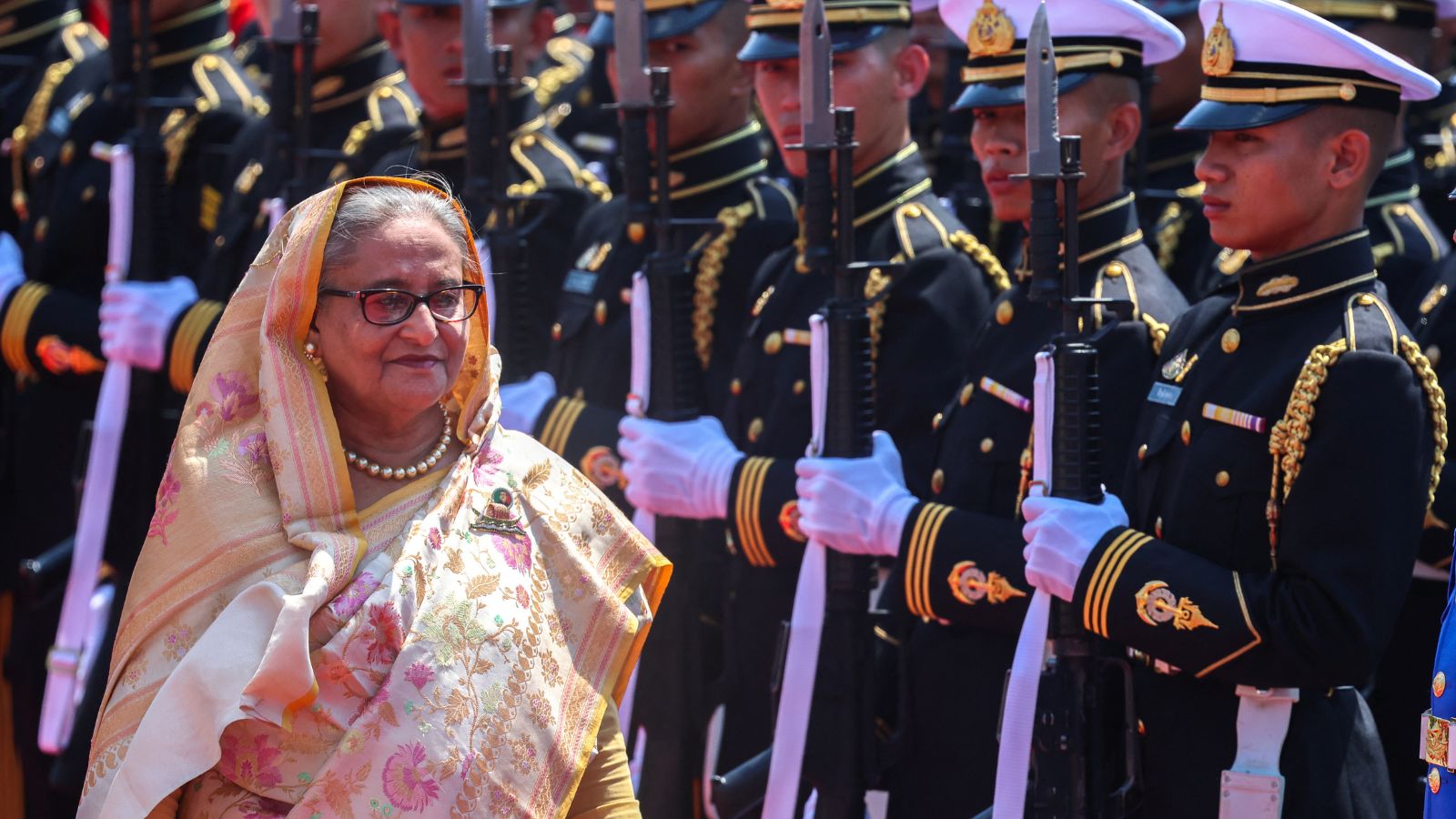
India is officially stepping back from Sheikh Hasina. The immediate trigger is a planned virtual press event meant to beam the ousted Bangladeshi leader straight from a safehouse in New Delhi into the political consciousness of Dhaka. South Block wants no part of it. Diplomats have signaled clear displeasure, effectively shutting down the microphone before the broadcast can destabilize an already fragile transition in Bangladesh.
When a former head of state flees a mass uprising in a military helicopter and lands on your airbase, you inherit a diplomatic hand grenade. For months, New Delhi managed the crisis through silence and heavy security. The logic was simple. Protect a historic ally, keep channels open, and wait for the dust to settle across the border. But the calculus shifted the moment Hasina attempted to project political power back into her home country from Indian soil.
The Exile Paradox in South Block
Hosting a fallen leader is an old tradition in South Asia, but it always carries a steep price. India has a long history of offering shelter to regional figures, from Tibetan spiritual leaders to deposed monarchs and prime ministers. Yet, sheltering someone is vastly different from letting them use your territory as a staging ground for a political comeback.
The interim government in Dhaka, led by Muhammad Yunus, watches New Delhi's every move with acute suspicion. Every day Hasina remains in India without facing extradition proceedings creates a friction point in bilateral ties. Bangladesh has already revoked her diplomatic passport and demanded accountability for the violent crackdown that preceded her downfall. When a guest in your capital attempts to organize digital rallies or broadcast fiery political messaging, that guest transforms from a humanitarian obligation into a strategic liability.
South Block realized that allowing a virtual press conference would cross a red line. It would signal to the new administration in Dhaka that India is actively harboring an insurgent political operator rather than a retired stateswoman. Foreign ministries do not make these decisions lightly. They weigh the sentimental value of past alliances against the cold, hard reality of future trade, security cooperation, and regional stability.
Behind the Closed Doors of New Delhi Safehouses
Life in diplomatic exile is rarely glamorous. Since August 2024, Hasina has lived under strict security parameters managed by Indian intelligence agencies. Her movements are restricted. Her communications are monitored, not out of malice, but out of sheer operational necessity. New Delhi cannot afford security breaches or embarrassing leaks that compromise its intelligence infrastructure.
The decision to block the virtual press event stems from direct pressure and sharp warnings channeled through diplomatic backchannels. Dhaka made it clear that hosting or facilitating political broadcasts by an individual facing multiple murder charges and crimes against humanity investigations would poison bilateral relations for a generation.
India cannot afford to alienate the current leadership in Dhaka permanently. Bangladesh is a crucial trading partner, a vital buffer in India's eastern security grid, and a frontline state in the battle against cross-border militancy. Clinging to the political ambitions of one deposed leader is a terrible trade-off for regional hegemony.
By pulling the plug on the press conference, Indian authorities are sending a message to both sides. To Dhaka, they are demonstrating a pragmatic willingness to distance themselves from a toxic political asset. To Hasina, they are establishing the boundaries of hospitality. You can stay, but you cannot use our roof to wage your political wars.
The Regional Fallout of Diplomatic Pragmatism
South Asia operates on a razor edge of political volatility. When a regime collapses, the fallout rarely stays within national borders. For India, the fall of the Awami League government wiped out decades of strategic alignment in a matter of weeks. The opposition parties and student movements that drove Hasina from power harbor deep resentment toward New Delhi, largely because India was perceived as backing an authoritarian regime for too long in the name of stability.
This dynamic creates a vicious cycle. The longer India shelters Hasina, the more ammunition it gives to anti-India factions in Bangladesh. The more anti-India sentiment grows in Dhaka, the harder it becomes for New Delhi to normalize relations with the interim government.
Yet, outright expulsion is not an option either. Handing over a veteran leader to a revolutionary tribunal that has already suspended due process norms in various ways would signal weakness and disloyalty to future allies across the region. India has to walk a narrow ridge between appearing callous to its friends and appearing hostile to its neighbors.
The virtual press event was designed to break that deadlock by forcing the issue into the public sphere. By mobilizing her base through international media channels, Hasina hoped to reclaim the narrative and compel New Delhi to take a harder public stance on her behalf. Instead, her handlers in the Indian security establishment saw the move for what it was: a desperate gambit that threatened to blow up months of delicate, behind-the-scenes diplomacy.
The Cost of Past Miscalculations
To understand why New Delhi finds itself in this corner, one must examine the years leading up to the 2024 collapse. Indian foreign policy toward Bangladesh suffered from a profound lack of diversification. For over fifteen years, South Block hitched its entire eastern wagon to a single political entity. Every egg was placed in the Awami League basket.
Diplomatic analysts warned repeatedly that suppressing political opposition, hollowing out democratic institutions, and ignoring grassroots discontent would eventually trigger a massive backlash. Those warnings were dismissed in favor of short-term stability. After all, Hasina delivered on India's primary security demands. She cracked down on anti-India insurgent groups operating from Bangladeshi soil, ensured transit rights, and kept radical Islamic elements tightly controlled.
When the bill came due, it was astronomical. The street-level fury that erupted in Dhaka was not just about economic grievances or job quotas. It was a pent-up explosion against a system perceived as propped up by an external power.
Now, India is paying the price for that monochromatic vision. Managing Hasina's exile is a daily exercise in damage control. Every public statement she makes, every rumor of a political comeback, and every attempt to rally her fractured party sends shockwaves through the Ministry of External Affairs.
What Comes Next for Bilateral Ties
The cancellation of the virtual press conference is a tactical victory for pragmatism, but it does not solve the structural crisis. Bangladesh is moving toward a long and unpredictable political transition. Elections have not been scheduled with absolute certainty, and the interim government is wrestling with internal divisions, economic strain, and the daunting task of writing a new political playbook.
India must figure out how to reset its relationship with a country that no longer trusts its motives. This requires reaching out across the political spectrum in Dhaka, engaging with student leaders, civil society groups, and opposition factions that were once ignored or suppressed. It means proving through actions, rather than press releases, that India respects the sovereignty and democratic aspirations of the Bangladeshi people.
Hasina remains a ghost of a bygone era, rattling chains from a fortified bungalow in the National Capital Region. Her political career is over, regardless of what digital platforms she attempts to utilize. The sooner all parties accept that reality, the sooner South Asia can move past the trauma of August 2024 and build a mature, resilient relationship between two sovereign neighbors who cannot afford to be enemies