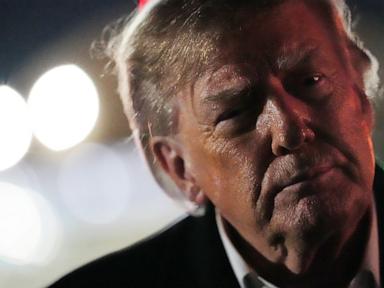
High-dollar defamation lawsuits rarely turn on courtroom dramatics alone; they are usually won or lost during pretrial discovery, where every deposition request becomes a mechanism to inflate legal costs, extract damaging admissions, and test whether a plaintiff can survive the burden of proving actual malice. When a headline points to a clash over depositions between Donald Trump's legal team and the BBC in a multi-billion-dollar defamation dispute, surface-level coverage tends to treat the fight as a simple tug-of-war over who speaks first or who looks tougher in court. A rigorous operational reading strips away that theater and examines the underlying litigation mechanics: asymmetric cost functions, jurisdictional friction, editorial record preservation, and the evidentiary threshold that separates political rhetoric from actionable defamation.
Deconstructing Standard Coverage of Deposition Battles
Typical media coverage of high-profile defamation disputes flattens complex procedural friction into a binary contest. One side demands testimony; the other resists, files motions for protective orders, or challenges scope and sequencing. While that framing captures the outward drama of a docket sheet, it leaves out three structural dynamics that govern how both sides behave behind closed doors.
First, standard reporting often treats a headline damages figure—such as a $10 billion demand—as an empirical valuation rather than a strategic anchor. In civil litigation, a multi-billion-dollar figure functions simultaneously as a signaling device to shareholders or supporters, an escalation lever in settlement posture, and a benchmark for disproportionate discovery scope under proportionality rules. Claimed damages do not automatically translate into provable economic harm or collectible judgments, yet they heavily influence how aggressively parties argue over document production and witness examination.
Second, conventional commentary frequently blurs the boundary between public statements made on air or in print and the internal editorial chain that produced them. A deposition battle is rarely just about asking a witness to repeat or defend a broadcast segment. Counsel probes how scripts were drafted, how clips were edited or contextualized, what sourcing standards were applied, and whether warnings or corrections were raised before publication.
Third, surface accounts often overlook how cross-border and jurisdictional realities complicate witness availability and procedural rules. A dispute involving a prominent American political figure and a major British broadcaster implicates distinct legal traditions around free expression, defamation standards, and cross-border discovery mechanisms. Even when a case is litigated in a specific court under defined procedural rules, practical questions around witness location, corporate custodians, and privilege logs shape every scheduling dispute.
The Cost Function of Pretrial Discovery
To understand why parties fight so fiercely over depositions before a jury is ever seated, treat litigation as a resource-allocation system governed by a cost function rather than a single event. Every deposition carries direct financial expenditure alongside indirect operational and reputational costs.
Direct and Indirect Cost Drivers
- Preparation and Counsel Hours: Preparing a senior executive, editor, or public figure for sworn testimony requires extensive document review, mock examinations, privilege screening, and multi-lawyer attendance. Every hour of testimony typically multiplies into many hours of preparation and follow-up review.
- Opportunity Cost of Key Personnel: Senior decision-makers and high-profile figures operate under severe time constraints. Pulling executives or principals away from core operations or public duties imposes an internal drag that does not show up on an opposing party's invoice.
- Asymmetric Leverage: A well-funded litigant can use broad discovery demands to impose steady burn on an opponent, testing whether the opposing side prefers early settlement, narrower stipulations, or protracted motions practice. Conversely, a party facing heavy discovery burdens may seek protective orders or staged depositions to limit exposure until threshold legal issues are tested.
- Error and Impeachment Risk: Under oath, small inconsistencies between prior public remarks, emails, text messages, and live answers can be preserved as impeachment material. Even minor memory lapses or imprecise phrasing can be framed later as evasive or unreliable.
When a party resists or seeks to sequence a deposition, the move is rarely just delay for delay's sake. It is an effort to shift the cost-to-benefit ratio of disclosure—forcing the other side to justify relevance and proportionality before handing over sworn testimony that cannot be unsaid.
Three Pillars of Actual Malice and Editorial Proof
In defamation law involving public figures, a plaintiff faces a demanding evidentiary hurdle: proving actual malice—meaning the statement was made with knowledge that it was false or with reckless disregard for whether it was false or not. Negligence, bad manners, or unfavorable framing is not enough on its own. That legal standard turns deposition strategy into a targeted search for state-of-mind evidence.
1. Knowledge of Falsity
Counsel examining editorial or production witnesses looks for evidence that decision-makers actually knew a factual claim was inaccurate when aired or published. Internal messages, draft revisions, fact-checking notes, or pre-broadcast pushback become central exhibits. In a deposition, questioning typically tests whether a witness was aware of contradicting facts before the segment went out.
2. Reckless Disregard and Purposeful Avoidance
Because direct admissions of knowing falsity are rare, litigators focus heavily on reckless disregard—situations where a publisher entertained serious doubts about truth or engaged in purposeful avoidance of obvious contrary information. Depositions probe workflow shortcuts, time pressure, reliance on questionable sources, and whether editorial guardrails were bypassed or ignored.
3. Editorial Chain and Intent
A broadcast or report is rarely the work of a single person acting in isolation. Producers, editors, researchers, legal reviewers, and on-air talent each occupy a different link in the chain. Mapping who knew what, and when, helps determine whether any alleged error stemmed from routine human mistake, isolated judgment, or systemic disregard for accuracy.
Cause-and-Effect Chains Missed in Surface Narratives
Surface-level coverage often treats procedural disputes as isolated skirmishes. Tracing the cause-and-effect chains reveals how early discovery moves reshape the entire litigation path.
Sequencing Shapes Leverage
If a key deposition occurs early—before full document production is complete—the questioning party may lack critical internal records, while the deponent faces questions without the benefit of seeing every relevant exhibit in context. If a deposition is delayed until after core documents are produced, the examiner can confront the witness with contemporaneous records, raising the stakes of every answer.
Scope Drives Motion Practice
Overbroad deposition topics or sweeping document requests invite objections based on proportionality, relevance, or privilege. Those objections trigger meet-and-confer negotiations and motions to compel or for protective orders. Each motion consumes calendar time and judicial bandwidth, slowing down summary judgment briefing where weak claims are often filtered out before trial.
Public Optics Versus Evidentiary Value
Litigants often speak as though every procedural filing is aimed at winning in court, yet high-profile cases operate on two tracks simultaneously: the legal record and the public narrative. A fierce fight over depositions can signal resolve to supporters and critics alike, even when the underlying legal dispute turns on narrow rules of civil procedure. Separating performative posturing from substantive evidentiary value is essential for anyone tracking whether a case is actually moving toward trial or resolution.
Facts Versus Educated Hypotheses in High-Profile Disputes
Careful analysis requires separating verifiable mechanics from educated hypotheses when exact confidential filings, sealed transcripts, or private negotiations are not public.
Known mechanisms and established principles: Pretrial discovery in civil defamation litigation is governed by procedural rules that allow parties to seek non-privileged information relevant to claims or defenses, subject to proportionality and court oversight. Public-figure defamation claims require proof of actual malice by clear and convincing evidence, making pre-publication awareness and editorial process central subjects of inquiry.
Educated hypotheses: When legal teams clash over depositions in a high-stakes case, each side is likely attempting to maximize its informational advantage while minimizing its own exposure to impeachment and cost. A plaintiff's team generally benefits from broad, early access to internal editorial decision-makers and records to build a circumstantial case of recklessness, whereas a media defendant generally seeks tight boundaries around relevance, privilege, and witness burden so routine editorial judgment is not conflated with actual malice.
Tactical Step-by-Step Framework for Evaluating Discovery Clashes
Anyone analyzing or advising around a high-profile deposition dispute—whether an executive, legal observer, or media strategist—can evaluate developments systematically using a five-step sequence.
- Identify the Procedural Posture: Determine whether the dispute centers on initial scheduling, scope of questioning, privilege assertions, protective orders, or cross-border service and compulsion. Procedural posture dictates what the judge is actually being asked to decide.
- Map the Target Witness to the Legal Element: Ask what specific element of the claim or defense a given witness's testimony can advance or undermine—such as pre-publication knowledge, editing choices, damages causation, or corporate oversight.
- Trace Document-to-Testimony Sequencing: Check whether key internal documents, drafts, and communications have already been produced or remain contested. Testimony taken after document production carries very different evidentiary weight than testimony taken in the dark.
- Separate Legal Thresholds from Damages Rhetoric: Distinguish between arguments over liability and actual malice on one hand, and headline damages figures on the other. A massive damages claim does not relieve a plaintiff of proving fault and falsity.
- Assess Settlement and Summary Judgment Impact: Evaluate how a discovery ruling affects the odds of surviving summary judgment. Evidence that creates a genuine dispute of material fact on actual malice shifts bargaining power far more than rhetorical escalation in the press.
Limitations and Strategic Play
No legal framework or discovery tactic guarantees a decisive outcome in complex defamation litigation. Courts exercise wide discretion over case management and discovery scope, privilege claims face strict scrutiny when state-of-mind is at issue, and protracted litigation remains expensive and uncertain for every party involved. Even strong legal positions can stall over procedural hurdles, shifting judicial schedules, or changing strategic priorities.
The sharpest strategic play for any observer or decision-maker tracking this dispute is to ignore the noise around headline dollar figures and watch two concrete inflection points instead: rulings that define the exact scope and timing of key depositions, and summary judgment motions testing whether the evidentiary record clears the actual malice bar. Those two milestones—far more than pretrial posturing—determine whether a high-stakes defamation fight ends in dismissal, negotiated resolution, or a full-scale courtroom trial.