The glow of a smartphone at 3:00 AM is the modern world’s hearth. In a small apartment in Tokyo, a teenager hits repeat on a bridge that feels like it was written specifically for her heartbreak. Simultaneously, in a crowded San Juan bodega, the bass of a reggaeton track rattles the windows, making the floorboards hum with a rhythm that feels like heritage. These people will never meet. They speak different languages. Yet, they are currently voting in a global election that never ends.
Every time a finger taps a play button on Spotify, a data point is etched into a digital monolith. For years, we tracked these numbers in weekly charts and annual "Wrapped" summaries—fleeting snapshots of what was hot in June or who dominated December. But the data has finally crystallized into something more permanent. Spotify has unveiled its first-ever all-time most streamed artists list, and the results represent more than just a win for a marketing department. They are a map of the human psyche in the digital age.
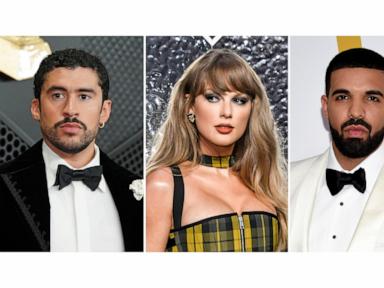
At the very summit of this mountain stand two figures who have redefined what it means to be a global icon: Taylor Swift and Bad Bunny.
The Architect of the Shared Secret
Taylor Swift’s presence at the top feels inevitable now, but consider the sheer physics of her ascent. To reach the number one spot on an all-time list, an artist cannot simply be popular. They must be essential. They must become the soundtrack to the mundane.
Imagine a fan we will call Sarah. Sarah didn't just listen to 1848 or Midnights once. She lived inside them. When she was eighteen, she played "All Too Well" while crying in a parked car. Five years later, she played it again while making coffee in her first "grown-up" apartment. Ten years later, she is still there, hitting play. This is the secret to Swift’s dominance: the compounding interest of emotional resonance.
She has mastered the art of the "shared secret." Even as she plays to eighty thousand people in a stadium, she manages to whisper into the ear of the individual listener. Her statistics—numbering in the tens of billions—are built on the back of this intimacy. She isn't just a pop star; she is a chronicler of the passage of time. When Spotify tallies her streams, they aren't just counting songs. They are counting the number of times millions of people reached for a mirror to see their own feelings reflected.
The data reveals a startling consistency. While other artists peak with a massive hit and then drift into the "legacy" bin, Swift’s entire catalog remains active. It is a living ecosystem. The "Eras" are not just marketing terms; they are chapters in a collective biography that the world refuses to put down.
The Language of the New Center
If Swift represents the power of the diary, Bad Bunny represents the shift of the world’s tectonic plates. For decades, the "center" of the music industry was firmly rooted in the English-speaking West. To be a global superstar, the conventional wisdom suggested you eventually had to "cross over." You had to learn the language of the gatekeepers.
Benito Antonio Martínez Ocasio looked at those gatekeepers and chose to ignore them entirely.
His position as the most-streamed male artist of all time—and the second most-streamed artist overall—is a historical pivot point. He did not achieve this by conforming. He achieved it by being hyper-local. By singing in his native Spanish, by leaning into the specific slang of Puerto Rico, and by embracing a fluid, genre-blurring masculinity, he became more universal than the artists who tried to please everyone.
Consider the "Invisible Stake" here. It isn’t just about record sales. It is about the decentralization of culture. In the past, a handful of executives in New York or London decided what the world heard. Today, the algorithm simply follows the heat. The heat is coming from the streets of Medellín, the clubs of Madrid, and the suburbs of Chicago. Bad Bunny’s dominance is the data-backed proof that the "peripheral" has become the "prime." He is the king of a world that no longer needs a translation.
The Ghost in the Machine
Behind these two titans lies a list of names that tells a story of the "Streaming Era" transition. Drake, The Weeknd, Justin Bieber, and Ed Sheeran round out the top tier. These are the artists who cracked the code of the playlist.
In the era of the CD, you bought an album, listened to it for a month, and then it sat on a shelf. In the streaming era, music is utility. It is "Focus Flow." It is "Summer BBQ." It is "Sad Girl Fall." The artists who thrive are those whose textures fit into the gaps of our lives. The Weeknd’s cinematic synth-pop provides the neon-lit backdrop for a late-night drive. Ed Sheeran’s acoustic warmth is the default setting for a million wedding dances.
But there is a tension in these numbers. We call them "the most streamed," but what does that actually mean for the soul of the music?
There is a phenomenon we might call "The Background Effect." As we move toward a world where music is always on, the risk is that it becomes wallpaper. Yet, the data suggests the opposite is happening at the top. The most streamed artists aren't the ones making "safe" background noise. They are the ones with the most fervent, almost religious, fanbases. The numbers are high because the devotion is deep.
A stream is a tiny, fractional transaction, worth less than a cent. But ten billion streams? That is a mountain of tiny choices. It is the sound of a global population trying to find a common language in a fractured time.
The Myth of the "Niche"
We were told that the internet would fracture our culture into a million little pieces. The theory was that we would all live in our own private bubbles, listening to obscure sub-genres that no one else understood. We were supposed to become a world of niches.
The Spotify all-time list proves that theory wrong.
Instead of fracturing, we have consolidated around a new set of Global Greats. These artists have managed to bridge the gap between the hyper-personal and the massive. They have become the "Big Tent" of the 21st century. When a new Taylor Swift album drops, it is one of the few remaining moments where the world is doing the same thing at the same time.
This isn't just business. This is sociology.
In a world where we can’t agree on the news, the climate, or the truth, we seem to agree on the hook of a song. We agree on the feeling of a beat. The "Billion Ear Club" is the new town square. It is a place where a kid in Lagos and a grandmother in London might actually be sharing a frequency.
The Weight of Forever
What happens to an artist when they become a permanent fixture of the data? There is a certain weight to being "All-Time." It moves the conversation away from "What’s next?" toward "What lasts?"
For the artists further down the list—those in the top 50 or 100—the challenge is survival. The streaming economy is a "winner-take-most" system. The gap between the number one spot and the number 1,000 spot is a canyon. While we celebrate the coronation of the elite, the invisible struggle of the middle-class musician continues. They are the ones fighting for a sliver of the attention that Swift and Bad Bunny command by simply existing.
Yet, there is a strange hope in these rankings. They show that the gatekeepers have lost their keys. You cannot manufacture the kind of numbers Bad Bunny puts up through a traditional PR campaign alone. You cannot "buy" the decade-long loyalty of a Swiftie.
These numbers are an honest, if brutal, reflection of what we actually love. Not what we say we love to look cool. Not what critics tell us is "important." But what we actually play when we are alone. What we play when we are happy. What we play when we are falling apart.
The list is a mirror.
When you look at the top of the charts, don't just see the stars. See the billions of hands reaching out to touch a screen. See the commutes, the workouts, the breakups, and the celebrations. See the quiet moments in the dark and the loud moments in the sun.
We are not just consumers of a product. We are the architects of this digital kingdom. Every time the chorus kicks in and you feel that familiar shiver, you aren't just listening to a song. You are participating in the creation of a new kind of history.
The music doesn't stop when the song ends. It lingers in the data, a ghost of our collective heartbeat, waiting for the next person to hit play and start the whole dance over again.