The screen glows with a cold, blue light at three in the morning. It is a light that doesn't just illuminate the room; it illuminates a new kind of battlefield. In the quiet of a bedroom or the sterile hum of a high-security office, a single post travels thousands of miles in a heartbeat. It bypasses borders. It ignores customs agents. It lands directly in the psyche of a nation.
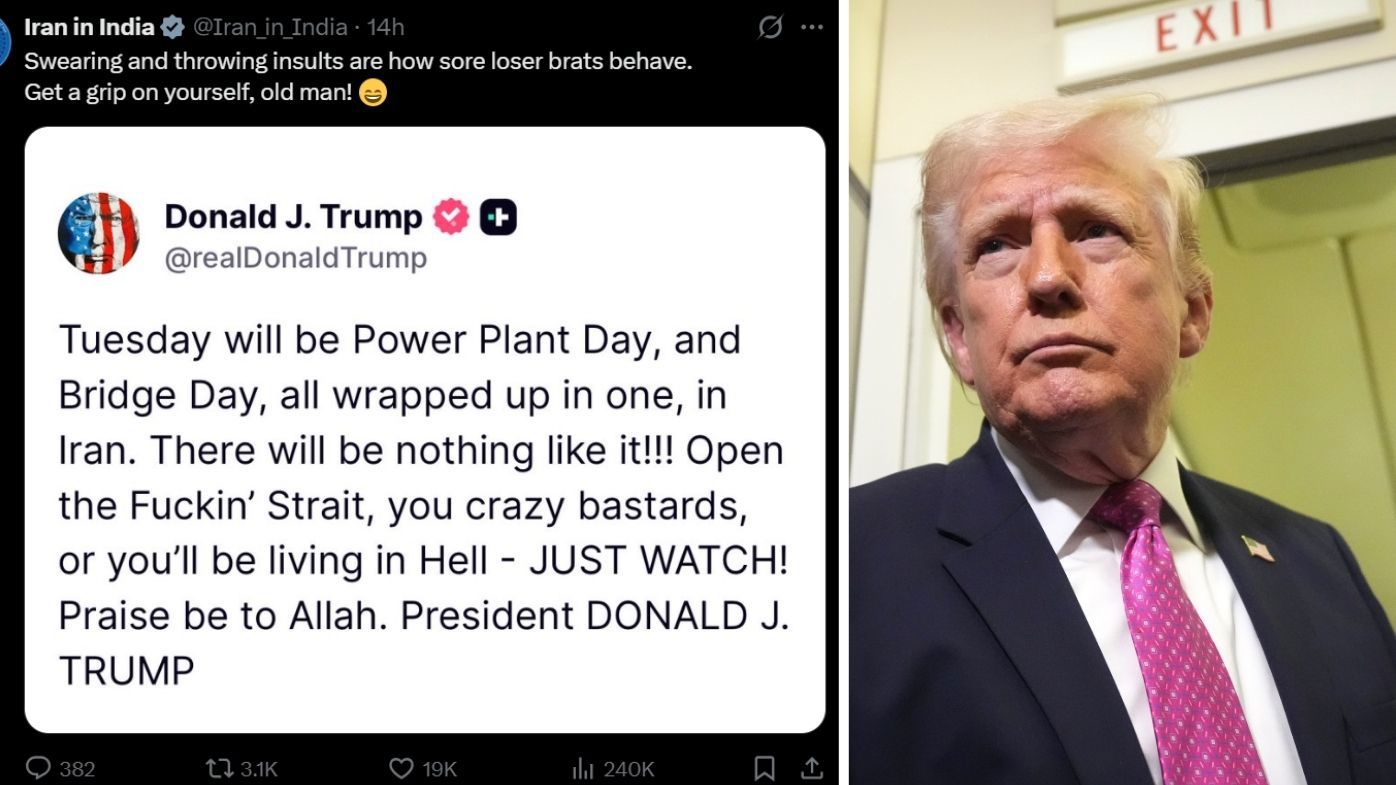
When Iranian state-linked accounts and officials began targeting Donald Trump’s health through social media, they weren't just participating in a political spat. They were conducting a masterclass in the weaponization of biological vulnerability. This is the story of how the most private thing a human being possesses—their heartbeat, their stamina, their very breath—became the ultimate currency in a global war of influence.
The Fragility of the Strongman
Power has always been synonymous with vitality. From the marble statues of Roman emperors to the carefully staged photos of leaders on horseback, the message is the same: the leader is unbreakable. But the digital age has stripped away the marble. Now, we have high-definition cameras that catch every stumble and algorithms that amplify every cough.
Consider a hypothetical intelligence officer in Tehran. Let’s call him Ahmad. Ahmad doesn't need missiles to cause a tremor in the American markets. He needs a grainy video clip. He needs a screenshot of a post. He needs to craft a narrative that suggests the man behind the podium is fading. By labeling the former president's online behavior as a symptom of "sickness," the Iranian strategy shifted from traditional geopolitical maneuvering to a more intimate form of psychological sabotage.
They aren't just attacking policy. They are attacking the vessel.
The Architecture of a Digital Viral Infection
How does a rumor about a leader's health move from a dark corner of the internet to a mainstream headline? It’s a process that mimics biology. It starts with a host—a platform like X or Telegram. The "virus" is a specific claim, often wrapped in a layer of mock concern or clinical-sounding terminology.
The Iranian response to Trump’s posts utilized this exact mechanism. By using the word "sickness," they didn't just insult him; they attempted to frame his entire political output as the byproduct of a failing mind or body. It is a brilliant, if ruthless, rhetorical move. If you can convince an audience that a leader’s ideas are actually symptoms, you don’t have to debate the ideas anymore. You just have to treat the patient.
This isn't a new tactic, but the speed is unprecedented. In the past, a rumor about a king’s health might take weeks to cross a kingdom by horse. Today, a coordinated effort by a state actor can ensure that millions of people see the same "concerning" clip before the sun rises. The goal isn't necessarily to prove the leader is ill. The goal is to make the public wonder. Uncertainty is the poison.
The Body Politic in the Age of Anxiety
We live in an era where we are obsessed with wellness and terrified of decline. We track our steps, our sleep, and our heart rates. We have projected this obsession onto our leaders. When Iran strikes at Trump’s health, they are tapping into a deep-seated collective anxiety about the stability of the people who hold the red buttons.
The stakes are invisible but massive. If the public loses faith in the physical or mental competence of a candidate, the entire structure of a campaign begins to wobble. It affects donor confidence. It affects voter turnout. It affects how allies and enemies alike calculate their next move on the global stage.
Think about the silence in a room when someone mentions a leader’s "sickness." It’s a heavy, uncomfortable silence. It’s the sound of people realizing that our grand systems of government are still, at the end of the day, dependent on the biological durability of a few individuals. Iran knows this. They are poking at the one part of the American political machine that cannot be patched with software or reinforced with steel: the human body.
The Echo Chamber of the Algorithm
The real tragedy of this digital warfare is that we, the users, are the ones who carry the water. When a state actor like Iran drops a "health concern" into the digital slipstream, the algorithm takes over. It seeks out the people most likely to be worried. It feeds the confirmation bias of the opposition. It sparks a defensive firestorm from the supporters.
Every like, share, and angry comment serves to push the narrative further up the feed. We become the unwitting soldiers in a foreign influence operation. We aren't just reading the news; we are magnifying the weapon. The "sickness" isn't just a label applied to a politician; it becomes a description of the information ecosystem itself.
Consider the data. During periods of heightened tension, the volume of health-related misinformation spikes significantly. It is a reliable tool because it is so difficult to disprove in real-time. Medical records are private. Doctor-patient confidentiality is a shield. In that vacuum of information, the most scandalous story wins.
Beyond the Screen
To understand the weight of this, you have to look past the hashtags. You have to imagine the actual impact on the ground. When health becomes a weapon, it changes how we view every action of a public figure. A long pause in a speech is no longer a rhetorical choice; it’s a "mini-stroke." A trip on a staircase is no longer a common accident; it’s "neurological decline."
We are training ourselves to look for frailty instead of strength. This shift in perspective is exactly what an adversary wants. They want us to see our leaders as patients and our country as a clinic.
The Iranian strategy regarding Trump's posts is a window into the future of conflict. We are moving away from the era of "boots on the ground" and into the era of "synapses in the crosshairs." It is a war of perception, fought in the milliseconds between a scroll and a click.
The screen stays lit. The notifications keep coming. Somewhere, another post is being drafted, another "concern" is being raised, and the pulse of power continues to flicker in the dark. We are no longer just observers of history; we are the medium through which the shadow of doubt is cast.
The true sickness isn't found in a hospital bed or a medical report. It’s found in the ease with which we allow the most intimate aspects of our humanity to be turned into a tactical advantage.