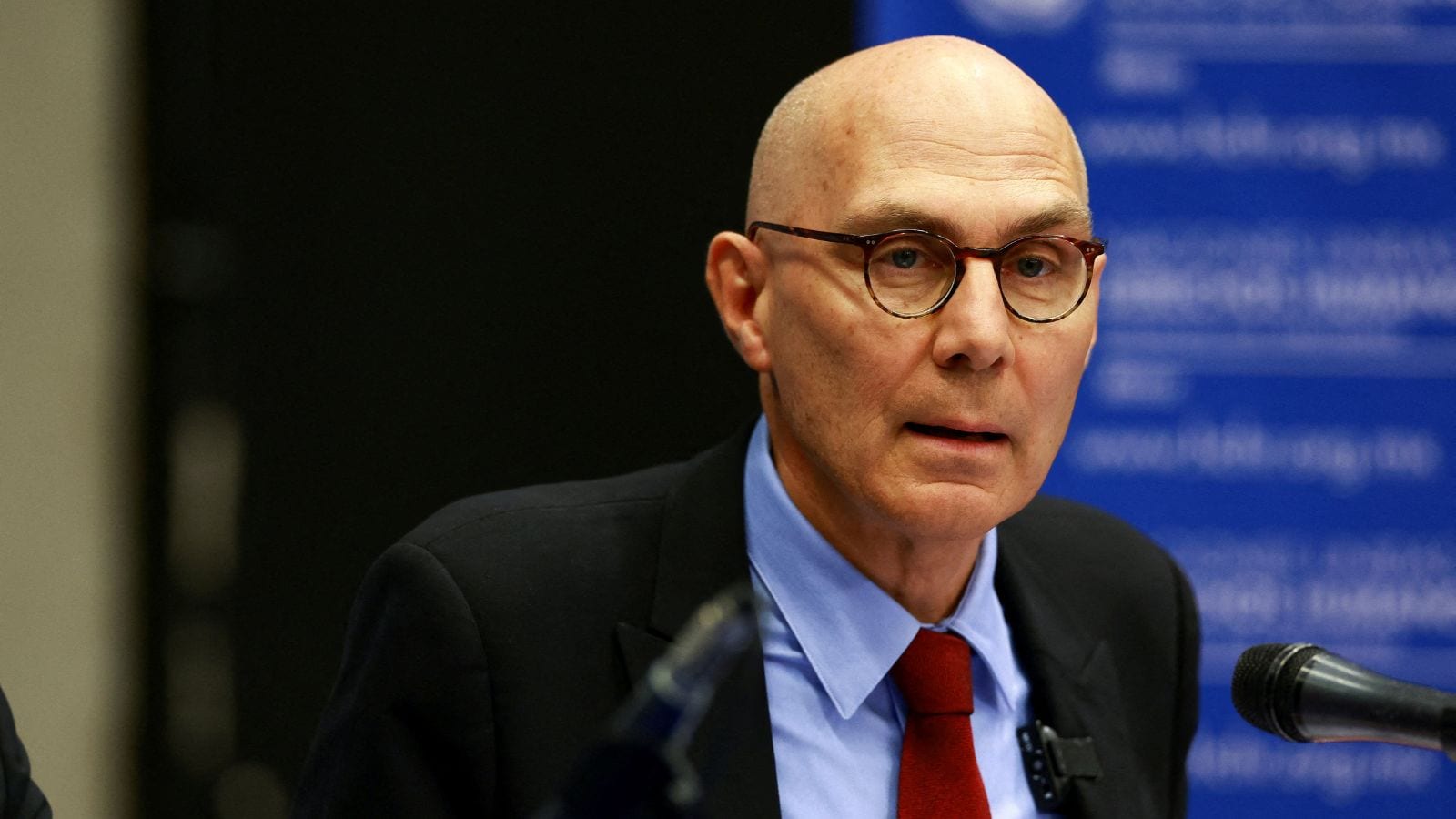
The corporate media is telling a simple story about the United Nations. In their version, High Commissioner for Human Rights Volker Türk is a brave referee under attack by bad actors. Russia opposes his second four-year term. Israel wants him gone. Washington is raising quiet objections. Therefore, the conventional narrative goes, Türk must be doing something right.
That narrative is complete fiction. Recently making headlines in related news: The Delusion Of Seizing Iranian Foreign Reserves To Fix Global Maritime Shipping.
The brawl over Türk’s reappointment isn’t a battle between heroic human rights advocacy and authoritarian retaliation. It is a desperate, late-stage bureaucratic maneuver designed to lock in institutional mediocrity before a new Secretary-General takes office.
By pushing a quiet vote in the UN General Assembly to secure Türk another term until October 2030, outgoing Secretary-General António Guterres isn't protecting human rights. He is binding the hands of his own successor and preserving a system where press releases replace actual accountability. Further insights regarding the matter are covered by TIME.
The Myth of the Neutral Referee
Every time a High Commissioner faces political pushback, defenders trot out the same defense: "If both sides hate him, he must be doing his job."
This logic is flawed. You do not measure the effectiveness of a human rights chief by the number of powerful enemies they irritate on Twitter. You measure it by whether their mandate actually deters state violence, protects dissidents, or forces accountability.
By that metric, the Office of the High Commissioner for Human Rights (OHCHR) under Türk has been an expensive exercise in procedural neutrality.
Look at the record. When autocratic regimes conduct systematic abuses, the UN High Commissioner’s office routinely retreats into passive language. When major powers commit clear violations of international law, the agency issues statements calling on "all parties to exercise restraint."
- China: Despite the landmark report issued by his predecessor Michelle Bachelet regarding state repression in Xinjiang, Türk has spent much of his tenure avoiding direct public pressure on Beijing.
- Iran: When thousands took to the streets and faced brutal state execution, the response from Geneva was characterized by bureaucratic delays and watered-down warnings about "reported deaths."
- The Global South: Dictatorships in Cuba, Eritrea, and North Korea routinely pass through UN scrutiny with minimal friction, while democracies bear the brunt of public scolding because they actually engage with the process.
This is not neutrality. It is institutional self-preservation.
The Guterres Preemption Strategy
Why is this vote happening right now? The timing tells you everything about how power actually operates inside the Secretariat in New York.
Secretary-General António Guterres leaves office at the end of the year. The selection process for the next UN leader begins immediately. Standard diplomatic protocol dictates that outgoing leaders do not saddle incoming administration heads with four-year appointments in core executive posts.
Yet Guterres rushed a proposal to the General Assembly to extend Türk’s mandate through 2030.
[Current Term Ends: Oct 2026] ──> [Guterres Mandate Ends: Dec 2026]
                                      │
                   Attempted 4-Year Reappointment
                                      │
                                      ▼
                      [Türk Secured Until Oct 2030]
This is a classic bureaucratic landmine. By extending Türk now, Guterres ensures his insider ally stays in Geneva regardless of who wins the Secretary-General election. It deprives the next SG of selecting an independent, reform-minded figure capable of fixing a broken apparatus.
When Russia submitted a counter-proposal to extend Türk’s term by just two months—aligning his exit with Guterres’s own departure—it wasn't doing so out of a noble desire for diplomatic ethics. Moscow wants a weaker critic. But the procedural point remains indisputable: an outgoing UN Secretary-General should not be locking down major human rights posts for the next decade.
The Fear of the Independent Voice
To understand why this system produces quiet bureaucrats instead of bold advocates, you have to look back to 2018.
When Zeid Ra’ad Al Hussein served as High Commissioner, he routinely called out heads of state by name. He criticized permanent Security Council members. He refused to soften his language to secure a second term.
When his four years ended, Zeid walked away. His reasoning was brutal and clear: seeking a second term in the current geopolitical climate required "bending a knee in supplication" and "muting a statement of advocacy."
Türk chose the opposite path.
Instead of burning bridges to defend principles, Türk built his decades-long UN career by mastering the art of strategic silence. He is a career insider—an Austrian lawyer who climbed through the United Nations High Commissioner for Refugees (UNHCR) and served as Guterres’s policy chief in New York. He understands the machinery. He knows which toes not to step on if he wants to keep his seat at the table.
| High Commissioner | Approach | Outcome |
|---|---|---|
| Zeid Ra’ad Al Hussein | Uncompromising advocacy; calls out superpowers by name. | Denied/refused second term; preserved independent integrity. |
| Volker Türk | Bureaucratic consensus; balanced press releases; internal diplomacy. | Recommended for 4-year renewal by outgoing SG. |
The result is a human rights organ that functions like a corporate legal team rather than a moral watchdog. It prioritizes access over impact.
What the Critics Get Wrong
The debate around Türk’s reappointment has fractured into two simplistic camps, both of which miss the core problem.
Camp 1: The Sovereign Shielders
Governments like Russia and Israel argue that the High Commissioner is biased, overly politicized, and stepping beyond his mandate. They view any criticism of their military actions or domestic policies as an infringement on sovereignty.
The Reality: Their objection isn't about UN bias; it's about avoiding international scrutiny entirely. They prefer a completely neutered OHCHR that produces zero reports and holds zero briefings.
Camp 2: The Establishment Defenders
Western diplomats and traditional human rights NGOs argue that opposing Türk plays directly into the hands of authoritarian regimes. They insist that voting against him weakens the entire international human rights architecture.
The Reality: Defending mediocrity to spite autocrats does not protect human rights. It damages the credibility of the office. When the world's top rights chief is seen as a political survivor rather than a fearless defender, victims of oppression lose faith in the system altogether.
How to Fix a Broken Mandate
If world leaders actually cared about global accountability rather than political maneuvering, they would dismantle the current appointment model entirely.
- Enforce Single, Non-Renewable Terms: The High Commissioner should serve one six-year term with zero possibility of re-election. The moment an official can be reappointed, every press release, investigation, and report becomes a calculated bid for votes.
- Decouple Appointments from SG Transitions: No Secretary-General should be permitted to appoint major agency heads within six months of their own departure.
- Mandate Measurable Benchmarks: The OHCHR should be judged by operational metrics—access granted to political prisons, speed of emergency reporting, and implementation of field recommendations—not by the number of diplomatic summits attended in Geneva.
The United Nations General Assembly does not need to choose between Russia's procedural delays and Guterres's bureaucratic legacy project.
Democracies should stop treating the OHCHR as a rubber-stamp exercise. Voting "yes" on a forced four-year extension doesn't save the human rights system. It certifies its irrelevance.
Hand the choice to the next Secretary-General, clear out the career bureaucrats, and find someone who isn't afraid to lose their job for telling the truth.


