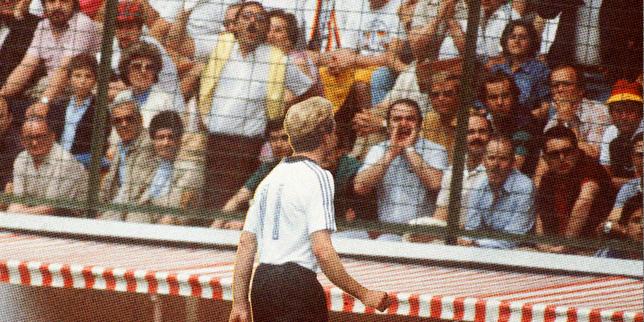
Imagine paying your hard-earned money for a World Cup ticket, walking into the stadium, and watching 22 world-class athletes completely stop playing football after ten minutes. No tackles. No sprints. Just a mind-numbing game of back-passes that lasted over an hour. That actually happened on June 25, 1982, at the El Molinón stadium in Gijón, Spain. It became known as the Disgrace of Gijón, or Le match de la honte.
If you think modern international football has its shady moments, nothing compares to the absolute cynicism West Germany and Austria displayed that afternoon. They didn't just bend the rules; they exposed a massive flaw in the tournament structure. They essentially chose to fix a game in real-time, right in front of a furious crowd and millions of stunned television viewers. This wasn't some hidden conspiracy cooked up in a backroom before kickoff. It was a blatant, unspoken agreement executed on the pitch. It ended up changing how international tournaments are scheduled forever. If you enjoyed this piece, you might want to read: this related article.
How Arrogance Set Up the Ultimate World Cup Scandal
To understand why this happened, you have to look at the sheer arrogance of the West German squad heading into the 1982 tournament. They were the reigning European champions. Their roster was packed with legendary names like Karl-Heinz Rummenigge, Paul Breitner, and Felix Magath. They genuinely believed they were untouchable.
Their opening match was against Algeria, a team making its very first World Cup appearance. The West German camp didn't just expect to win; they openly mocked their opponents. Manager Jupp Derwall famously stated that if his team lost to Algeria, he would jump on the first train back to Munich. One player bragged that they would dedicate their seventh goal to their wives and their eighth goal to their dogs. Another laughed about playing with a cigar in his mouth. For another look on this development, see the recent coverage from Bleacher Report.
The Algerians were watching, listening, and taking notes.
When match day came, Algeria pulled off one of the biggest shocks in sporting history. Led by Rabah Madjer and Lakhdar Belloumi, they beat the European giants 2–1. It was a historic masterclass that sent shockwaves through the football world. Derwall didn't catch that train back to Munich, but the West Germans were suddenly staring down the barrel of an early exit.
Algeria went on to lose 2–0 to a well-prepared Austrian side, but then they fought back to defeat Chile 3–2 in their final group match. That win made them the first African nation to win two games at a World Cup. Under the rules of the time, teams got two points for a win and one for a draw. Algeria finished their group stage matches with four points and a goal difference of zero.
Because of the tournament scheduling back then, Algeria played their final game a full day before West Germany and Austria faced each other. This was the fatal design flaw. The two European neighbors took the pitch knowing exactly what result would send them both to the next round while packing Algeria's bags.
The Math That Murdered Sportsmanship
The math was simple. An Austrian win or a draw would knock West Germany out. A massive German victory by three or more goals would eliminate Austria. But a West German win by one or two goals? That specific result would leave West Germany, Austria, and Algeria all tied on four points.
Thanks to the tiebreaker rules, a 1–0 or 2–0 win for the Germans would give them and Austria the superior goal difference, sending both through.
The game started with high intensity. West Germany needed a goal to survive, and they hunted for it early. In the 10th minute, Pierre Littbarski whipped a dangerous cross into the box, and Hamburg striker Horst Hrubesch bundled it into the back of the net.
West Germany 1, Austria 0.
For the next few minutes, the game actually looked like a real contest. Wolfgang Dremmler forced a solid save from Austrian goalkeeper Friedrich Koncilia, and Breitner missed a couple of decent chances. But somewhere around the 20-minute mark, a collective realization seemed to wash over the pitch. Both teams realized they had exactly what they wanted. If the score stayed 1–0, everyone on the field won. The only loser would be Algeria, sitting in their hotel rooms miles away.
What followed was an absolute insult to the sport. The intensity vanished. Players stopped tackling. If a German midfielder got the ball, he passed it sideways to a defender. The defender passed it back to Harald Schumacher in goal. Schumacher would wait for an Austrian player to stroll near, then comfortably boot it long or roll it back out. The Austrians did the exact same thing.
The statistics from that second half tell the ugly truth. There were only three shots in the entire 45 minutes, and absolutely none were on target. West Germany made a grand total of eight tackles across the entire second half—roughly one every six minutes. Both teams finished with pass completion rates well over 90 percent. Austria managed a ridiculous 99 percent passing accuracy in their own half because no German player even bothered to press them.
The Fury in the Stands and the Control Booth
The crowd inside El Molinón quickly realized they were witnessing a farce. Local Spanish fans began whistling and booing relentlessly. They started chanting "Argelia, Argelia!" in support of the cheated African debutants. Furious Algerian fans in the stands began waving banknotes at the pitch, making it crystal clear what they thought of the spectacle. One heartbroken fan even managed to burn a West German flag in the terrace.
The disgust wasn't limited to the fans in the stadium. The media professionals broadcasting the game live to millions of homes couldn't hide their revulsion.
West German television commentator Eberhard Stanjek grew so sickened by the lack of effort that he simply stopped talking. He refused to commentate on the non-aggression pact unfolding before his eyes. Across the border, Austrian commentator Robert Seeger went a step further. He openly apologized to his viewers and begged them to turn off their television sets rather than watch the embarrassing display.
Former West German star Willi Schulz called his country's players "gangsters" in print. The local Spanish newspaper, El Comercio, was so outraged that they refused to put the match report in the sports section. They printed the details of the game in their local crime section instead.
The only player who seemed to show any spark of pride was Austria's Walter Schachner. He kept trying to chase down long balls and initiate actual attacks, but his own teammates ignored him. He was completely isolated. The rest of the players just walked through the motions until Scottish referee Bob Valentine finally blew the whistle to end the misery.
The Fallout That Forced FIFA to Change
Algeria immediately launched a formal protest with FIFA, alleging match-fixing and collusion. They demanded that the match be voided or that both teams face disqualification. But proving an explicit pre-match agreement was impossible. There were no paper trails, no intercepted messages, and no smoking guns.
The players and management denied everything. Jupp Derwall doubled down on his pragmatism, essentially arguing that his job was to qualify, not to entertain. The Austrian delegation was even more dismissive. One Austrian official sparked outrage by suggesting that the Algerians should go back to their villages instead of complaining about European tactics.
FIFA ultimately ruled that neither team had technically broken any official rules on the books. The result stood. West Germany and Austria advanced. Algeria went home, robbed of a historic achievement by an unwritten pact.
However, the global backlash was too severe for FIFA to ignore. The governing body knew the credibility of their flagship tournament was on the line. They realized they could never allow a team to play a final group stage game with the benefit of hindsight again.
Starting at the 1986 World Cup in Mexico, FIFA instituted a permanent structural change. The final pair of group matches in every single group had to kick off simultaneously. If Group A had two final games, they started at the exact same minute on different pitches.
That rule remains a fundamental pillar of international football tournaments today. It is the reason we see high-drama simultaneous final group days at the World Cup, the Euros, and the Africa Cup of Nations. It forces teams to play for wins because they cannot safely predict what is happening on the other pitch.
The Disgrace of Gijón didn't end well for the conspirators anyway. Austria was quickly knocked out in the next round by France. West Germany made it all the way to the final, but they earned the hatred of neutral fans worldwide along the way. They eventually lost the final 3–1 to Italy, a result that much of the football world celebrated as poetic justice.
The legacy of that June afternoon isn't just about a broken rulebook; it's a permanent reminder of what happens when competitive integrity is completely abandoned for convenience. Next time you see a thrilling, chaotic final matchday where goal updates from another stadium are causing panic on the pitch, you can thank the shameful afternoon where West Germany and Austria decided to stop playing.
If you want to understand how this match altered the tactical evolution of the tournament, look at how modern teams approach goal-difference scenarios. You can study the 1982 tournament data structures or look into historical FIFA regulatory updates to see exactly how group-stage formatting has tightened up to prevent tactical collusion.