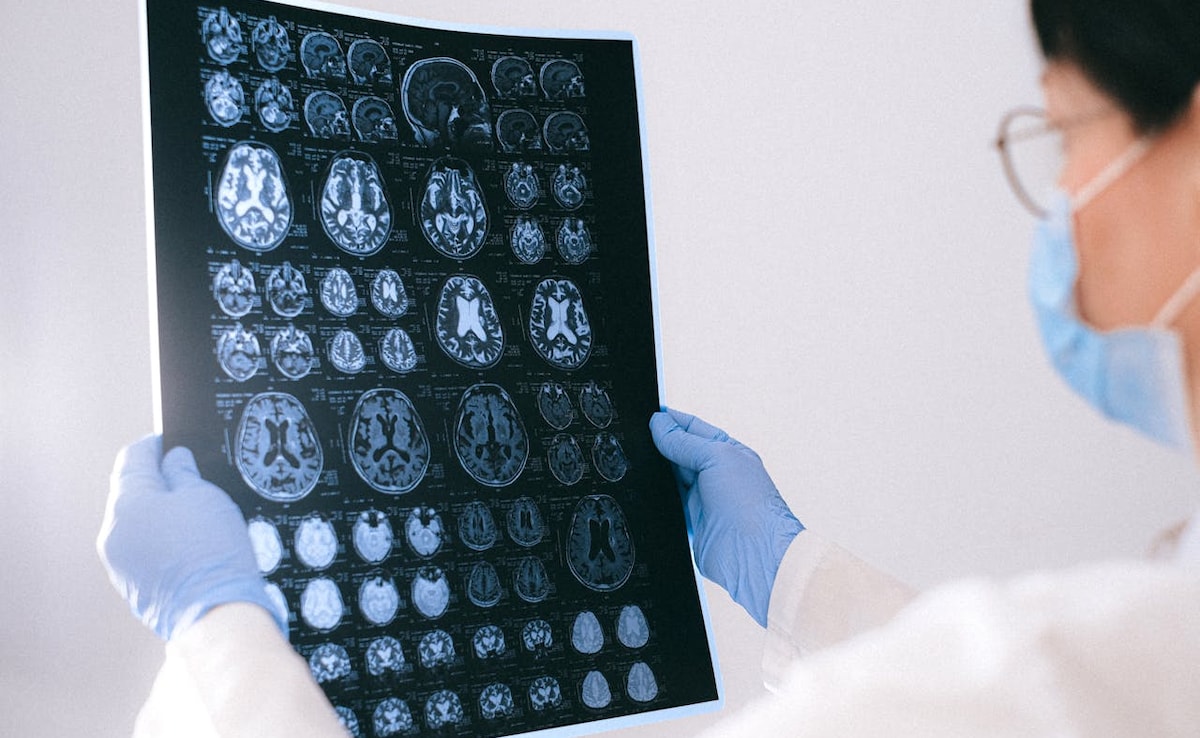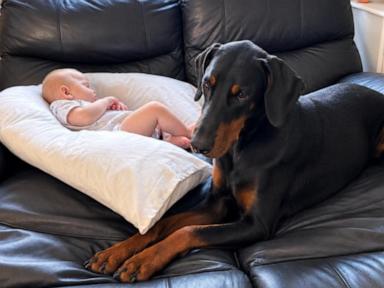
Dogs detect hidden medical conditions in babies by smelling minute shifts in volatile organic compounds released through skin, sweat, and breath. Viral videos often frame these moments as miraculous instincts or supernatural loyalty. The reality is strictly biological. A canine nose processes chemical signatures at concentrations of parts per trillion, allowing an untrained family pet or a specialized service animal to register metabolic distress, impending seizures, or severe allergic reactions long before a human caregiver notices a fever or a rash.
Every time a clip circulates showing a family dog pacing beside a crib, nudging a toddler, or refusing to leave an infant alone right before a medical emergency, the internet treats it like a heartwarming anomaly. It is not an anomaly. It is high-level biochemistry happening on the living room rug.
The Anatomy of a Biological Biosensor
To understand how a dog flags a crisis in a nonverbal infant, look at the hardware. Humans experience the world primarily through sight, operating with roughly five to six million olfactory receptors tucked into a small patch at the top of the nasal cavity. A dog operates on a completely different scale. Depending on the breed, a canine carries between 200 million and 300 million olfactory receptors.
The structural design is just as critical as the raw receptor count. When humans inhale, air travels through the same passage used for breathing, meaning every exhale pushes scent molecules back out and resets the system. Dogs possess a specialized fold of tissue just inside the nostril that separates airflow. One path goes to the lungs for respiration. The other routes air directly into the olfactory recess, where a bony labyrinth called the turbinates traps and filters odor molecules. Even while exhaling, a dog continues to smell.
This anatomical setup connects to an olfactory bulb that is proportionally 40 times larger than the human equivalent. While human brains dedicate massive computing power to visual processing, canine brains dedicate vast neural real estate to decoding chemical profiles. They do not just smell a baby. They smell the individual chemical components of that baby's current metabolic state.
What Dogs Actually Smell Inside a Nursery
Human bodies are constant chemical factories. Every cellular process, from digesting milk to fighting off a viral infection, produces metabolic waste. These byproducts enter the bloodstream and escape the body through breath, urine, sweat, and skin oils as volatile organic compounds (VOCs).
Healthy infants have a baseline chemical signature. When a medical condition develops, that signature changes immediately.
Consider hypoglycemia in infants with undiagnosed metabolic disorders or early-onset Type 1 diabetes. When blood sugar drops dangerously low, the body shifts how it produces energy, generating elevated levels of isoprene and acetone on the breath. Humans cannot smell this shift until it reaches extreme levels, such as the fruity breath associated with advanced diabetic ketoacidosis. A dog registers the spike in isoprene almost instantly.
The same mechanism applies to epilepsy and febrile seizures. Before electrical activity in the brain spirals into a physical convulsion, neurochemical changes trigger subtle shifts in stress hormones like cortisol and adrenaline, alongside changes in sweat composition. While researchers are still isolating the exact compound responsible for the pre-seizure scent, clinical studies confirm that dogs can distinguish sweat samples taken prior to a seizure from baseline samples with remarkable accuracy.
Allergies present another common nursery threat. An infant exposed to a trace allergen experiences an immediate cascade of histamine and inflammatory markers. A dog trained for allergen detection—or an observant household pet that associates a specific scent with past distress—can pick up the trace proteins of peanuts, dairy, or eggs on a caregiver's hands or detect the sudden physiological stress response in the baby before airway swelling becomes visible.
Why Babies Rely on Nonverbal Alarms
Adults and older children communicate early symptoms. They say their head hurts, their throat feels tight, or the room is spinning. Infants have no vocabulary and limited motor control. By the time a baby exhibits classic clinical signs of distress—cyanosis around the lips, lethargy, inconsolable crying, or a high fever—the underlying medical event is often well underway.
This communication gap is precisely why canine alerts in pediatric cases draw so much attention. A dog does not wait for a baby to cry. It reacts to the chemical precursors of the crisis.
In documented cases involving pediatric patients, dogs have alerted parents to conditions ranging from congenital heart defects to severe sleep apnea. The dog's behavior usually follows a predictable pattern. Rather than ignoring the crib, the animal becomes hyper-focused. It may whine, paw at the mattress, place its chin on the baby's chest, or repeatedly run between the nursery and the parents to force human intervention.
The Difference Between Pet Instinct and Trained Precision
Watching a viral video makes it easy to assume every golden retriever or shepherd mix is a natural-born diagnostician. That assumption is dangerous. There is a wide gulf between a family pet reacting to a weird smell and a certified medical alert dog trained to execute a reliable task.
An untrained family dog notices that the baby smells different. How the dog reacts depends entirely on its temperament and past conditioning. One dog might bark frantically and wake the parents. Another might get anxious, tuck its tail, and hide under the bed. A third might simply sniff the crib and walk away because it has no reason to believe the new odor requires action.
Medical alert dogs undergo months or years of rigorous operant conditioning to bridge that gap. Trainers expose the dogs to clinical samples—such as sweat pads collected during a hypoglycemic episode or saliva swabs taken prior to a seizure—and reward the animal for performing a specific, unmistakable alert behavior.
What Formal Training Looks Like
- Odor Imprinting: The dog learns to isolate a target VOC profile amid a sea of competing environmental smells like baby powder, dirty diapers, and laundry detergent.
- Discrimination Testing: Trainers present the dog with multiple samples, including control samples from healthy individuals and samples taken during normal exercise, ensuring the dog only alerts to the specific medical crisis.
- Alert Conditioning: The dog is taught a deliberate physical action, such as nudging a parent's leg, ringing a bell, or retrieving a medical kit, rather than relying on ambiguous whining or pacing.
- Generalization: The animal practices detecting the scent across different environments, noise levels, and stress conditions so it does not fail when a real emergency unfolds in a chaotic household.
The Gray Areas and Clinical Limitations
Medical journalism often falls into the trap of romanticizing animal abilities while ignoring failure rates. If you rely on a dog as a primary pediatric monitor, you are taking an unacceptable risk.
Canine olfaction is extraordinary, but dogs are living creatures, not calibrated laboratory instruments. Their accuracy fluctuates based on fatigue, illness, distraction, and environmental factors. Nasal congestion from mild allergies can temporarily blunt a dog's sensitivity. Strong household chemicals, essential oil diffusers, or scented candles can mask subtle VOCs in a nursery.
Furthermore, false positives happen frequently, especially with untrained pets. A dog might obsess over a baby's crib simply because the infant spit up, has a mild ear infection, or is experiencing normal teething discomfort. Without clinical validation, parents cannot tell whether the dog is signaling a life-threatening metabolic crash or reacting to a sour burp.
Even among professionally trained medical alert dogs, peer-reviewed studies show wide variance in real-world reliability. While controlled laboratory tests often yield sensitivity rates above 80 or 90 percent, field studies tracking dogs in everyday home environments show lower numbers due to distractions and inconsistent reinforcement from owners. If a family fails to reward the dog consistently when it alerts, the behavior degrades over time.
How Science Is Copying the Canine Nose
The medical technology sector has spent decades trying to replicate what a dog does effortlessly. Researchers developing electronic noses—arrays of chemical sensors paired with machine learning algorithms—are directly inspired by canine olfactory physiology.
These devices attempt to analyze breath condensates and skin emissions to detect early-stage cancers, bacterial infections, and metabolic disorders in neonatal intensive care units. In NICUs, premature infants have fragile skin and low blood volume, making frequent blood draws risky. Noninvasive breath and skin-gas sensors offer a way to monitor for sepsis or necrotizing enterocolitis without piercing the skin.
Despite millions in research funding, electronic sensors still lag behind biological noses in sensitivity and speed. A machine requires a concentrated sample, strict temperature controls, and periodic calibration. A dog processes dynamic, shifting air currents in real time while walking across a room. Until sensor miniaturization and chemical selectivity catch up to evolution, biological detection remains the gold standard for real-time VOC analysis.
What Parents Should Do When a Pet Acts Strange
If you have a dog and an infant under the same roof, dismissing sudden behavioral changes in your pet is a mistake. Dogs are creatures of habit. When a calm, predictable dog abruptly alters its routine around a baby, it is responding to a sensory input you cannot perceive.
Do not panic, and do not assume a worst-case diagnosis based solely on a dog's restlessness. Instead, treat the behavior as a prompt to run a systematic check on your child.
- Check physical vitals immediately. Look at the baby's skin color, particularly around the mouth and nail beds. Check their breathing rate by watching their chest rise and fall for a full minute, looking for flaring nostrils or retractions between the ribs.
- Take a temperature. Use a reliable rectal or temporal thermometer rather than relying on the back of your hand. Infants can develop rapid fevers without feeling overtly hot to the touch initially.
- Assess responsiveness and hydration. Wake the baby gently to ensure they respond normally to touch and voice. Check for wet diapers over the preceding six hours to rule out dehydration.
- Inspect the environment. Look for potential allergens, overheating from heavy swaddles, or anything obstructing the baby's airway.
- Consult a pediatrician if anything feels off. If the baby's vitals look normal but the dog persists in frantic, uncharacteristic behavior alongside any subtle lethargy or feeding refusal from the child, call your doctor's nurse line.
A dog cannot tell you what is wrong with your baby, and it should never replace a pulse oximeter, a baby monitor, or a pediatrician's exam. What it offers is an early warning system wired into millions of years of evolutionary biology. When your dog refuses to leave the nursery, check the crib.