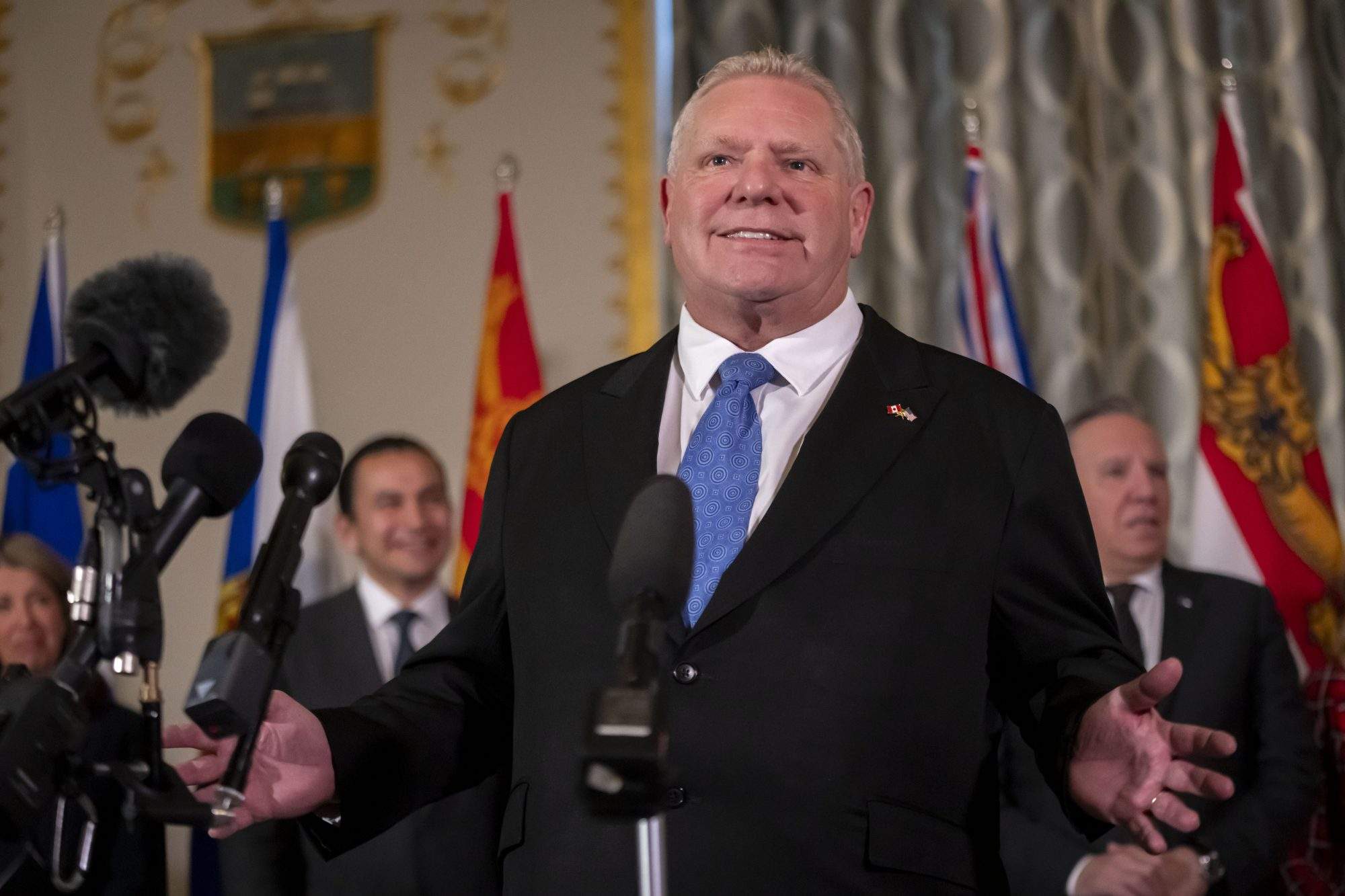
Ontario Premier Doug Ford just wrapped up a two-day blitz in Washington. He says he was jammed meeting everyone. He says they rolled out the red carpet. But look closely at the guest list for his high-stakes trip, and you notice a massive, glaring omission.
He didn't meet with a single person from the Trump administration. You might also find this connected story interesting: The Real Reason a US Warplane Attacked a Merchant Tanker Off Oman.
No sit-down with Commerce Secretary Howard Lutnick. No face time with Trade Representative Jamieson Greer. Nothing.
Instead, Ford spent his time huddled behind closed doors with the American Automotive Policy Council, the American Farm Bureau Federation, and Autos Drive America. He co-hosted a private reception with billionaire Ross Perot Jr. If you're trying to fix a broken trade relationship, avoiding the actual government in power seems like a wild strategy. As extensively documented in latest reports by TIME, the effects are significant.
It isn't. It's actually a calculated move to bypass a hostile White House by building a corporate firewall.
The Fortress North America Strategy
Canada is currently frozen out of serious trade discussions. While Washington and Mexico City are talking, Ottawa has been stuck in a frostier political reality. Donald Trump is back to calling Canada the 51st state, and the looming deadline to revise the United States-Mexico-Canada Agreement (USMCA) has Canadian officials sweating.
So, what does Doug Ford do? He goes to Washington to launch what he calls the Fortress North America plan.
The strategy is simple. Stop begging the Trump administration for a fair deal and start convincing American business leaders that hurting Canada hurts their own bottom line. The marketing pitch relies on a single premise: economic security is national security. Ford wants a deeply integrated supply chain for critical minerals, automotive parts, and energy that protects the continent from outside economic threats.
It is an aggressive sales pitch, but it has a massive hurdle to clear.
The Fallout of a Volatile Trade War
You can't understand Ford’s missing White House invite without looking at the wreckage of the last year. The relationship between Queen's Park and Washington isn't just cold; it's volatile.
Last year, Ford infuriated Trump by running anti-tariff advertisements featuring old footage of Ronald Reagan criticizing trade barriers. Trump retaliated by threatening to double planned tariffs on Canadian steel and aluminum. Ford fired back, briefly slapping a 25% surcharge on all electricity exports to the US, targeting millions of homes and businesses across Michigan, Minnesota, and New York.
Then came the booze boycott. Ontario yanked certain American alcohol products from provincial liquor stores. Ford even famously emptied a bottle of Crown Royal at a press conference to protest corporate closures, triggering threats of official enforcement actions from US Trade Representative Jamieson Greer.
Critics call this provincial activism a dangerous wildcard. They argue that Ford’s solo retaliation tactics undermine Canada’s ability to negotiate as a unified country under newly minted Prime Minister Mark Carney.
But Ford doesn't care. He plays the role of the leader of Canada's economic engine. Ontario is the largest province with the biggest population and the heaviest industrial output. To Ford, waiting around for federal diplomats to polite-talk their way into a meeting isn't an option.
Why Going Around Trump Might Actually Work
Shunning the White House to talk directly to Congress and industry boards looks like a snub, but it plays directly to Republican interests. Ford's Washington representative, David Paterson, points out that Ford has a unique asset: his business background and his conservative stripes.
Republican lawmakers and corporate leaders don't like taxes, and they don't like tariffs that disrupt their supply chains. The American auto sector cannot function without Ontario parts. The American Farm Bureau needs smooth agricultural trade. By treating this as a business-to-business negotiation rather than a political summit, Ford is trying to get American capitalists to do his lobbying for him.
If Detroit auto executives tell the White House that tariffs on Canada will destroy American manufacturing jobs, Trump listens. If the Farm Bureau warns that trade barriers will hurt American farmers, the message lands differently than if it came from a foreign politician.
Ford is betting that the language of profit will outlast the rhetoric of a trade war. He says he wants a deal more than anyone, but it has to be a fair deal.
Your Next Steps for Navigating Trade Volatility
If your business relies on cross-border supply chains, you can't afford to sit back and watch this political theater unfold without acting. Trade policies are shifting fast, and the traditional political channels are failing.
- Audit your supply chain exposure. Identify exactly how much of your material, technology, or inventory crosses the Canada-US border. Pinpoint the specific components that are vulnerable to sudden tariff spikes.
- Build regional business alliances. Don't rely on federal trade representatives to save your access. Connect with industry associations, chambers of commerce, and corporate partners on both sides of the border to create a unified voice against trade disruptions.
- Diversify contract clauses. Ensure your future supply and purchase agreements include flexible pricing or exit clauses that account for sudden regulatory shifts or retaliatory surtaxes.
The era of predictable, smooth North American free trade is over. Whether Ford's business-first blitz succeeds or fails, businesses need to build their own local fortresses to survive the political crossfire.
Ontario Premier Doug Ford Washington trade strategy
This video provides important regional context and background on Ontario Premier Doug Ford's specific trade priorities during his pivotal visit to Washington.



:max_bytes(150000):strip_icc():focal(665x0:667x2)/gettyimages-50733149-2000-8b129a2475974982a915418ce92a73d8.jpg)