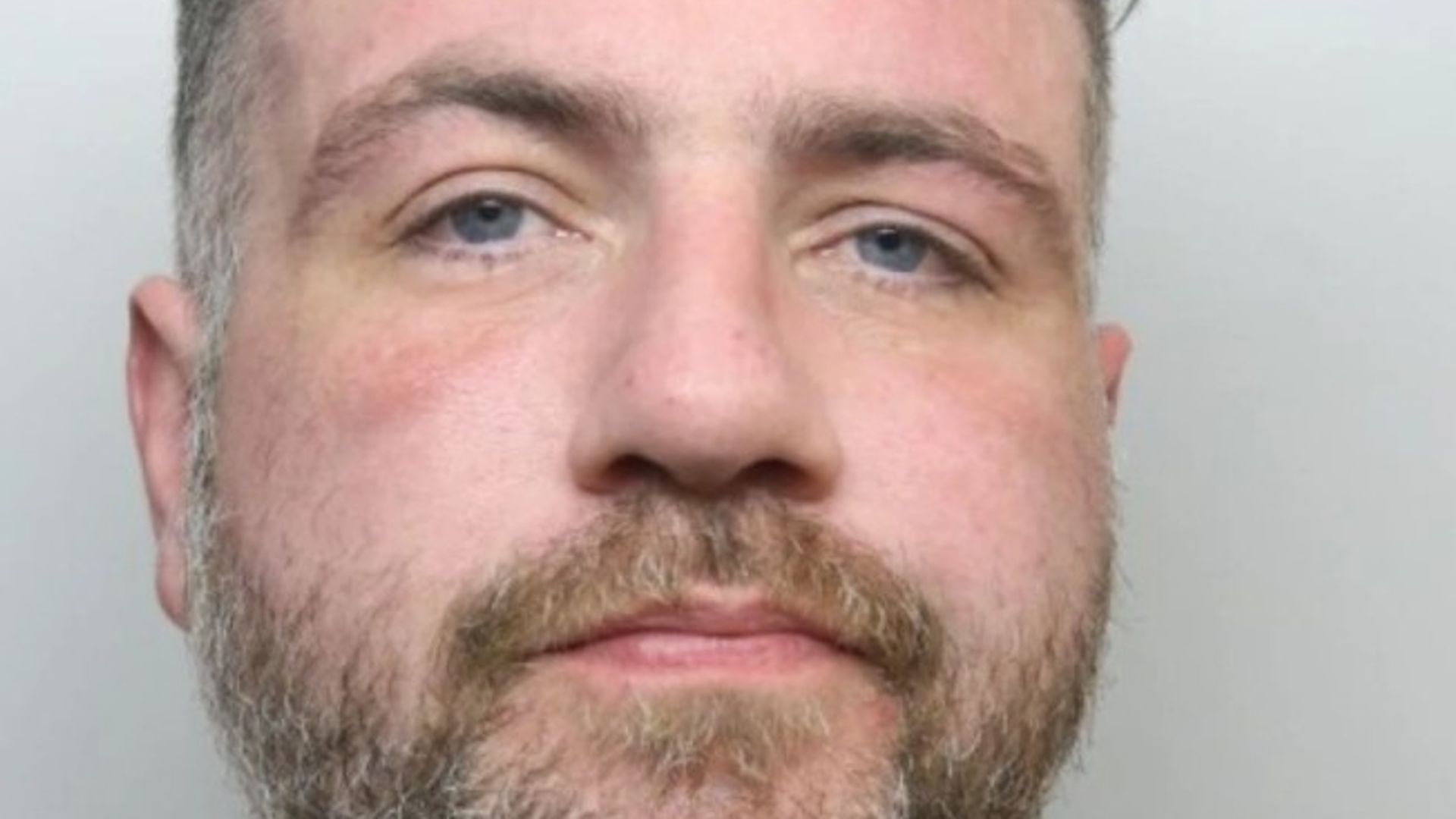
A driver who dragged a head teacher to his death beneath a 4x4 has been jailed for life, and the case exposes a brutal truth about how courts separate reckless driving from intentional murder. On November 2, 2026, 35-year-old Simon Richardson received a life sentence with a minimum term of 25 years at Manchester Minshull Street Crown Court after jurors convicted him of murdering 56-year-old Michael Mullins. Mullins was riding his bicycle home from Stretford Grammar School in Greater Manchester on April 20 when Richardson's Volvo XC90 struck him.
Most fatal collisions end in manslaughter charges or convictions for causing death by dangerous driving. Here, prosecutors convinced a jury that Richardson's actions crossed a much darker line. He didn't just crash and panic. According to trial evidence, he kept driving with Mullins trapped underneath the vehicle for roughly 1.3 miles (about 2.2 kilometers), even after knowing the cyclist was down there.
How a Collision Became a Murder Conviction
Under English law, murder requires proving an intention to kill or to cause grievous bodily harm—serious physical injury. That's a high bar in vehicle cases, where defendants routinely argue they lost control, didn't see what happened, or acted out of sheer terror rather than malice.
Prosecutors didn't rely on guesswork to clear that bar. They walked jurors through a sequence of choices after the initial impact on Warburton Lane in the Trafford area. Mullins hit the bonnet and windscreen of the Volvo XC90 before going under the vehicle and becoming entangled in the suspension. Rather than stopping to help, Richardson drove on.
His cousin, Gabrielle Debotte, sat in the front passenger seat and testified that both of them heard "moaning" from outside after leaving the collision scene. She told the court Richardson said, "He's under the car." Once a driver knows a human being is trapped beneath the chassis and keeps moving—especially over a distance of more than a mile—the legal picture shifts dramatically.
What Happened on Wet Gate Lane
The prosecution's timeline focused heavily on what Richardson did when he reached a quieter stretch near Lymm, along Wet Gate Lane. Court reporting indicated he drove to a secluded farm track in an attempt to dislodge Mullins. When that didn't free him, Richardson twice tried to pull him out, got back into the SUV, and swerved sharply from side to side before mounting a grass verge.
Mullins came free on the verge, only to be run over again as Richardson reversed and drove away. A passing motorcyclist later followed a trail of blood from the scene and found Mullins barely breathing. Paramedics couldn't save him.
Richardson denied knowing Mullins was under the car and claimed he hadn't tried to pull him out. Jurors didn't buy it. On October 30, 2026, they found him guilty of murder and dangerous driving, with the judge handing down the 25-year minimum term (minus time already spent in custody) plus a lifetime driving ban days later.
Why Repeat Offending Matters in Sentencing
Details from the sentencing hearing also highlight a frustrating pattern that road safety advocates see far too often. Prosecutor Phil Barnes KC told the court Richardson had 28 previous convictions, including past driving offenses. Those prior convictions included careless driving and failing to stop or report an accident in 2011, drink-driving and driving while disqualified in 2012, and driving without a license or insurance in 2023. Police also noted he attempted to evade officers in another vehicle the day after the fatal collision before being arrested.
Having a long record doesn't automatically turn a crash into murder—juries still have to decide intent on the specific offense. Still, prior convictions for disqualified driving and failing to stop tell a story about how someone treats rules and accountability when things go wrong. When a driver already has a history of ignoring bans and fleeing scenes, claiming innocent ignorance after dragging someone for over a mile faces an uphill battle in front of a jury.
That's one area where public debate remains sharp. Some people look at a record like Richardson's and ask why harsher interventions or tighter monitoring didn't keep him off the road earlier. Others point out that criminal courts must judge each charge strictly on the evidence presented at trial rather than punishing someone based on reputation or past mistakes alone. Both perspectives matter if we want honest conversations about sentencing and enforcement.
The Life Lost Beyond the Courtroom
Court summaries sometimes flatten tragedy into miles driven and legal thresholds. Remembering who Michael Mullins was keeps the human cost front and center.
He had led Stretford Grammar School as headteacher for 17 years, earning deep respect from colleagues, students, and families. Acting headteacher Elizabeth Baxter called him an inspirational leader whose absence left a huge void across the school. Outside school, he was a husband, father of two, grandfather, and someone who enjoyed music and was learning to play guitar.
His wife, Sarah, told the court that his violent death left her feeling completely adrift and facing an open wound that won't heal. Detective Chief Inspector Louise Edwards of Greater Manchester Police urged the public to focus on Mullins's legacy rather than the offender. Honestly, that's usually the hardest part for communities after a high-profile trial ends—the headlines move on, while the family lives with the aftermath every single day.
Practical Steps for Cyclists and Road Safety Advocates
If you ride regularly, follow local road safety news, or advocate for safer streets, there are concrete things you can do right now instead of just shaking your head at another headline:
- Audit your daily route for blind junctions and high-speed cut-throughs. Look closely at roads where drivers speed past stop signs or use rural lanes as rat runs—those spots carry disproportionate risk for solo riders.
- Use high-visibility lighting day and night. Bright front and rear lights help drivers spot a bicycle earlier at dusk or in low light, even if they never replace attentive driving.
- Log dangerous near-misses and unlicensed or reckless driving. Reporting hazards, poor sightlines, or dangerous driving to local authorities and road safety groups creates a paper trail that councils use when reviewing junctions.
- Support local cycling and road-safety campaigns. Backing groups that push for safer speeds, better cycling infrastructure, and tougher follow-through on repeat driving offenses helps turn grief into practical prevention.
You can read official prosecution details on the Crown Prosecution Service murder conviction release or review broader trial reporting from The Guardian. Real change on the roads comes down to how seriously communities take everyday driving behavior before another family has to walk into a courtroom.
Driver who dragged cycling headteacher to his death jailed provides video coverage of the sentencing outcome in the case involving headteacher Michael Mullins.