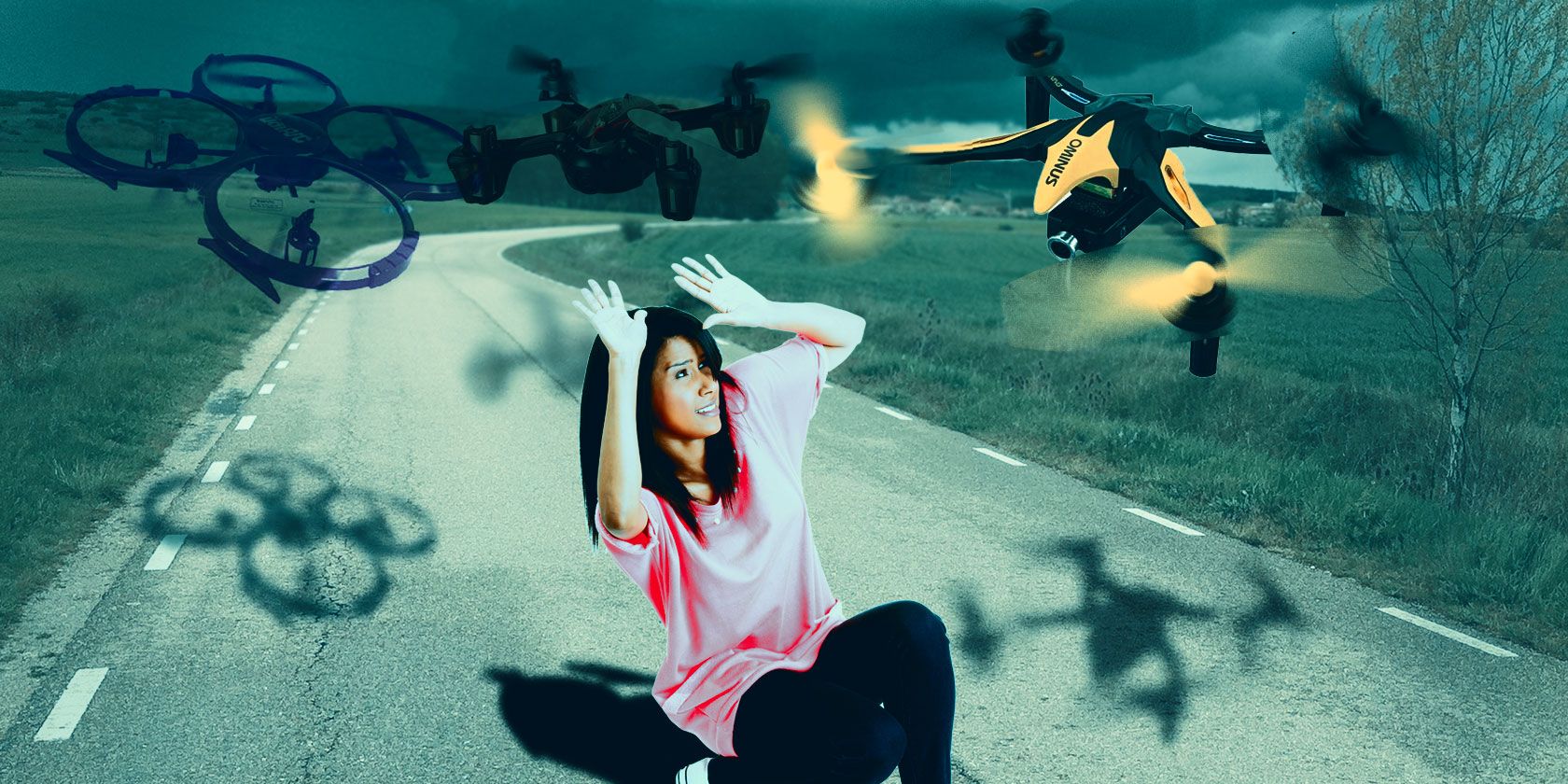
The sight of a small, buzzing quadcopter hovering over the White House lawn used to be a punchline or a curious accident. Not anymore. If you've been following the recent incursions over Washington D.C., you know the vibe has shifted from "hobbyist mistake" to "national security nightmare." We aren't just talking about privacy or local noise ordinances. We're talking about the reality of asymmetric warfare landing on our front porch.
For years, the U.S. military watched drones revolutionize the battlefield in Ukraine and the Middle East. It’s cheap. It’s deadly. Most importantly, it's incredibly hard to stop once it’s in the air. Now, that same tech is showing up in the most restricted airspace on the planet. The Department of Defense and the Secret Service are scrambling to catch up to a threat that costs five hundred bucks at a local electronics store. Don't miss our recent coverage on this related article.
The core of the problem is simple. Our billion-dollar defense systems were built to track fighter jets and cruise missiles. They weren't designed to spot a plastic toy carrying a pound of C4 or a high-definition camera flying at tree-level through a crowded city.
The Cheap Tech Toppling Expensive Security
Traditional defense relies on "seeing" the enemy. Radar systems look for massive metal birds moving at high speeds. When a drone made of carbon fiber and plastic drifts over the Potomac at twenty miles per hour, it often looks like a large goose to most sensors. This is the ultimate "low-cost, high-impact" strategy. To read more about the context here, The New York Times offers an informative summary.
Think about the math for a second. An Archer interceptor missile or a sophisticated jammer costs a fortune. A modified racing drone costs less than a used iPhone. In any conflict, the side that spends less to destroy more wins. This isn't just theory. We've seen it in the Black Sea and the Donbas. Now, the potential for that same math to be applied to the U.S. Capitol or the Pentagon is keeping planners up at night.
I’ve talked to security analysts who point out that the "swarm" is the real bogeyman. Stopping one drone is a headache. Stopping fifty simultaneous drones launched from different vans across the city is currently an impossibility. Our current jamming technology is powerful, but using it in a dense urban environment like D.C. means knocking out local cell towers, Wi-Fi, and emergency communications. You can't just "turn it on" without causing chaos for the very citizens you're trying to protect.
Gaps in the Domestic Defense Shield
While the military has some "counter-UAS" (Unmanned Aircraft Systems) capabilities, the legal framework in the U.S. is a mess. Outside of specific war zones, the FAA and various privacy laws limit what the government can do to a drone. If a suspicious drone is over your house, the cops usually can't just shoot it down or hack its signal.
There are three major hurdles we're facing right now:
First, detection. Washington is a "No Drone Zone," but that’s just a rule on a map. Drones don't have license plates you can read from a mile away. Remote ID laws are supposed to help, but let’s be real. A bad actor isn't going to register their drone or broadcast their location to the authorities.
Second, the "Kinetic" problem. You can’t exactly fire a machine gun at a drone over the National Mall. What goes up must come down. Stray bullets or falling debris pose a massive risk to the public. This forces security teams to rely on electronic warfare—jamming—which, as mentioned, is a blunt instrument that messes with the city's infrastructure.
Third, the legal grey area. Currently, only a few federal agencies have the explicit authority to "disrupt" a drone's flight. Local police departments are often left watching helplessly as a drone circles a sensitive target because they don't want to get sued or violate federal wiretapping laws by interfering with the drone's radio link.
Lessons From Overseas Successes and Failures
If you want to see where this is going, look at how the conflict in Ukraine evolved. They started with simple reconnaissance drones and moved to "First Person View" (FPV) kamikaze craft within months. The tech moves faster than government procurement cycles. By the time a "Drone Defense Contract" is signed in the U.S., the technology it’s supposed to fight has already changed three times.
We’ve seen electronic domes and specialized nets used in other countries. Some use trained eagles—honestly, that didn't work well. Others use directed energy weapons (lasers). The U.S. is testing high-power microwaves to fry drone electronics instantly. This is the most promising path, but it’s still in the "expensive prototype" phase.
Domestic Terror and the Asymmetric Edge
It’s not just about foreign militaries. The barrier to entry for domestic "lone wolf" actors is now non-existent. A person with a grudge and a YouTube tutorial can become a significant threat to a high-profile target. This is the definition of asymmetric warfare: the weak using cheap, accessible technology to bypass the strengths of the powerful.
Security around the D.C. "Flight Restricted Zone" (FRZ) is tight, but it’s mostly focused on planes. The small-scale incursion is the new reality. We’ve seen reports of unidentified drones hovering over Langley and other sensitive sites for days at a time. The fact that we still don't know who was behind many of these flights is the most chilling part. It proves that our "secure" airspace is actually quite porous.
Taking Action Beyond the Red Tape
The solution isn't just more laws. We need a fundamental shift in how we build cities and secure buildings.
- Passive Defense is king. Buildings need to start incorporating physical shielding or "drone-proof" architecture. This means more than just fences; it means designs that disrupt line-of-sight for remote pilots.
- Localized Jamming. We need "surgical" electronic warfare tools that can drop a drone without taking out the entire neighborhood's 5G. This tech exists, but it needs to be in the hands of more than just a few elite federal teams.
- Rapid Identification. Every drone sold should have a hard-coded, unalterable digital signature. If you fly where you aren't supposed to, the system should automatically flag the operator's location to the nearest patrol.
The era of the "safe" backyard or the "secure" government building is over. Technology has democratized the ability to strike from the air. Until we treat the drone threat with the same seriousness as we do a hijacked plane or a truck bomb, the sky remains an open door.
If you're a business owner or a local official, don't wait for a federal mandate. Evaluate your own airspace. Look at your vulnerabilities from the top down. The "buzz" you hear might just be a hobbyist, but in 2026, you can't afford to bet on it. Invest in detection sensors now, because by the time you see the drone, it’s already too late to stop it.