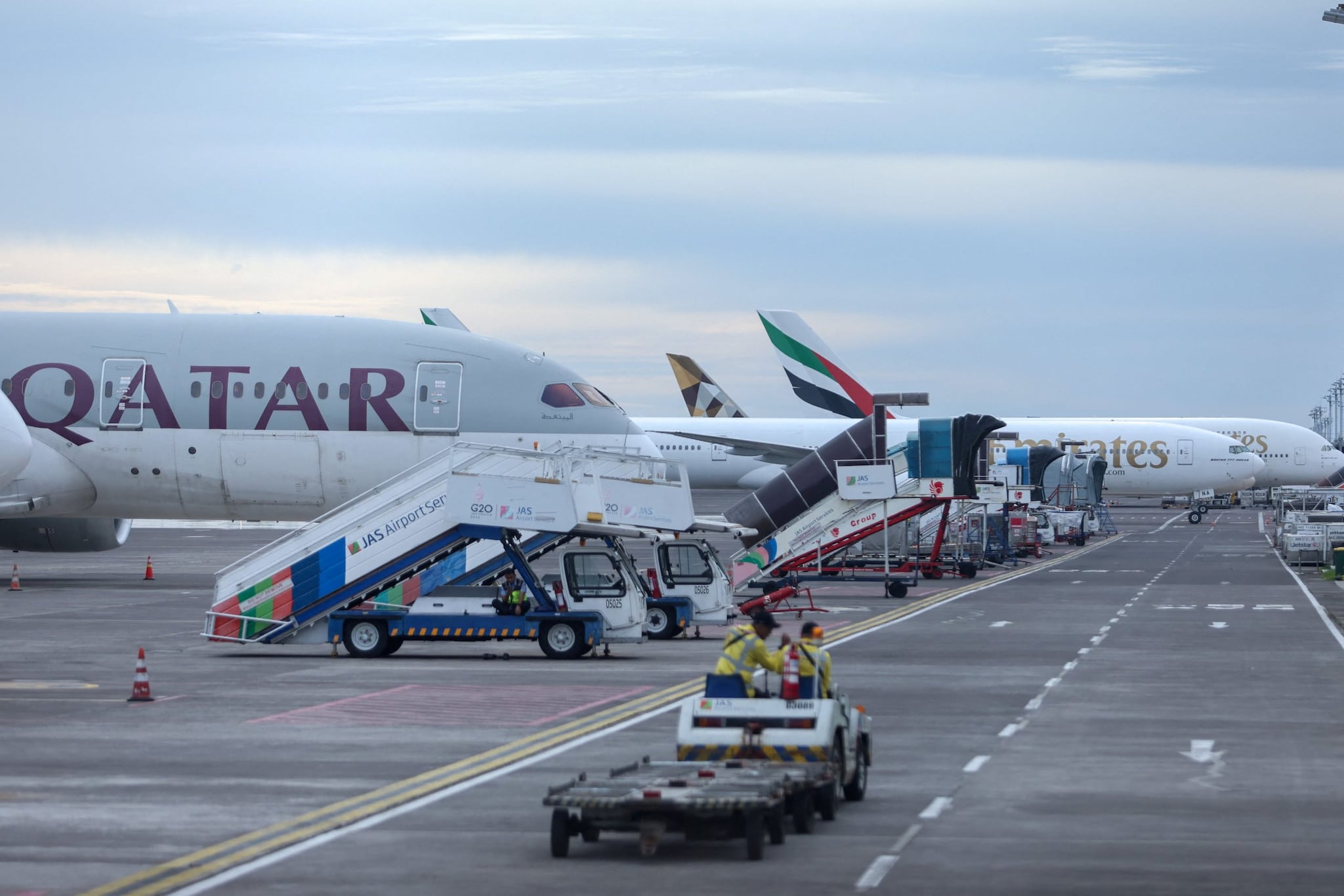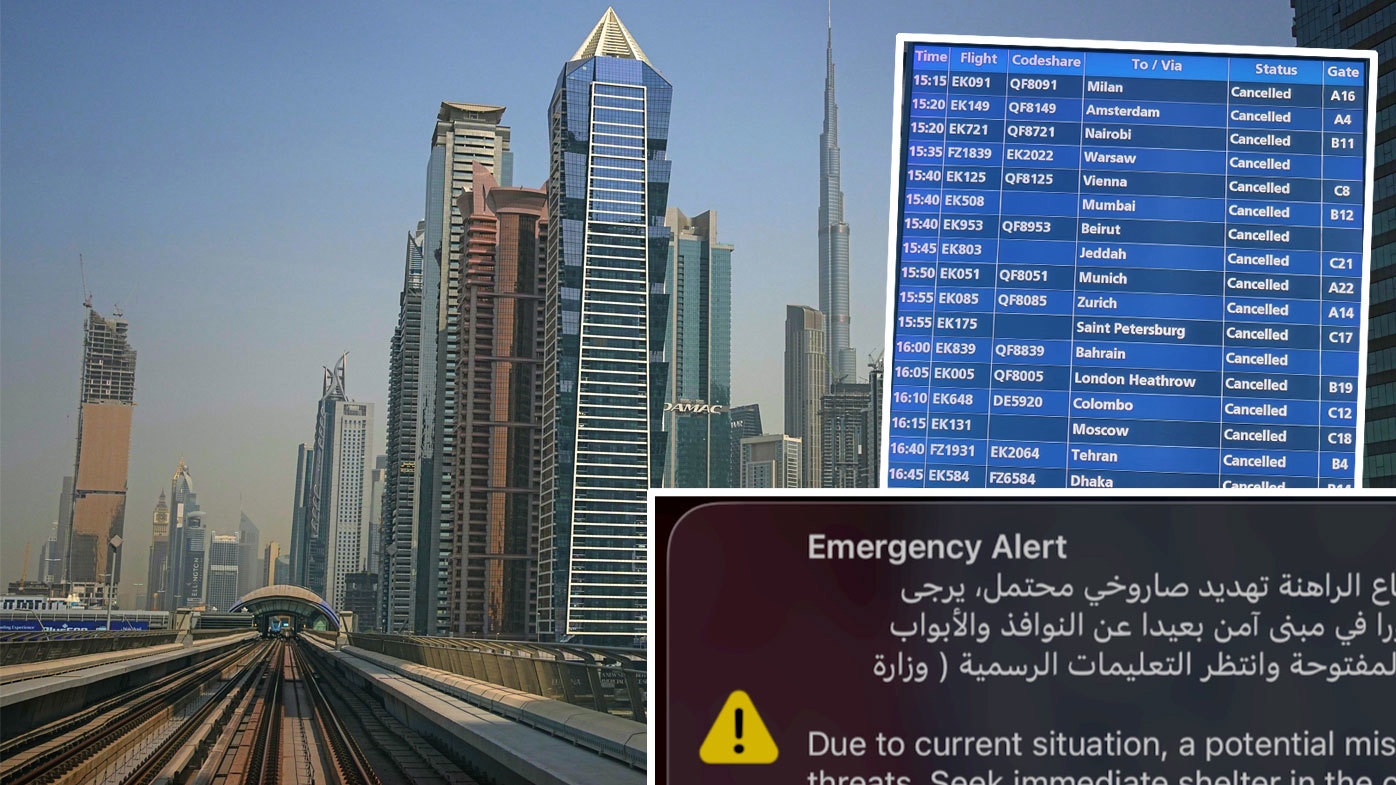
The headlines are predictable. They paint a picture of Western expats huddled in gold-plated towers, looking nervously at the horizon while "tensions escalate" across the Middle East. They frame the Australian or British professional in Dubai as a victim of geography—a high-flying earner suddenly trapped by a map.
It is a narrative built on a fundamental misunderstanding of how the world actually works.
If you are an Aussie in Dubai right now, you aren't "stuck." You are winning. The panic-baiting articles circulating in Sydney and Melbourne are written by people who still view the world through a 1990s geopolitical lens. They see a desert and assume instability. They see a border and assume a threat.
They are wrong. While the West deals with crumbling infrastructure, surging street crime, and political polarization that feels one bad election away from a riot, Dubai remains a fortified island of hyper-stability.
Let’s dismantle the "stuck" myth with some cold, hard reality.
The Geography Fallacy: Proximity vs. Reality
The lazy consensus suggests that because Dubai is in the Middle East, it is inherently "unsafe" when the region gets loud. This is the equivalent of saying you shouldn’t live in London because there is a conflict in Ukraine.
Distance in the modern world is measured by defense capabilities and diplomatic weight, not just kilometers.
Dubai is not a passive participant in regional dynamics; it is the world's most successful neutral ground. Think of it as the Switzerland of the 21st century, but with better air conditioning and a functional tax code. The UAE has spent decades diversifying its security alliances. It isn't just "protected" by the West; it is integrated into the global economy in a way that makes its instability a non-starter for every major power on the planet, including the ones people are currently afraid of.
If you are "stuck" in a place where the police response time is under five minutes, where you can leave your MacBook on a cafe table to go to the bathroom, and where the sovereign wealth fund is larger than the GDP of most European nations, you aren't a refugee. You're an accidental genius.
Why Your "Safe" Home Country is a Statistical Risk
Let’s talk about the "flight to safety." Australians often get misty-eyed about the suburbs of Perth or Brisbane when the news gets scary. But let’s look at the data.
When people talk about "crisis," they usually mean kinetic warfare. But for the average person, the "crisis" that actually ruins your life is the breakdown of social order, hyper-inflation, or the inability of the state to provide basic safety.
- Crime Rates: Compare the violent crime statistics of Melbourne or Sydney to Dubai. In Dubai, the "crisis" of someone stealing your phone or home-invading your family is statistically near zero.
- Energy Security: While Europe and parts of the West face "cost of living" crises driven by energy shortages, Dubai sits on the source. You aren't going to freeze or lose power because of a supply chain hiccup.
- Fiscal Sanity: The Australian government’s debt-to-GDP ratio and its reliance on taxing the middle class into oblivion is a slow-motion crisis. Dubai has no personal income tax. In a global meltdown, cash is king. The "stuck" expat is accumulating capital at a rate three times faster than their peers back home.
Who is actually in more danger? The person in a neutral, hyper-wealthy city-state with world-class air defense, or the person in a Western city facing 10% inflation and rising social unrest?
The Illusion of the "Exit Strategy"
The competitor articles love to focus on the "difficulty of getting out." They interview one person who couldn't find a direct flight on a Tuesday and call it a humanitarian bottleneck.
I’ve seen this play out in multiple global shifts. People mistake a temporary logistics hurdle for a permanent trap.
Dubai International (DXB) is the busiest international airport on the planet. It is the lungs of global travel. If the planes stop flying out of DXB, the global economy has already stopped breathing. At that point, it doesn't matter if you are in Dubai, London, or New York—you’re in the same dark room as everyone else.
The idea that you need an "exit strategy" from the most connected hub on earth is a paradox. You are already at the exit. You are at the crossroads.
The Truth About Expats and "Fear"
Let’s be honest about why these "trapped in Dubai" stories exist. They serve as "schadenfreude" for the people back home.
There is a segment of the population that hates the idea of the "Dubai Expat"—the person who escaped the tax net, lives in a villa, and posts photos of brunch while the rest of the world grinds through a recession. When a regional conflict occurs, the media produces these "reality check" pieces to make the people in the suburbs feel better about their choice to stay put.
"See? They might have no tax and sunshine, but they're scared."
Are they, though? If you actually talk to the people on the ground—the hedge fund managers, the tech founders, the engineers—they aren't checking flight prices. They are buying the dip in the real estate market. They know that Dubai thrives during global volatility because it is the world's premier "safe haven" for capital.
When the world gets messy, money moves to where it is treated best and where the rules are consistent. Dubai is the beneficiary of global chaos, not its victim.
The Mental Trap of "Home"
The biggest misconception is that "home" (Australia, UK, USA) is the default safety zone.
This is a cognitive bias known as the status quo bias. We assume that the place we were born is inherently safer because it is familiar. But familiarity is not safety.
Imagine a scenario where a global conflict disrupts maritime trade in the South China Sea. Australia, being an island nation dependent on those trade routes for everything from fuel to electronics, would see its economy paralyzed in weeks. Dubai, conversely, has spent the last decade building redundant trade routes and massive domestic reserves.
Being "stuck" in a desert kingdom with a massive surplus of resources is objectively better than being "safe" in a Western democracy that can't refine its own fuel.
The Real Crisis is Your Lack of Perspective
If you are an Aussie in Dubai and you’re feeling anxious, it’s because you are consuming the wrong media. You are listening to people who haven't left their zip code in five years tell you how "dangerous" the most monitored, secure, and well-funded city in the world is.
Stop looking for the exit and start looking at the balance sheet.
You have access to:
- A currency pegged to the USD (the ultimate safe-haven asset).
- A government that views stability as its primary product.
- A demographic of high-achievers who aren't interested in ideological warfare.
The "Middle East crisis" is a tragic, complex series of events, but conflating the entire region into a single "danger zone" is intellectually lazy. It’s like avoiding a trip to Vancouver because there are riots in Mexico City.
The Actionable Truth
If you want to be smart about this, do the opposite of what the "stuck" narrative suggests.
- Ignore the "Get Out" Panic: Every time there is a headline, flight prices spike because of "anxiety buyers." Wait 48 hours. The planes are still landing. The malls are still open.
- Leverage the Stability: While others are paralyzed by fear, realize that your purchasing power in Dubai is actually increasing relative to the crumbling currencies of the "safe" West.
- Audit Your Security: Look around you. Do you feel unsafe, or are you being told you should feel unsafe? There is a massive difference between a headline and a lived reality.
The reality of being an Aussie in Dubai isn't that you're stuck in a war zone. It's that you've found a loophole in the global chaos. You're living in a high-trust, high-security, high-growth environment while the rest of the world watches the news and wonders why everything is getting so expensive and dangerous back home.
The only crisis you should worry about is the one that happens when you eventually have to leave this "trap" and move back to a place where the trains don't run on time and half your paycheck goes to a government that can't protect your car from being stolen.
Stay put. You’re already where everyone else will be trying to get to when things actually get bad.
Stop treating your privilege like a prison sentence.