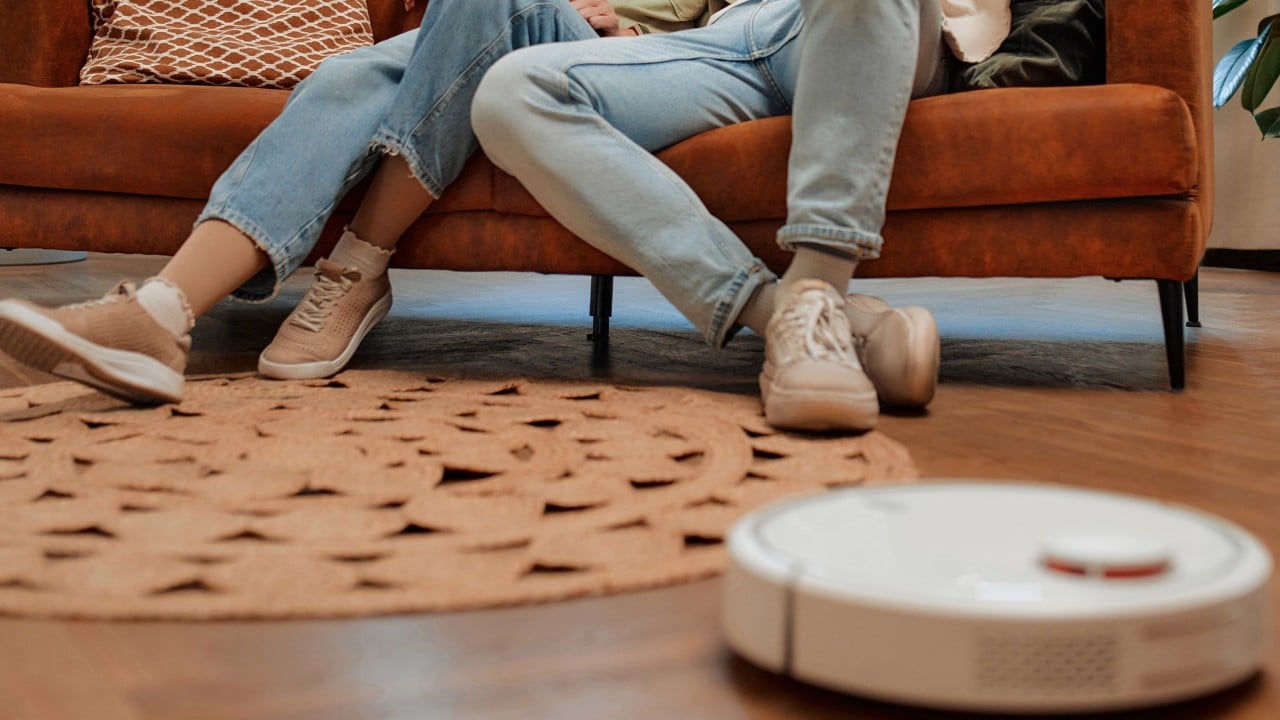
We used to buy machines to save our labor. Now we buy them to watch our lives.
The box arrived on a Tuesday, sleek and glossy, promising freedom from the tyranny of pet hair and dust bunnies. It was a robot vacuum, a circular disk of sensors and spinning brushes designed to navigate the geography of a living room with blind, algorithmic obedience. You press a button. It hums to life. It bumps against the sofa, maps the baseboards, and vacuums the floor while you are away at work.
Except, in one home in Taiwan, it did more than sweep. It listened. It recorded. And in doing so, it tore open a marriage, won a court case, and landed its owner behind bars.
Consider what happens when our appliances become double agents.
We live surrounded by silent witnesses. The thermostat knows when we wake up. The smart lock knows when we come home. The television records what we watch, and increasingly, who is in the room watching it. But a robot vacuum is different. It crawls across the carpet at foot level, drifting through bedrooms, sliding under tables, mapping every square inch of our most private spaces.
In this particular household, a husband grew suspicious. The quiet erosion of trust had already begun, that slow, corrosive feeling that the person sleeping beside you is drifting into another orbit. He didn't hire a private investigator. He didn't wait in a parked car across the street with binoculars.
Instead, he turned to his cleaning appliance.
Modern robot vacuums do not just clean; they navigate using advanced optical sensors, LiDAR, and internal microphones. They build digital maps of your home to ensure efficient cleaning paths. By accessing the companion smartphone application linked to the device, the husband discovered something staggering. The vacuum's onboard recording capabilities and accompanying digital logs captured audio and spatial data from rooms where secrets were supposed to be safe.
He had his proof. The audio recordings allegedly captured his wife engaged in an affair.
Armed with this digital treasure trove of betrayal, he went to court. He thought justice would be a straight line. He believed that proof of a broken vow would outweigh the method used to obtain it. He was wrong.
The legal system operates on rules that machines do not understand. In Taiwan, as in many jurisdictions around the world, the right to privacy is not suspended simply because a domestic contract has been breached. While the court acknowledged the reality of the infidelity, it also recognized a far more dangerous precedent: the weaponization of domestic technology against personal privacy.
The husband won his civil litigation regarding the marital breach, but the victory tasted like ash. Because he had utilized a device to surreptitiously record private conversations without consent, he crossed a hard legal line. Privacy protection laws do not care whether the surveillance device has wheels and a dustbin. Illegal wiretapping is illegal wiretapping, whether performed by a human holding a concealed microphone or an autonomous disc rolling quietly across a hardwood floor.
He was sentenced to prison.
Think about the irony. A man buys a gadget to clean his floors, only to have it sweep him straight into a jail cell.
We are handing the keys to our castles over to connected machinery without reading the fine print. Every time we invite a smart device into our homes, we invite a trojan horse. We focus so much on the utility of convenience that we forget the cost of constant observation. These machines are data harvesters disguised as household helpers. They map our rooms, listen to our arguments, record our laughter, and store our habits on remote servers managed by corporations we know nothing about.
The law is scrambling to catch up to this new reality. For decades, privacy laws were built around walls, doors, and locked drawers. If you wanted to spy on someone, you had to physically intrude. You had to pick a lock, plant a bug, or stand outside a window.
Now, the bug is already inside. You bought it, unboxed it, connected it to your Wi-Fi, and placed it on the living room rug yourself.
When technology outpaces our ethics, we stumble in the dark. We assume that because a device is marketed as a consumer good, it operates in a legal and moral vacuum. We forget that the data generated inside our homes is currency, and like all currency, people are willing to risk everything to acquire it.
The marriage was already broken before the vacuum ever started its cleaning cycle. The infidelity was the disease, but the obsession was the fever that finished the job.
Look down at the floor. Something small, round, and quiet is moving across the tiles right now. It is bumping into the chair leg, turning around, and scanning the perimeter. It does not judge. It does not care about your secrets. It only records, maps, and remembers.
And somewhere in the cloud, the logs are piling up.