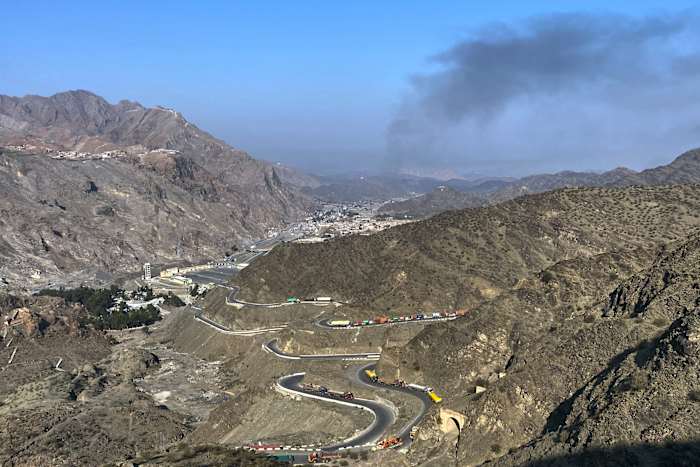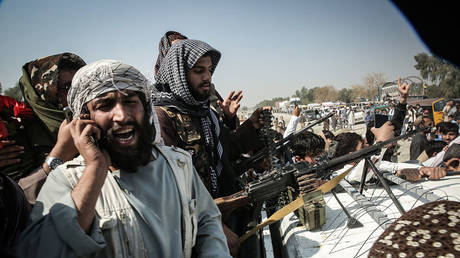
The border does not look like a line on a map. It looks like a jagged, unforgiving spine of rock and dry earth where the wind screams through the mountain passes of the Hindu Kush. For those living in the shadow of the Durand Line, the geopolitics of Islamabad and Kabul are not abstract debates held in air-conditioned rooms. They are the sound of mortar fire at 3:00 AM. They are the sight of a neighbor’s gate hanging off its hinges.
Recently, the Pakistani government released a number that should stop the heart of anyone who values human life. Nearly 1,000. Specifically, 985. That is the count of personnel lost to the escalating violence bleeding across the frontier from Afghanistan in a single year. Meanwhile, you can read similar developments here: The Cold Truth About Russias Crumbling Power Grid.
Numbers have a way of sanitizing horror. When we say "one thousand," we see a digit with three zeros. We don’t see the tea cooling on a table in a house in Khyber Pakhtunkhwa, waiting for a father who will never walk through the door. We don't see the young recruit from a village in Punjab who joined the Frontier Corps to pay for his sister’s schooling, only to return in a box draped in green and white.
The friction is not new, but the heat is rising to a boiling point. Since the Taliban regained control of Kabul, the expectation in Islamabad was a period of "strategic depth" and brotherly cooperation. Instead, the reality has been a nightmare of shifting allegiances and porous borders. The Pakistani Taliban, or TTP, have found a sanctuary in the rugged Afghan interior, launching strikes that peel away the security of a nation already grappling with an economic tailspin. To explore the bigger picture, we recommend the excellent analysis by BBC News.
The Ghost in the Mountains
Consider a hypothetical soldier named Salman. He is twenty-four. He smokes cheap cigarettes and dreams of opening a mobile phone repair shop when his service ends. Salman spends his days staring at a ridgeline that looks exactly like the one behind him. He knows that somewhere in those caves, men are cleaning rifles and plotting the next "fidayeen" attack.
Salman’s fear isn’t of a formal army. It is the fear of the invisible. It is the IED buried under the red clay. It is the sniper who waits for the precise moment the sun hits the lens of a scope. When Pakistan reports nearly 1,000 losses, they are reporting a thousand versions of Salman—a generation of young men being swallowed by a conflict that feels increasingly like a circular trap.
The official statements from Pakistan’s Ministry of Interior are blunt. They point the finger directly at the Afghan soil. They speak of "inaction" and "broken promises." From the perspective of the Pakistani leadership, they supported a neighbor for decades only to be met with a knife to the ribs.
But the Afghan side of the story is draped in its own complexities. The Taliban administration in Kabul denies providing a base for militants. They claim they have neither the resources nor the desire to police every square inch of the world’s most difficult terrain. They are a government of former insurgents trying to rule a starving country, and they are discovering that it is much easier to blow up a bridge than it is to build one.
The Price of a Porous Fence
For years, Pakistan has been working on a massive engineering project: a fence. Thousands of miles of chain-link and barbed wire, punctuated by high-tech surveillance posts. It was supposed to be the solution. It was supposed to turn the border into a wall.
It failed.
A fence is a physical object. The insurgency is an idea. You cannot fence out an ideology that moves through the bloodlines of divided tribes. Families live on both sides. A man might have his house in Pakistan and his wheat field in Afghanistan. When the violence spikes, these people become the collateral. They are squeezed between the hammer of the militants and the anvil of the state’s military response.
The statistics tell us that the violence has jumped by over 60% in certain districts. This isn't a slow burn; it is an explosion. The TTP has become bolder, more sophisticated, and better armed. Some analysts suggest they are using equipment left behind during the chaotic American withdrawal—night-vision goggles and thermal optics that turn the dark into a playground for the hunter.
This isn't just a "border skirmish." It is a fundamental breakdown of the regional order. If the two neighbors cannot find a way to coexist, the 1,000 deaths of last year will look like a preamble.
The Weight of the Silence
Why does this matter to someone sitting thousands of miles away? Because the border between Pakistan and Afghanistan is the fault line of global security. This is the place where empires go to die, and where radicalism finds its most fertile soil. When the security forces of a nuclear-armed state are being picked off at a rate of three men a day, the vibration is felt in every capital in the world.
There is a profound exhaustion in the voices of those who live in the frontier provinces. They have seen this movie before. They saw it in the 1980s. They saw it after 9/11. Now, they are seeing it again. They are tired of being the buffer zone. They are tired of the funerals.
The tragedy of the 985 lives lost is that each one represents a failure of diplomacy. Every bullet fired is a sign that words have lost their currency. Islamabad demands the extradition of militants. Kabul demands respect for its sovereignty. Meanwhile, the body count climbs.
Imagine the atmosphere in a barracks tonight. The air is cold. The men are quiet. They know the statistics. They know that tomorrow, the tally might reach 1,000, then 1,100, then 1,200. There is no "win" condition in sight. There is only the endurance of the watch.
The true cost of this escalation isn't found in the budget reports or the heated exchanges at the UN. It is found in the dirt. It is found in the thousands of fresh mounds of earth across the cemeteries of Pakistan, marked by simple stones and fading flags.
The mountain does not care who owns it. It only knows the weight of those who fall upon it.
Somewhere in North Waziristan, a young man is standing guard. He watches the shadows move across the valley. He is not thinking about geopolitics or the Durand Line. He is thinking about the sound of his mother’s voice and the way the wind feels right before the rain starts. He is one man. He is a statistic in waiting. He is the human heart of a conflict that the world has decided is too complicated to solve, and too distant to feel.
The sun sets behind the peaks, casting long, dark shadows that stretch across the border like reaching fingers.