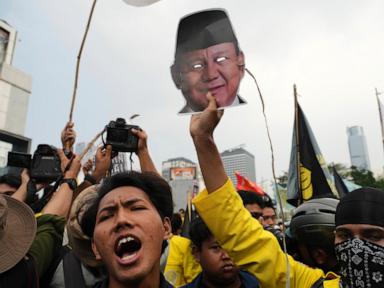
The streets of Jakarta are choking on tear gas again. Across Indonesia, tens of thousands of university students have walked out of lecture halls to block major thoroughfares and clash with riot police. To the casual observer, this looks like a cyclical venting of youthful frustration over government policy. It is not. This wave of unrest is a direct response to a calculated economic squeeze where rising living costs, subsidy cuts, and a shrinking formal job market have collided with a controversial state agenda. Students are not just protesting laws; they are fighting a system that is actively pricing them out of their own future.
The Myth of the Middle Class Cushion
For the past decade, international economists have pointed to Indonesia as a shining beacon of emerging market stability. The narrative was simple: a booming young population would fuel consumer spending, attract foreign direct investment, and lift millions into the middle class.
That narrative has hit a wall of harsh reality.
While gross domestic product numbers look stable on paper, the domestic economy is fracturing. The government has aggressively pushed ahead with ambitious infrastructure projects, including the massive relocation of the capital city to Nusantara in East Kalimantan. Funding these legacy projects requires immense capital. To balance the ledger, the state has quietly shifted the financial burden onto its citizens.
The most acute pain point is the systematic rollback of public subsidies. Fuel prices have crept upward, driving up the cost of food distribution and basic commodities. Electricity tariffs have followed suit. For an average household, these adjustments represent an immediate and non-negotiable pay cut.
The Higher Education Trap
University students occupy a unique position in Indonesian society. Historically, they have been the moral compass of the nation, leading the pro-democracy movement that toppled the Suharto regime in 1998. Today, their anger is sharpened by immediate financial betrayal.
Tuition fees at state universities have skyrocketed under new institutional frameworks that grant colleges greater financial autonomy. This autonomy was sold as a way to improve academic quality, but the practical outcome has been a dramatic increase in single tuition fees, known locally as UKT.
Families who scraped together savings based on historical tuition rates suddenly found themselves facing exponential fee hikes mid-semester. Students are being forced to take out high-interest loans or drop out entirely. The irony is bitter. The government actively encourages youth to seek higher education to build a "Golden Indonesia" by 2045, yet it is making that very education a luxury asset.
The financial strain does not end at graduation. The ultimate catalyst for the current unrest is the bleak outlook of the job market. Indonesia is experiencing a severe structural mismatch. The economy is generating informal gigs—ride-hailing drivers, courier services, and temporary retail work—rather than the high-skilled, white-collar positions promised to university graduates.
A Labor Market Rigged Against Youth
The legislative root of this employment crisis can be traced back to the implementation of the Omnibus Law on Job Creation. Initially marketed as a sweeping reform package designed to cut red tape and attract foreign factory owners, the law has systematically eroded worker protections.
For young job seekers, the Omnibus Law has transformed the job hunt into a race to the bottom. It relaxed restrictions on contract labor, making it easier for companies to employ workers on endless temporary rotations without ever offering permanent status or benefits. It also altered the calculation of minimum wage increases, effectively capping wage growth below the real inflation rate of urban centers like Jakarta, Surabaya, and Bandung.
A graduate entering the workforce today faces a bleak calculus. They are burdened with higher debt from inflated tuition, yet they must accept positions that offer less stability and lower purchasing power than those available to their parents a generation ago. They are overeducated for the informal economy, yet locked out of a stagnant formal corporate sector.
The Illusion of Digital Salvation
When traditional employment sectors began to stall, policymakers pointed to the digital economy as the ultimate safety valve. Tech platforms were supposed to absorb the educated youth, transforming them into tech-savvy entrepreneurs and freelance pioneers.
That experiment has largely failed to deliver sustainable livelihoods. The domestic tech sector has gone through a brutal correction cycle. Mass layoffs across major Indonesian e-commerce and ride-hailing firms have flooded the market with experienced professionals, pushing recent graduates further down the pecking order.
What remains is a gig economy that functions as a holding pen rather than a career ladder. Driving a motorbike for a delivery app may prevent absolute poverty, but it does not justify the cost of a four-year degree, nor does it provide a path toward buying a home or starting a family. The realization that the digital dream was mostly marketing hype has turned optimism into resentment.
The Geopolitical and Raw Material Gambit
To understand why the government remains stubbornly committed to this economic path despite widespread protests, one must look at the broader industrial strategy. The administration has bet the country's future on resource nationalism, specifically the processing of raw materials like nickel and bauxite domestically.
This strategy requires enormous capital investment and close partnerships with foreign enterprises, particularly Chinese industrial firms. Smelters and processing plants have sprung up across Sulawesi and Maluku. While these projects generate massive export values on national balance sheets, they create localized enclaves of wealth. The jobs created are largely for construction or specialized industrial labor, doing little to resolve the employment crisis facing urban, university-educated youth.
Furthermore, the tax incentives granted to these foreign-backed consortiums mean that the immediate windfall for the national treasury is limited. To fund the infrastructure connecting these industrial hubs, the government continues to rely on domestic tax collection, including a planned increase in the value-added tax (VAT) on consumer goods. This shifts the tax burden squarely onto the shoulders of the domestic consumer, further compressing the middle class.
The Cost of Silencing Dissent
As the protests grow in scale, the state’s response has shifted from policy justification to security enforcement. Security forces have deployed increasingly aggressive tactics to contain demonstrations, using water cannons, tear gas, and digital surveillance to track student leaders.
This heavy-handed approach highlights a widening gap between the political elite and the younger demographic. The current political establishment is increasingly consolidated, with major parties forming vast coalitions that leave little room for formal opposition within parliament. With constitutional avenues for dissent narrowed, the street becomes the only viable forum for political expression.
Social media platforms, once viewed as open spaces for organizing, are now heavily monitored under the Elastic Articles of the Information and Electronic Transactions Law (UU ITE). Students face not just physical risks on the front lines of a protest, but the long-term threat of criminal charges for digital advocacy. This risk profile has changed the nature of the movement, making it more decentralized and, conversely, more volatile.
The Fractured Path Forward
There is no easy legislative fix for the current crisis because the student demands run directly counter to the state's core economic model. The government cannot simply reinstate massive subsidies without derailing its infrastructure commitments and blowing out the fiscal deficit limit mandated by law. It cannot easily repeal the Omnibus Law without signaling a retreat to the foreign investors it has spent years courting.
At the same time, ignoring the student movement is a dangerous gamble. Indonesia’s history demonstrates that when student economic anxieties align with broader public discontent over corruption and nepotism, the political consequences are swift and destabilizing.
The current unrest is not a temporary grievance over specific policy tweaks. It is an existential critique of an economic strategy that views public welfare as a secondary priority to macroeconomic metrics and legacy infrastructure. Until the state addresses the fundamental reality that its youth are being priced out of the society it claims to be building, the tear gas over Jakarta will not clear.