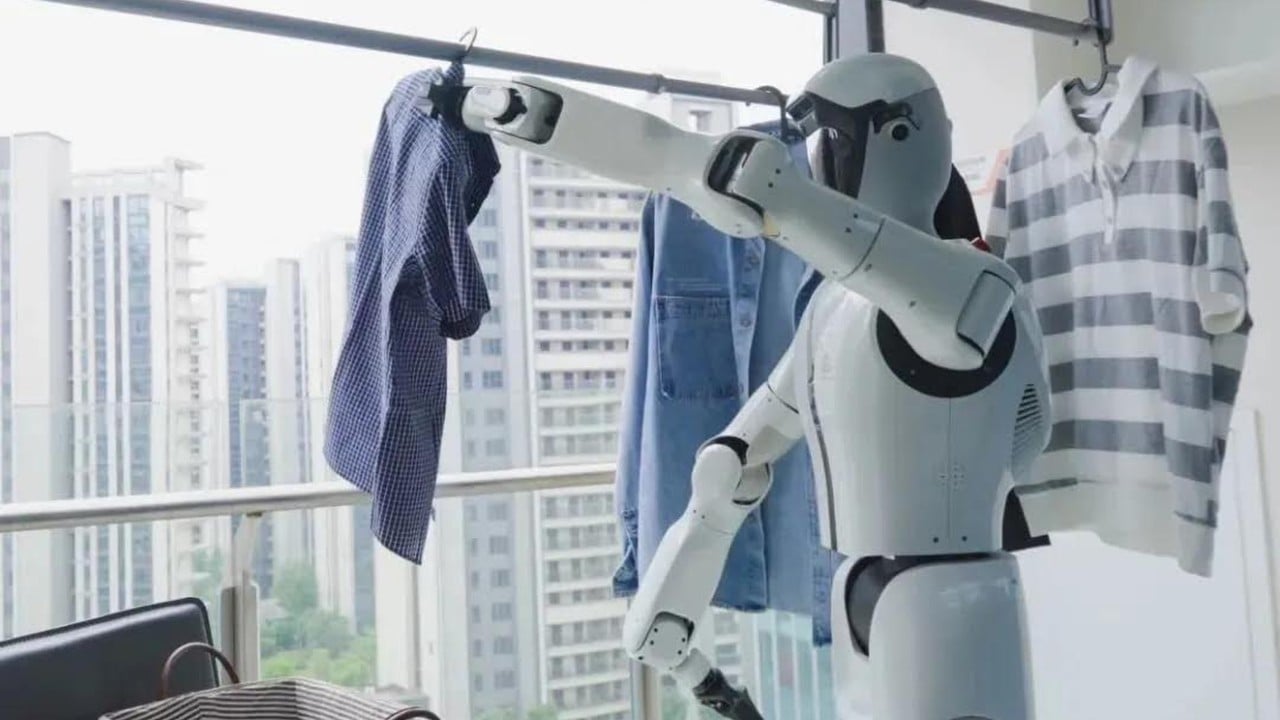
China’s aggressive push into the humanoid robotics sector is widely framed as a sudden technological leap toward automating domestic labor—specifically laundry, bed-making, and eldercare. This framing miscalculates the actual friction points of commercialization. The transition of humanoid robots from structured factory floors to unstructured domestic environments is not a linear scaling problem; it is a profound optimization challenge across hardware economics, edge-compute constraints, and liability frameworks.
While state-backed initiatives and capital injections have flooded the Chinese robotics ecosystem, the timeline for deploying a commercial humanoid robot into a private residence requires solving a multi-variable cost and utility equation. To understand when and how these machines will enter homes, we must deconstruct the underlying hardware mechanics, the unit economics of the supply chain, and the operational bottlenecks of domestic deployment. In other news, read about: Heavy Weapons Pylon Integration: The Engineering and Strategic Realities of B-52 Payload Quadruplication.
The Tri-Factor Framework of Domestic Robotics
Industrial robots thrive on determinism. A factory arm operates within a caged environment where variables are fixed, lighting is controlled, and positions are calculated down to the millimeter. A domestic environment is the antithesis of determinism. It is highly dynamic, unpredictable, and presents infinite edge cases.
For a humanoid robot to achieve utility in a home, it must successfully execute three sequential functions: MIT Technology Review has analyzed this important issue in great detail.
1. High-Degree-of-Freedom Unstructured Manipulation
Deforming objects—such as a messy blanket or a pile of wrinkled laundry—requires immense computational overhead. Unlike rigid objects (e.g., an automotive part), textiles have infinite configurations. A robot cannot simply use a standard geometric model to grasp a bedsheet. It must employ real-time topology estimation and continuous tactile feedback to adjust its grip pressure and pulling trajectory.
2. Multi-Modal Semantic Mapping
To care for an elderly individual or navigate a changing household layout, the robot must possess semantic understanding of its environment. It cannot merely see a barrier; it must differentiate between a permanent wall, a temporary obstacle like a misplaced chair, and a vulnerable asset like a sleeping pet. This requires fusing data from light detection and ranging (LiDAR), time-of-flight (ToF) cameras, and tactile sensors into a unified local world model.
3. Energy-to-Weight Power Density
A domestic humanoid must operate within the physical constraints of human infrastructure. It cannot weigh 200 kilograms without risking structural damage to floors or posing severe safety hazards to occupants. However, decreasing weight while maintaining the torque necessary to lift an adult human or move heavy objects creates an engineering paradox. Current lithium-ion battery architectures restrict operational windows to two to four hours under active load, turning charging logistics into a critical operational bottleneck.
The Chinese Supply Chain: Lowering the Bill of Materials
The primary competitive advantage of the Chinese robotics sector does not stem from superior algorithmic architecture, but from industrial clustering. By leveraging existing electric vehicle (EV) and smartphone supply chains, Chinese robotics manufacturers are systematically driving down the Bill of Materials (BOM) for humanoid platforms.
+-----------------------------------------------------------------+
|                    HUMANOID ROBOT BOM REDUCTION                 |
+-----------------------------------------------------------------+
|  EV Supply Chain Infusion    -->  Low-Cost Actuators & Motors   |
|  Smartphone Manufacturing    -->  Cheap Sensors & Edge Cameras  |
|  Industrial Clustering       -->  Rapid Prototyping Ecosystem   |
+-----------------------------------------------------------------+
|  RESULT: Target unit cost reduction from $100,000 to ~$20,000   |
+-----------------------------------------------------------------+
The cost function of a humanoid robot is heavily weighted toward actuators—the combinations of electric motors, reducers, and drivers that dictate joint movement. Actuators account for roughly 50% to 60% of total hardware costs.
| Component Group | Key Elements | Percentage of Total BOM | Supply Chain Dynamics |
|---|---|---|---|
| Actuation Systems | Harmonic drives, planetary reducers, frameless torque motors | 50% – 60% | Rapidly commoditizing via Yangtze River Delta EV suppliers. |
| Sensor Suites | 3D LiDAR, depth cameras, six-axis force sensors | 15% – 20% | High volume efficiency inherited from smartphone and ADAS supply chains. |
| Compute Core | Edge AI accelerators, GPU/TPU modules, microcontrollers | 10% – 15% | Dependent on global silicon, facing localization pressures. |
| Structural & Power | Aluminum/carbon fiber chassis, BMS, lithium battery packs | 10% | Fully localized, mature domestic battery manufacturing ecosystem. |
Western developers frequently rely on specialized, low-volume aerospace engineering components, leading to prototype costs exceeding $100,000 per unit. Conversely, Chinese firms in regions like Shenzhen and Suzhou utilize localized precision manufacturing to target a sub-$20,000 retail price point at scale.
However, this cost-down strategy introduces specific technical trade-offs. Substituting high-end, machined harmonic drives with lower-cost, mass-produced planetary reducers frequently introduces backlash—a slight play or looseness in the gears. While negligible in coarse industrial work, backlash in a domestic setting causes jerky micro-movements, making delicate tasks like inserting a plug into a socket or handling fragile glassware remarkably difficult without complex algorithmic compensation.
The Eldercare Bottleneck: Kinetic Risks and Liability Architecture
The application of humanoid robotics to eldercare is frequently cited as a solution to China’s demographic inversion. With a rapidly aging population and a shrinking workforce, the macroeconomic demand is undeniable. Yet, the physical reality of eldercare introduces severe liability and engineering hurdles that are absent from tasks like folding laundry.
Eldercare tasks can be categorized by their mechanical risk profiles:
- Low-Kinetic-Risk Tasks: Fetching medication, monitoring vitals via computer vision, delivering meals, and providing cognitive engagement.
- High-Kinetic-Risk Tasks: Assisting an individual out of bed, supporting weight during transfers to a wheelchair, and bathing.
The force physics of assisting a human body require high torque at low speeds. If a robot experiences an operational fault, a software latency spike, or a power interruption while holding a human being, the outcome can be catastrophic.
Unlike an industrial environment where emergency stops (E-stops) instantly cut power and freeze the machine, a domestic robot carrying a person cannot simply cut power and go limp; doing so would drop the patient. The system must feature redundant, back-drivable actuators or mechanical locks that gracefully lower or support the human asset during a system failure.
This requirement introduces a direct conflict with the goal of minimizing BOM costs. True hardware redundancy doubles the sensor and actuator count in critical joints (knees, hips, spine), driving both weight and cost back up, while shrinking the battery-powered runtime.
Technical Benchmarks for Domestic Autonomy
To evaluate the readiness of any humanoid platform for residential tasks, we must look past edited marketing videos and measure performance against objective technical benchmarks.
Zero-Shot Generalization vs. Overfitted Environments
Many public demonstrations rely on overfitted reinforcement learning models. The robot succeeds because it has trained thousands of times on the exact geometry of a specific room, under identical lighting, with the same fabric textures. True domestic readiness requires zero-shot generalization—the ability to walk into an unfamiliar home, identify a novel washing machine model, interpret its interface, and operate it correctly without prior explicit training on that specific appliance.
Teleoperation vs. Edge Inference
A significant portion of current humanoid task execution is achieved via teleoperation, where a human operator wearing a motion-capture suit controls the robot remotely. While useful for gathering training data, teleoperation does not scale commercially. The true metric of autonomy is the ratio of human intervention hours to robot operational hours ($HI/RO$). For commercial viability in domestic spaces, this ratio must fall below $0.001$, meaning a human needs to intervene less than once per thousand hours of operation.
Force Sensitivity and Contact Mechanics
Standard position-based control models are dangerous in a home. If a child steps in front of a robot moving its arm, a position-controlled arm will attempt to reach its destination regardless of the obstruction, exerting dangerous forces. Domestic humanoids must utilize impedance or admittance control schemes, where the robot constantly measures external forces and prioritizes force limits over position accuracy. If the arm encounters resistance as low as 5 to 10 Newtons, it must immediately alter its trajectory or yield to the obstruction.
Operational Roadmap to Residential Deployment
Humanoid robots will not materialize in living rooms overnight as fully autonomous maids. The rollout will follow a strict, risk-mitigated operational continuum dictated by environment predictability and safety margins.
+-------------------------------------------------------------------+
|               DOMESTIC HUMANOID DEPLOYMENT TIMELINE              |
+-------------------------------------------------------------------+
| PHASE 1: Structured Commercial Gaps (B2B)                         |
|   - Controlled logistics, hospital corridors, office cleaning     |
+-------------------------------------------------------------------+
|                                 │                                 |
|                                 ▼                                 |
+-------------------------------------------------------------------+
| PHASE 2: Supervised Residential Assist (B2B2C)                    |
|   - Assisted living facilities, trained operators nearby          |
+-------------------------------------------------------------------+
|                                 │                                 |
|                                 ▼                                 |
+-------------------------------------------------------------------+
| PHASE 3: Fragmented Consumer Households (B2C)                     |
|   - True autonomous domestic deployment                           |
+-------------------------------------------------------------------+
Phase 1: Structured Commercial Gaps (B2B)
Before entering private homes, humanoids will find commercial utility in semi-structured environments that mimic domestic tasks but feature higher predictability and clear legal frameworks. This includes night-shift cleaning in commercial offices, automated linen sorting in large hotels, and material transport inside hospitals. These deployments will serve as high-volume data engines, capturing millions of hours of physical interaction data required to train foundation models on real-world physics.
Phase 2: Supervised Residential Assist (B2B2C)
The second wave will target institutional eldercare and assisted living facilities. Here, the environment is partially standardized (uncluttered hallways, specialized beds), and trained human staff are co-located with the machines. If a robot encounters an edge case it cannot solve—such as an unmapped medical device or an uncooperative patient—it can safely halt and signal a human supervisor. This minimizes liability while refining the robot's edge computing capability.
Phase 3: Fragmented Consumer Households (B2C)
The final stage is the unassisted, single-family home. Entry into this market will be gated by a strict economic crossover point: the depreciated monthly cost of the hardware lease must be lower than the local market rate for outsourced domestic labor, combined with an insurable safety record. Initial residential tasks will be strictly non-contact and non-kinetically hazardous, such as loading structured dishwashers, managing laundry appliances, and vacuuming hard-to-reach areas, before advancing to complex caregiving.
Manufacturers that prioritize building out closed-loop data collection pipelines from Phase 1 and 2 deployments will capture a structural advantage. Hardware can be commoditized and replicated quickly within the Chinese industrial ecosystem, but the proprietary datasets of real-world physical interactions—and the safety validation models built upon them—will form the ultimate moat separating viable consumer products from failed prototypes.