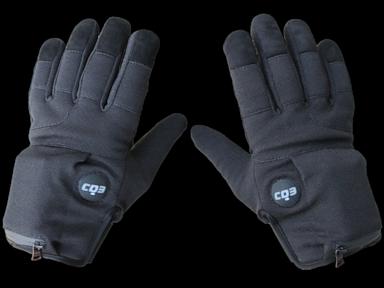
Procuring non-lethal tactical hardware for federal law enforcement is rarely a simple exercise in safety optimization. When the Department of Homeland Security initiates a procurement cycle valued between $10 million and $20 million to equip Immigration and Customs Enforcement personnel with Generated Low Output Voltage Emitter devices, the transaction exposes fundamental structural mechanics governing agency toolkits, use-of-force thresholds, and liability distributions.
The baseline mandate for any federal tactical acquisition relies on a cost-benefit calculation balancing officer safety, suspect injury reduction, and political exposure. The federal procurement notice targets thousands of units of the GLOVE technology manufactured by Compliant Technologies. These conductive distraction devices transform standard patrol gear into an electrical stimulus delivery system via direct skin contact. Understanding why federal agencies opt for close-quarter electrical compliance tools requires an analytical breakdown of operational friction points in high-intensity enforcement environments.
The Operational Friction Matrix in Field Operations
Enforcement Removal Operations and Homeland Security Investigations personnel frequently operate in tight spaces, such as vehicle extractions, residential entryways, and crowded public locations, where traditional distance-based compliance tools present severe operational limitations.
Standard conductive energy devices, commonly known as Tasers, require optimal deployment distance and a clear trajectory for two projectile darts to complete an electrical circuit. In close-quarters grappling scenarios, standard projectile systems fail due to insufficient deployment vector geometry.
The mechanical alternative introduces distinct variables:
- Vector Independence: The electrical stimulus depends entirely on physical contact made by the operator's hand, removing the spatial distance requirement of projectile systems.
- Traceability Deficit: Unlike traditional projectile deployment cartridges that scatter serialized identification tags, close-contact conductive gear leaves minimal physical forensic evidence or visible contact marks, complicating post-incident forensic audits.
- Escalation Velocity: Integrating a painful stimulus directly into a natural hand strike compresses the decision-making window for an operative transitioning from empty-hand control to pain compliance.
This compression alters the force continuum. In tactical theory, the introduction of a pain compliance tool that mimics an ordinary glove blurs the perceptual boundary between a standard physical escort technique and a localized electrical intervention.
The Cost Function of Compliance and Liability
Public sector agencies operate under a unique liability framework. Unlike private corporations that measure optimization via profit margins, federal agencies evaluate operational decisions through the lens of litigation risk, public oversight, and political capital.
The decision to allocate up to $20 million for a single-source or direct-market procurement establishes a clear financial commitment to close-quarter electrical intervention. However, the true cost function extends far beyond the initial procurement line item:
$$\text{Total Cost of Deployment} = \text{Procurement Cost} + \text{Training Overhead} + \text{Litigation Exposure} + \text{Externalities of Misuse}$$
Historical data from municipal jails and correctional facilities where similar conductive gloves have seen prior deployment indicates that expanding tool availability directly correlates with utilization frequency. When agents carry an expanded compliance toolkit, the threshold for deploying pain-inducing mechanics shifts.
Liability exposure increases non-linearly with the number of field operators equipped. Legal scrutiny intensifies when a device capable of delivering high-voltage pulses is utilized in environments involving civil immigration enforcement, where population demographics include individuals who may not present an active physical threat or who fall into vulnerable categories identified by manufacturer warnings—such as pregnant individuals, the elderly, or those with underlying medical conditions.
Structural Bottlenecks in Oversight and Accountability
The integration of concealed electrical compliance devices into federal enforcement routines creates a distinct oversight bottleneck. Traditional use-of-force reviews rely on tangible forensic markers, such as dart puncture sites or deployment logs from smart-taser firmware.
When a compliance tool is integrated directly into a standard garment, internal affairs divisions face significant structural barriers to verification:
- Absence of Automatic Telemetry: Basic contact-based conduction systems often lack the comprehensive data-download capabilities found in modern digital firearms or advanced electronic control weapons, making duration and frequency tracking heavily dependent on self-reporting.
- The Training-to-Deployment Gap: Manufacturer recommendations typically mandate strict operational limitations, such as restricting continuous activation duration to a maximum threshold of fifteen seconds and prohibiting use for punitive or retaliatory compliance. When scaling distribution to thousands of field personnel, maintaining uniform compliance with these operational ceilings across decentralized field offices proves statistically improbable.
- Deterioration of De-escalation Norms: The availability of an immediate pain-compliance mechanism can inadvertently suppress verbal negotiation strategies, replacing communicative de-escalation with tactile electrical disruption.
Strategic Execution and Systemic Forecast
The Department of Homeland Security procurement trajectory indicates a broader shift toward compact, non-lethal, close-quarter compliance hardware across federal policing structures. As civil oversight bodies and state-level attorneys general threaten legal and civil countermeasures against the misuse of these conductive devices, the operational reality on the ground will be dictated by internal agency policy enforcement.
To mitigate catastrophic liability and institutional friction, the agency must couple any large-scale hardware deployment with mandatory real-time digital logging mechanisms embedded within the gear, alongside strict operational disqualifiers that explicitly penalize off-protocol applications during routine civil enforcement actions.